Finding the right sofa Auckland showrooms carry isn't just about design. It's about construction, fabric performance, delivery timelines and how a piece will sit in your room for the next decade. Auckland's furniture market spans budget imports through to locally curated collections, and knowing what separates a well-made sofa from a fast-fashion piece saves money and frustration. This guide covers materials, fit, guarantees and what to ask before you commit to a purchase.
Frame and Foundation: What Holds a Sofa Together
The frame determines how long a sofa lasts. Solid timber, engineered timber and metal each behave differently under daily use.
Solid birch or beech frames, common in quality sofas, tolerate flexing without splitting. Engineered timber-plywood or MDF-adds dimensional stability when reinforced with corner blocks and adhesive joints. Metal frames suit slimline designs but require welding expertise to handle repeated load. Consumer.org.nz highlights frame construction as the first durability checkpoint when comparing sofas.
Spring Systems and Support
No-sag springs paired with rubber webbing distribute weight evenly, reducing sag over years of use. Cheaper options substitute elastic webbing alone, which stretches faster under load. Ask whether the sofa uses eight-way hand-tied springs, sinuous springs or webbing-each affects seat firmness and longevity.
Foam density follows. High-resilient foam (HR35 or higher) maintains shape better than standard polyurethane. Feather-down toppers add softness but need weekly plumping. If you prefer low-maintenance sitting, a foam-only cushion stays consistent without upkeep.
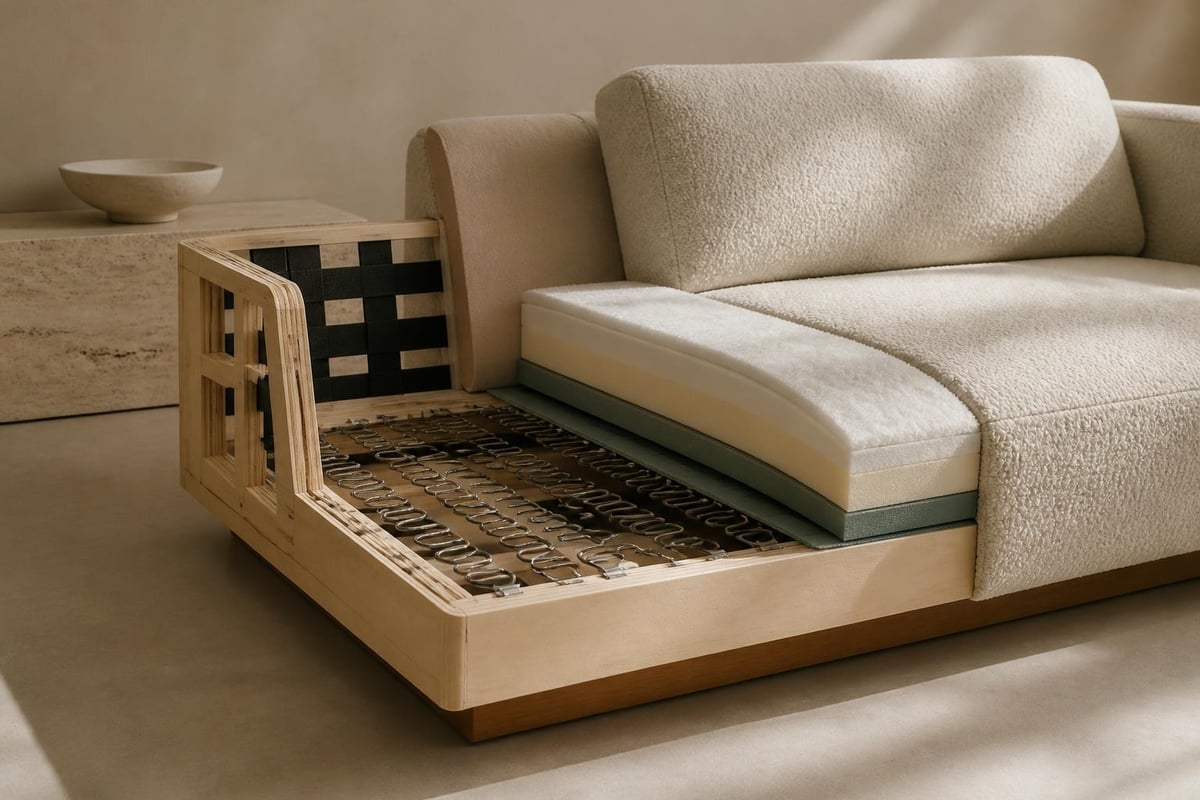
| Component | Standard Grade | Quality Grade | Impact on Longevity |
|---|---|---|---|
| Frame | Particle board, stapled | Solid timber, dowelled | 3-5 years vs 15+ years |
| Springs | Elastic webbing only | No-sag springs + webbing | Sag within 2 years vs stable 10+ |
| Foam | Polyurethane 25kg/m³ | HR foam 35kg/m³ or higher | Compression set early vs maintains shape |
| Joinery | Glued butt joints | Mortise-tenon or dowel-glued | Loosening vs tight long-term |
Fabric and Leather: Choosing for Real Use
Fabric performance matters more than colour. Rub count (Martindale cycles) tells you how well a fabric resists wear. 25,000 cycles suit guest rooms; 40,000+ handles daily family use. Wool blends breathe well, linen softens with age but wrinkles easily, and performance polyesters resist stains without sacrificing hand.
Leather develops patina over time. Full-grain leather shows natural grain and texture, ageing better than corrected-grain options. Aniline finishes let the leather breathe but mark more readily than semi-aniline or pigmented surfaces. Eco leather-a bonded or synthetic option-suits high-traffic households needing wipe-clean ease at lower cost.
When selecting sofa Auckland retailers stock, match fabric to the room's use. A reading nook tolerates delicate linens; a media room with kids needs stain resistance and durability. Most mid-to-high end retailers offer sample swatches to test at home under your lighting before committing.
Sizing, Scale and Room Fit
Measure three times: doorways, hallways and the final position. A three-seater often runs 200–240cm wide and 90–110cm deep. Add clearance for legs, arms and access around the piece. Modular sofas split into sections, easing delivery through tight Auckland townhouse stairwells or apartment lifts.
Seat height affects comfort. Standard seats at 40–45cm suit most adults; lower profiles (35–38cm) create a lounge aesthetic but require core strength to rise. Deep seats (100cm+) invite feet-up sitting but don't suit formal posture or compact rooms.
Configuring for Open-Plan Spaces
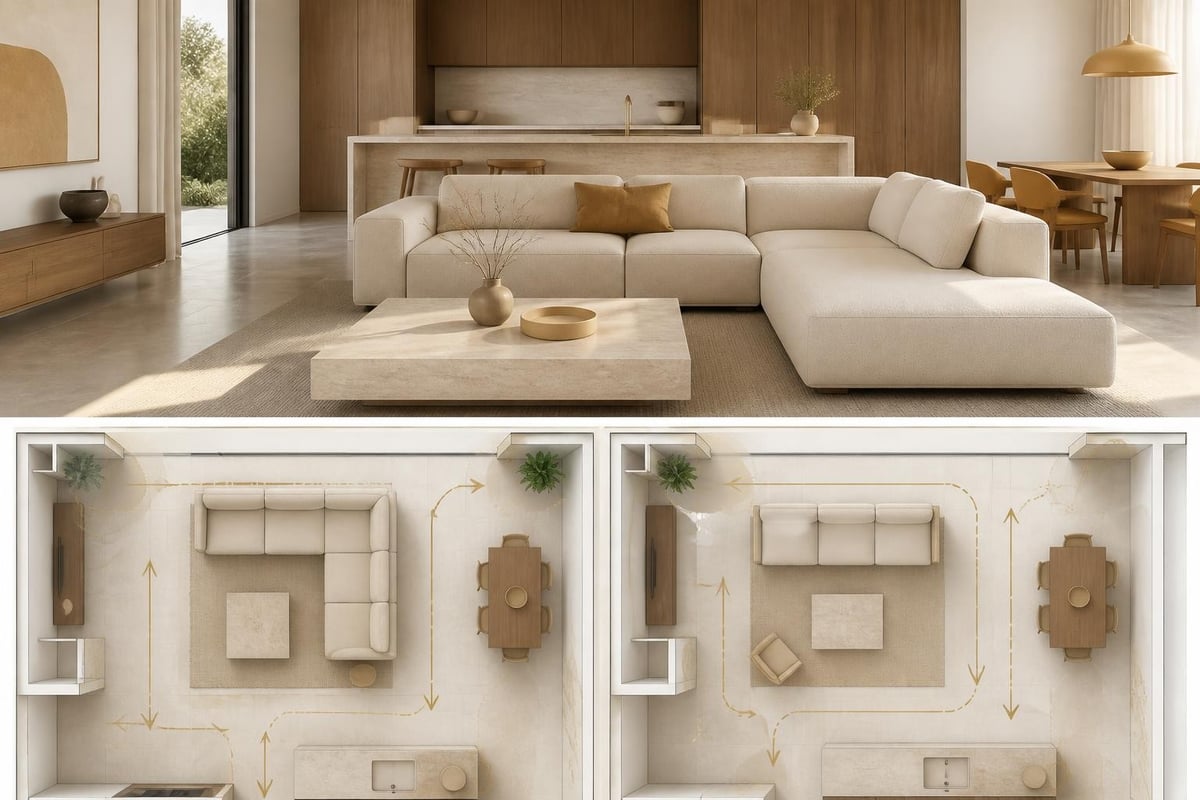
L-shape and modular layouts anchor open-plan living. Chaise ends provide lounging without needing a separate footstool, while corner units turn dead space into seating. Floating a sofa away from the wall defines zones in combined living-dining areas common in Auckland apartments and new builds.
If you're planning a layout, sketch the room to scale or use painter's tape on the floor to mark dimensions. Walk around the outline, checking sightlines to the television, windows and kitchen. A sofa that blocks natural light or forces awkward traffic flow won't work no matter how good it looks.
- Straight sofas: 180–240cm, suited to walls or backing onto dining areas
- L-shape configurations: corner + chaise, 250–320cm footprint, anchor large rooms
- Modular systems: individual units, rearrange as needs change
- Armchairs and ottomans: pair with a two-seater to create flexible seating
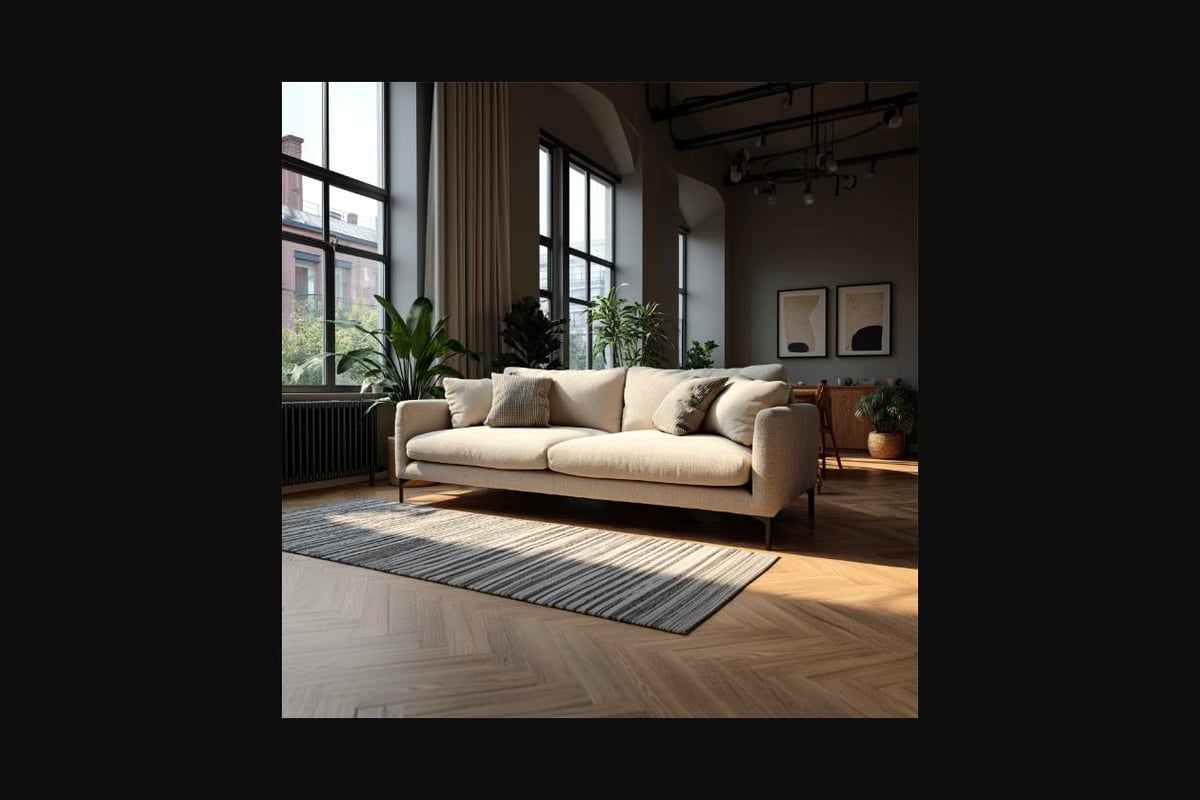
The Bauhaus Studio Linear Straight Sofa demonstrates how slimline proportions and tall legs maintain floor visibility, useful in smaller Auckland living rooms where every square metre counts.
Guarantees, Remedies and Consumer Rights
The Consumer Guarantees Act covers all furniture sold in New Zealand, including sofa Auckland retailers offer. Goods must be of acceptable quality, fit for purpose and match the description given at sale. If a frame cracks within two years or foam compresses prematurely, you're entitled to a repair, replacement or refund depending on severity.
Community Law outlines automatic guarantees that apply regardless of retailer warranties. A manufacturer's warranty adds coverage but doesn't replace your statutory rights. Always confirm what's covered-frame, springs, foam, fabric-and for how long before finalising the purchase.
Ask how the retailer handles claims. Some coordinate directly with manufacturers; others require you to chase offshore suppliers. Local or family-owned businesses often resolve issues faster because decision-making sits in-house rather than overseas.
Delivery, Assembly and Placement
Delivery timelines vary. Stock items ship within days; custom orders (specific fabrics, configurations) take 8–16 weeks depending on the supplier. Confirm whether delivery includes:
- Room of choice placement (not just kerbside or garage)
- Packaging removal and disposal
- Assembly if the sofa ships flat-pack or modular
- Stair or lift access fees for upper floors
Many Auckland apartments restrict lift use during business hours, requiring weekend or after-hours delivery at extra cost. Check building management rules early to avoid surprise charges or rescheduling.
Positioning and Break-In
Cushions settle after the first month of use. Feather-down fills need daily plumping to maintain loft; foam-only cushions may soften slightly as cells compress to your shape. Avoid placing sofas in direct sunlight, which fades fabric and dries leather. If the room gets strong afternoon sun, consider UV-filtering window film or sheer curtains.
Legs may need felt pads or rubber cups to protect timber or polished concrete floors. Metal legs sometimes mark soft timber; test on an inconspicuous spot or add protective glides from the outset.
Local vs Imported: What the Market Offers
Auckland's sofa market mixes offshore imports with locally curated collections. Imported pieces often arrive flat-pack, requiring assembly and offering lower price points. Quality varies widely; official retail-trade data shows furniture sales fluctuate with housing starts and consumer confidence, so retailers chase volume during slow quarters with cheaper stock.
Locally designed or assembled sofas carry higher price tags but offer tighter quality control, easier warranty claims and faster turnaround on custom orders. You're also supporting New Zealand businesses and avoiding the regulatory complexity of importing timber furniture, which requires phytosanitary certification and border inspections.
Supporting Circular Economy Practices
When a sofa reaches end-of-life, disposal matters. Auckland's waste infrastructure charges for bulky item collection, and most sofas end up in landfill. WasteMINZ guidelines encourage reuse, recovery and responsible disposal, but the onus sits with the owner to organise collection or drop-off at approved facilities.
Some retailers offer trade-in schemes or partner with reuse charities. If your old sofa still has life, list it on community boards or donation platforms rather than sending it to landfill. Quality pieces constructed from timber and metal can be reupholstered or repaired, extending their use and reducing waste.
Showroom Visits: What to Test and Ask
Visit a showroom with measurements and photos of your space. Sit on every option that fits your budget. Check:
- Seat depth and height: Can you sit upright comfortably? Do your feet reach the floor?
- Backrest support: Does it support your lower back or force you to use throw cushions?
- Arm height and width: Do the arms suit your posture or get in the way when lounging?
- Fabric hand and texture: Rub it, lean into it, imagine it after years of use.
Ask to see the underside. A well-made sofa uses corner blocks, screwed joints and a dust cover beneath. Exposed staples or chipboard footings signal cost-cutting.
| Question | Why It Matters |
|---|---|
| What's the frame made from? | Determines longevity and repairability |
| What spring system is used? | Affects support and sag resistance |
| What's the foam density? | Indicates cushion lifespan |
| Is the cover removable or fixed? | Impacts cleaning and future reupholstering |
| What's the lead time for custom orders? | Sets realistic delivery expectations |
| Who handles warranty claims? | Determines ease of remedies if issues arise |
For design-aware buyers, Bauhaus operates two Auckland showrooms where you can compare materials, test seat comfort and discuss custom configurations with the team. The advantage of family-owned retailers is continuity-decisions don't pass through offshore call centres or franchise hierarchies.
Matching Sofas to Auckland Living
Auckland's housing stock ranges from compact apartments to sprawling suburban builds. The right sofa fits the architecture and the way you live.
Apartments and Townhouses
Space efficiency matters. Slimline frames on tall legs keep floors visible, making small rooms feel larger. Modular sofas reconfigure when you move, and armless designs slip into tight corners. Avoid oversized chaises or deep seats that dominate the room and block natural light.
Consider acoustics. Hard surfaces in modern apartments amplify sound; upholstered furniture dampens noise. A sofa with thick cushioning and a solid backrest improves sound absorption, useful in open-plan spaces where cooking noise travels.
Family Homes and New Builds
Durability trumps delicacy. Stain-resistant fabrics, washable covers and foam cushions suit households with children or pets. L-shape configurations anchor living zones, while ottomans add flexible seating during gatherings.
New builds often feature open-plan living-dining-kitchen layouts. Floating a sofa mid-room defines the living area without blocking sightlines or flow. Pair it with a console table behind the sofa for display and storage, linking furniture to the overall interior scheme.
For more on complementary pieces that complete a living room, explore ottoman options or coffee tables for the home on the Bauhaus blog.
Budgeting and Long-Term Value
Sofas span $1,500 to $10,000+ depending on size, materials and origin. Setting a realistic budget requires balancing upfront cost with expected lifespan.
A $2,000 sofa lasting five years costs $400 per year. A $5,000 piece lasting 15 years costs $333 annually, better value despite the higher entry price. Factor in:
- Replacement cushion costs if foam compresses prematurely
- Reupholstering fees if the frame outlasts the fabric
- Delivery and assembly charges not included in the base price
- Extended warranties if offered (read terms closely)
Avoid interest-free payment plans that lock you into a mediocre piece. Save for the sofa that fits your needs rather than settling for what you can finance today.
Trade-Offs Worth Making
If budget constrains choice, prioritise frame and springs over fabric. A sofa with a solid timber frame and no-sag springs can be reupholstered when the fabric wears out, extending its life by another decade. Conversely, a beautiful fabric on a particle-board frame becomes landfill when the structure fails, regardless of upholstery condition.
Compromising on size works better than compromising on quality. A well-made two-seater you can afford beats a cheap three-seater that sags within two years.
Caring for Your Sofa Long-Term
Maintenance extends lifespan. Vacuum weekly using the upholstery attachment to remove dust and crumbs before they grind into fibres. Rotate and flip cushions monthly to even wear.
Spot-clean spills immediately with a clean, damp cloth and mild detergent. Avoid harsh chemicals that strip fabric treatments or discolour leather. For stubborn stains, professional upholstery cleaning every 12–18 months refreshes the piece without the wear of home machines.
Leather needs conditioning twice yearly to prevent cracking. Use a pH-balanced leather conditioner and buff gently. Avoid silicone-based products that create surface shine but don't penetrate the hide.
When to Reupholster or Replace
Reupholstering costs $1,500–$3,500 depending on sofa size and fabric choice. It makes sense if the frame and springs remain sound but the upholstery is worn or stained beyond cleaning. Replacement makes sense when the structure has failed-cracked frames, collapsed springs, compressed foam that no longer rebounds.
Check second-hand markets or donation programmes before disposing of a sofa. Well-made pieces retain value and find new homes with buyers who appreciate quality construction over newness.
Current Trends in Sofa Auckland Design
Contemporary Auckland interiors favour clean lines, neutral palettes and modular flexibility. Curved silhouettes are returning, softening the hard edges of minimalist spaces. Bouclé and textured weaves add tactile interest without loud patterns.
Sustainability drives material choices. Buyers ask about FSC-certified timber, low-VOC foams and recycled fabric content. Retailers respond by sourcing responsibly and publishing material specs, a shift from the opaque supply chains of previous decades.
For insights into how contemporary pieces fit broader interior trends, the Bauhaus blog on living and dining room furniture covers current directions in New Zealand design.
Modular and Reconfigurable Systems
Modular sofas suit renters and homeowners who move frequently or redecorate often. Individual sections rearrange to fit new floor plans, extending the sofa's usefulness across multiple homes. Some systems allow adding or removing modules as family size changes, a practical approach in a market where housing needs shift.
Straight sofas still dominate smaller spaces where L-shapes overpower the room. The key is matching configuration to actual use rather than aspirational Pinterest boards. If you rarely host large groups, a compact two-seater plus armchairs offers more flexibility than a sprawling sectional.
Working with Interior Designers and Developers
Developers furnishing show homes or rental units prioritise durability, broad appeal and timely delivery. Mid-to-high end pieces signal quality without alienating buyers with polarising styles. Neutral fabrics photograph well and suit staged interiors where the sofa anchors the room without dominating it.
Interior designers value retailers who offer trade pricing, custom fabric programmes and reliable lead times. The ability to specify exact dimensions, leg finishes and cushion firmness makes project work smoother, particularly when coordinating with builders and tight settlement dates.
Bauhaus works with designers and developers on projects requiring quality furniture within defined budgets and schedules. The two Auckland showrooms allow clients to see pieces in person rather than specifying from catalogues alone, reducing the risk of mismatched expectations.
Comparing Sofa Auckland Options: A Practical Approach
Start with a shortlist based on size, budget and style. Visit showrooms to test comfort and inspect construction. Request fabric samples to view at home under your lighting. Confirm lead times, delivery terms and warranty coverage before committing.
Ask whether the retailer sources locally, assembles in New Zealand or imports finished goods. Each model carries different implications for quality control, customisation and after-sales support. Local assembly often allows tweaking dimensions or swapping components; offshore imports arrive as-is with limited flexibility.
Compare total cost, not just ticket price. Include delivery, assembly, fabric upgrades and any optional features. A sofa listed at $4,500 may cost $5,200 delivered and assembled, while a $4,800 piece with free delivery and setup saves money overall.
Red Flags to Watch For
Avoid retailers who can't or won't explain frame materials, spring systems or foam grades. Vague answers suggest they don't know the product or are hiding low-quality construction. Pressure tactics-limited-time discounts, "last one in stock" claims-signal a sales-driven culture over customer service.
Check reviews, but read critically. A single bad review among hundreds may reflect an isolated issue; patterns of delayed delivery, poor communication or refused warranty claims warrant caution. Look for how the business responds to complaints, not just the complaints themselves.
Bringing It All Together
Choosing a sofa Auckland showrooms stock well requires balancing design, construction and budget against how you actually live. A beautiful piece that doesn't suit your posture or room layout becomes expensive frustration. A well-made sofa that fits your space and survives daily use delivers value for a decade or more.
Prioritise solid frames, quality springs and appropriate fabrics. Test in person, confirm lead times and understand your rights under the Consumer Guarantees Act. Whether you're furnishing a first apartment or refreshing a family home, the right sofa anchors the room and supports the way you use the space.
Disclaimer: AI-supported images may differ from products on website.
Finding the right sofa comes down to materials, fit and how the piece will age in your home. Bauhaus has specialised in contemporary sofas and furniture since 2003, offering quality mid-to-high end pieces backed by experienced service across two Auckland showrooms. Whether you're furnishing a new build or refreshing your living room, our team makes the process straightforward and tailored to your needs. Visit Bauhaus to explore our curated collection and find the sofa that works for your space.