Ottomans remain one of the most practical yet underrated pieces in contemporary furniture. The ottoman NZ market has shifted significantly over the past decade, moving beyond basic footstools to include modular seating components, storage solutions, and genuine design statements that complement modern living. Understanding what makes a well-constructed ottoman and how it fits into your space determines whether you end up with a useful piece or something relegated to a corner.
What Defines a Quality Ottoman
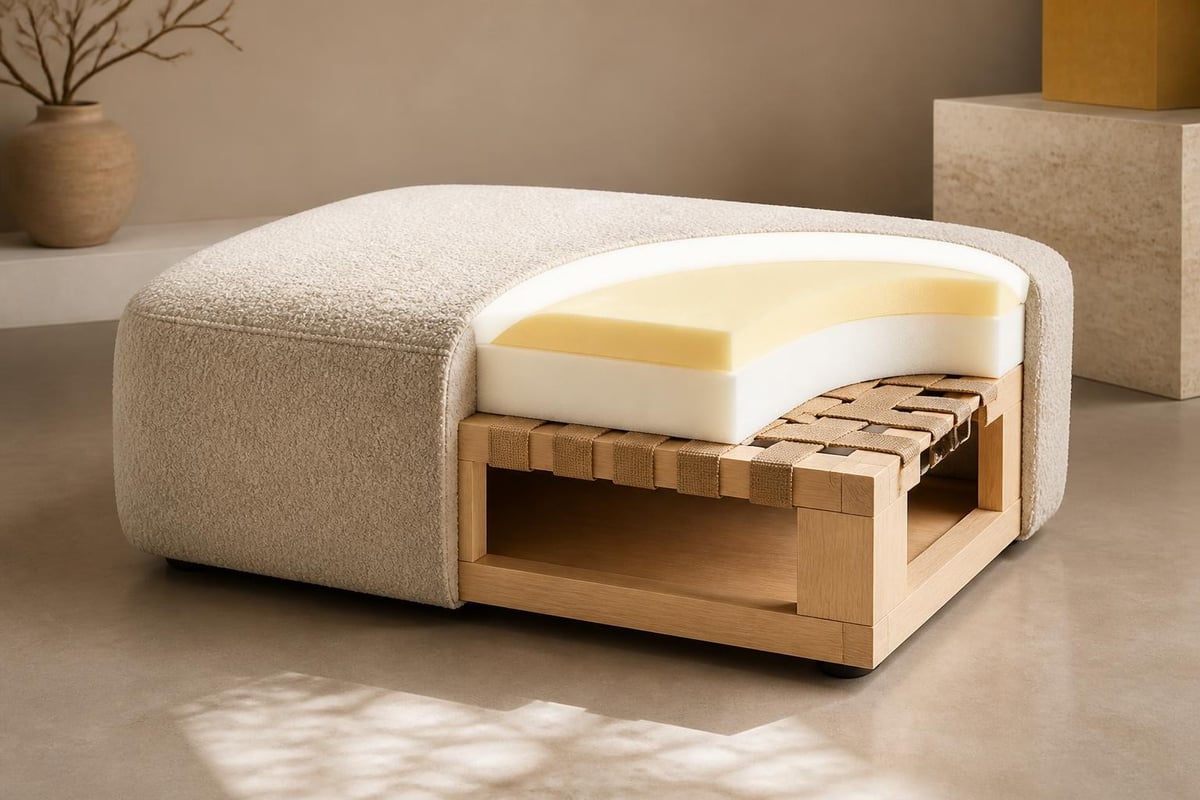
Construction quality separates an ottoman that lasts from one that sags within a year. The frame forms the foundation: solid timber or engineered plywood with reinforced corners creates structural integrity, while chipboard or unsupported MDF fails under regular use. Premium ottoman NZ options feature cross-braced frames with corner blocking, the same joinery techniques found in quality sofas.
The suspension system carries the load. Webbed bases, either rubber or elastic, distribute weight evenly and prevent collapse. Spring systems add bounce but require proper tempering and tie-down work, otherwise they shift and create noise. Foam density matters more than thickness: high-resilience foam at 35-40 density holds shape for years, while softer foams compress permanently.
Frame Materials and Longevity
Solid timber frames in beech, oak, or ash provide the longest service life. Kiln-dried timber resists warping and splitting, critical in New Zealand's varied humidity levels. Engineered frames using birch plywood or MDF cores work well when properly reinforced, offering stability at a lower weight than solid timber.
Metal frames suit contemporary designs, particularly in ottomans paired with modular sofas. Steel tube frames powder-coated in matte black hold up under repeated repositioning. Aluminium frames reduce weight but need thicker wall sections to prevent flex. Check weld quality at corners and stress points before committing.
| Frame Type | Durability | Weight | Cost Range | Best Use |
|---|---|---|---|---|
| Solid timber | 20+ years | Heavy | High | Traditional, statement pieces |
| Birch plywood | 15+ years | Medium | Medium | Modular, contemporary |
| Steel tube | 15+ years | Medium | Medium-High | Modern, industrial |
| Chipboard/MDF | 3-5 years | Light | Low | Budget, temporary |
Ottoman Types for Different Spaces
Storage ottomans serve dual functions in compact homes and apartments. Hinged lids provide access to concealed compartments for blankets, magazines, or children's toys. Gas-lift mechanisms make opening easier than friction hinges, particularly on larger units. Internal depth matters: shallow ottomans under 30cm hold only flat items, while deeper units accommodate folded bedding.
Modular ottoman units extend sofa configurations. The Bowie L-Shape Sofa includes matching ottoman options that connect to the main seating or float independently as occasional tables or extra seats. This flexibility suits open-plan spaces where furniture needs shift between daily living and entertaining.
Cocktail ottomans function as coffee tables with a softer profile. Large square or rectangular formats with firm upholstery support trays, books, and glassware without the hard edges of timber tables. Paired ottomans create visual rhythm while maintaining access through the centre. Legs or plinths determine how much floor remains visible beneath, affecting both cleaning ease and perceived room size.
Sizing and Proportion Guidelines
Ottoman height relative to sofa seat determines comfort. Match heights for leg rests, go 5-10cm lower for footstools, or drop to 30-35cm for coffee table replacements. Width should align with the sofa section it serves: a two-seater needs a 100-120cm ottoman, while three-seaters pair with 130-150cm widths.
Depth affects movement around the piece. Standard 60cm depth works in most living rooms, leaving 80-100cm clear passage behind. Deeper ottomans at 80-90cm suit spacious rooms but narrow traffic lanes quickly. Measure your existing paths before choosing oversized options.
- Single-seater scale: 50-70cm square, pairs with armchairs
- Two-seater scale: 100-120cm wide, 60-70cm deep
- Three-seater scale: 130-150cm wide, 60-80cm deep
- Sectional scale: 120-180cm, often modular or paired units
Upholstery Choices and Maintenance
Leather upholstery wipes clean and develops character over time. Full-grain leather shows natural markings and ages with a patina, while corrected-grain leather offers uniform appearance with a protective topcoat. Eco leather provides a wipeable surface at lower cost, suited to ottomans used as casual seating or footrests where spills occur.
Fabric options range from performance weaves to natural linens. Performance fabrics with stain treatments handle daily use in family homes, resisting spills and showing less wear in high-contact areas. Natural fabrics like wool, linen, or cotton breathe better but require more careful maintenance. Bouclé textures add visual interest but trap dust and crumbs between loops.
Cleaning and Care Requirements
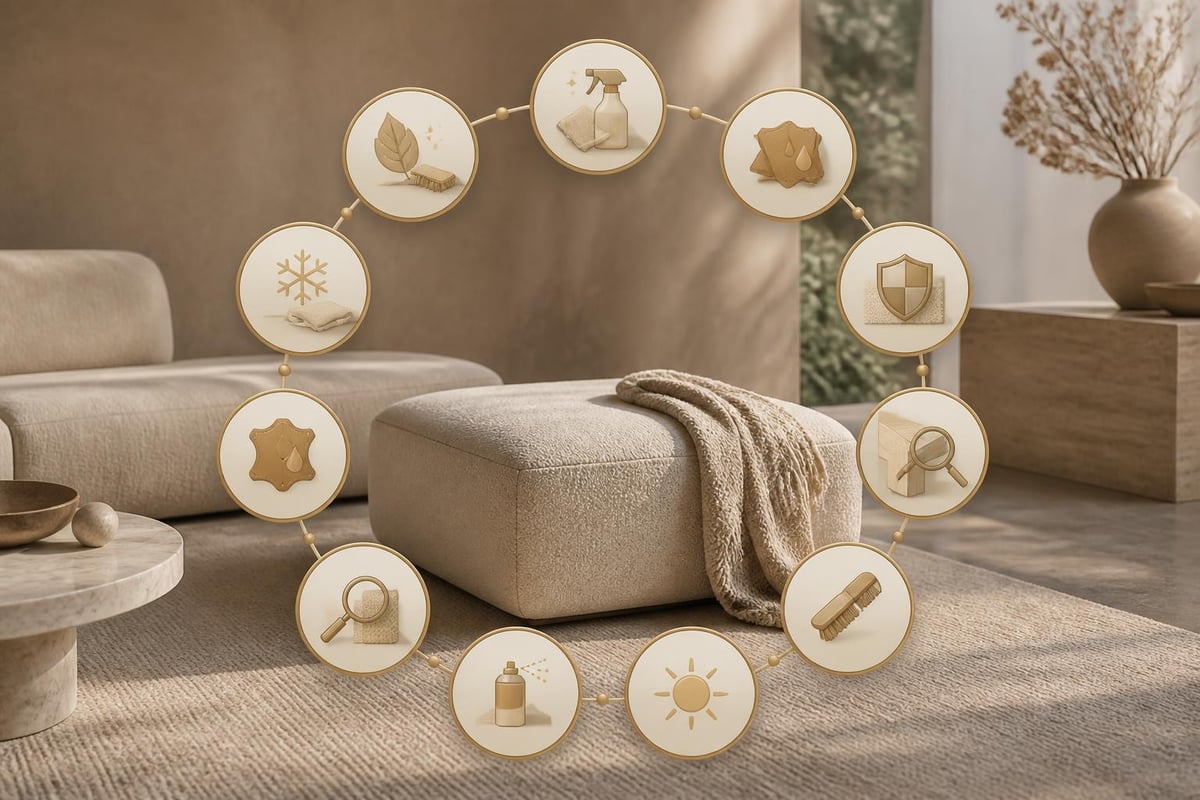
Leather ottomans need conditioning every six months to prevent cracking. Use pH-neutral cleaners, avoid silicone-based products that create buildup. Wipe spills immediately with a damp cloth, then dry with a soft towel. Position away from direct sunlight and heating vents to prevent fading and brittleness.
Fabric-upholstered ottoman NZ pieces benefit from regular vacuuming with an upholstery attachment. Removable covers machine-wash according to fabric specifications, typically cold water and air drying. Fixed covers require professional cleaning annually for high-use pieces. Scotchgard or similar treatments extend time between deep cleans but reapplication becomes necessary after each cleaning.
Storage ottomans accumulate dust in interior compartments. Empty and vacuum internals quarterly, checking for moisture that indicates poor ventilation or spills that seeped through seams. Timber frames inside benefit from occasional inspection for loose joints or splitting.
Pairing Ottomans with Existing Furniture
Matching ottoman styles to sofa design creates visual cohesion. Contemporary sofas with clean lines and exposed legs suit ottomans in similar profiles: low plinths or metal legs, minimal button detailing, monochromatic upholstery. Traditional sofas with skirted bases and rolled arms pair with upholstered ottomans featuring similar detailing.
Contrasting ottoman choices add intentional variety. Leather ottomans ground fabric sofas, providing textural interest and a wipeable surface. Patterned ottomans introduce colour against neutral seating, though pattern scale should relate to room size: small geometric prints suit compact rooms, while large-scale patterns need space to read clearly.
For those considering complete living and dining room furniture coordination, ottoman selection becomes part of a broader material and colour palette. Repeating timber tones between ottoman legs and dining table bases creates subtle connection without matched suites.
Colour and Material Coordination
Neutral ottomans in grey, taupe, or charcoal offer flexibility as surrounding décor changes. These tones anchor varied accent colours in cushions, throws, and artwork. Natural materials like timber legs or linen upholstery bring warmth to minimalist schemes without competing for attention.
Bold ottoman colours work when repeated elsewhere in the room: cushions, rugs, or artwork. A single saturated piece reads as intentional; multiple unrelated colours create visual confusion. Jewel tones like emerald, navy, or burgundy provide richness without the visual weight of black.
Textural variety prevents monotony in tonal schemes. A bouclé ottoman against a smooth velvet sofa, or leather against linen, adds depth through surface rather than colour. Combining more than three distinct textures in one seating area typically overcomplicates the palette.
Modular Systems and Flexibility
Modular ottoman NZ options connect to sectional sofas or operate independently. Clip systems, hook-and-loop fasteners, or weight-based friction keep modules aligned without permanent joining. This flexibility suits households that rearrange for different activities: creating conversation circles, clearing space for children's play, or forming a continuous surface for casual dining.
Wheeled ottomans move between rooms as needed. Locking casters prevent unwanted drift while allowing repositioning for cleaning or reconfiguration. Consider wheel finish: metal casters suit hardwood floors, while nylon or rubber wheels protect softer surfaces from scratching.
Nesting ottomans store compactly when not in use. Two or three graduated sizes stack together or separate into individual seats and side tables. This approach works particularly well in guest rooms or studies where space serves multiple functions.
- Assess connection method: clips, magnets, or friction-based alignment
- Test separation ease: modules should separate cleanly without force
- Check underside finish: unfinished bases scratch floors, need felt pads
- Verify weight: heavy modules stay put, light ones shift during use
- Consider storage: where do extra modules go when not configured
Ottoman Placement in Room Layouts
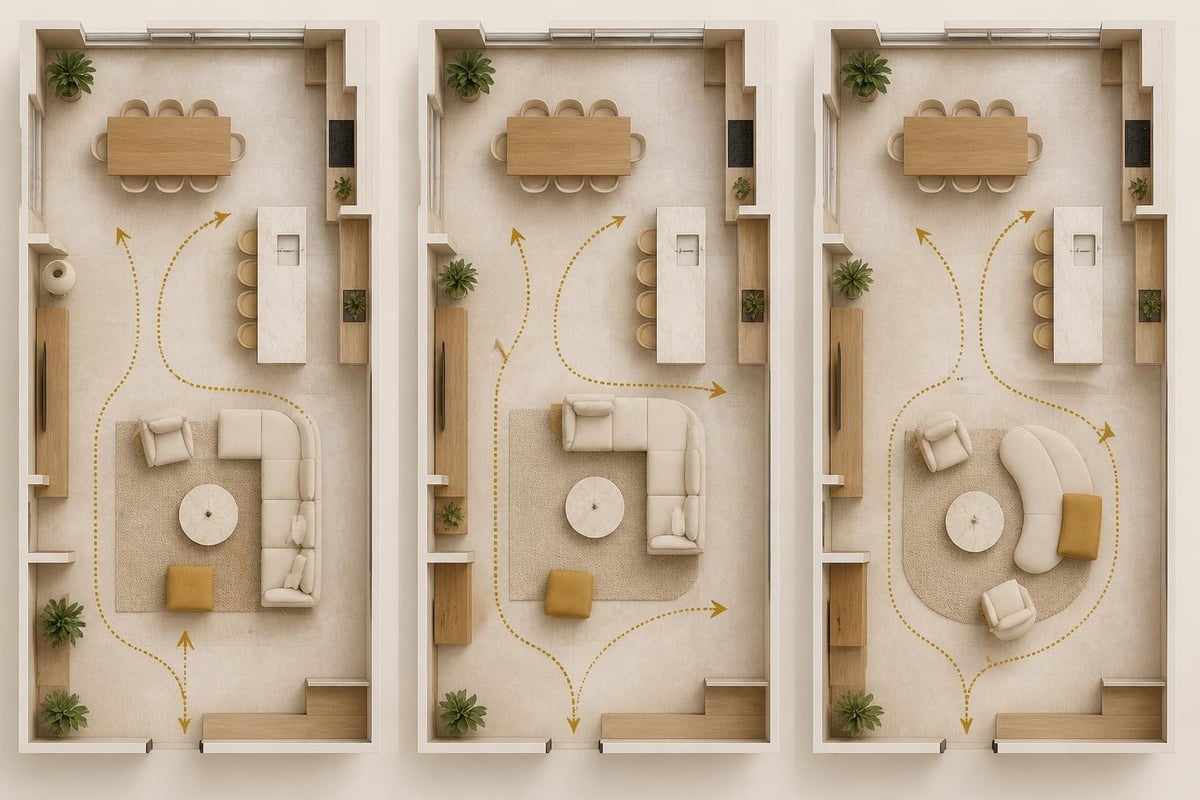
Centre placement in front of the sofa creates a traditional coffee table arrangement. Leave 40-50cm between sofa edge and ottoman for comfortable leg extension. This spacing allows standing without climbing over furniture while keeping items within arm's reach from a seated position.
Side placement next to armchairs forms reading nooks or secondary seating clusters. A smaller ottoman pulled beside a chair supports feet during long reading sessions or provides perch space for a second person during conversations. This works particularly well with swivel chairs that adjust orientation to face the ottoman or the main room.
Floating ottomans away from walls define zones in open-plan spaces. A large ottoman between sofa and dining area creates subtle separation without solid barriers. Upholstered backs on both sides ensure the piece looks finished from all angles, critical in layouts where circulation occurs around rather than along one side.
Traffic Flow Considerations
Maintain 80-100cm clear paths around all sides of an ottoman used as a coffee table. This width accommodates comfortable passing and prevents the constant shuffle around tight corners. Narrower paths work when the ottoman serves only the adjacent sofa rather than through-traffic.
Corner placements trap ottomans in underused positions. Unless specifically sized for a corner and paired with sectional seating wrapping two walls, ottomans need access from at least two sides to function as intended. Dead-end placement limits use to the single approach side.
Creating home environments often means blending practical New Zealand living with personal touches that remind us of home. For South African families settling in Auckland or Wellington, this might include incorporating familiar food culture alongside furniture choices. Something From Home offers a wide selection of South African products for those seeking a taste of home while furnishing new spaces.
Custom versus Ready-Made Options
Custom ottomans match specific upholstery to existing sofas when manufacturers offer coordinated options. The fabric, leather, or finish aligns perfectly, creating an intentional suite rather than approximate matches from different makers. Lead times extend to 8-12 weeks for imported fabrics but result in exact colour and texture coordination.
Ready-made ottoman NZ stock provides immediate availability and the ability to assess the piece physically before purchase. Showroom inspection reveals actual seat firmness, upholstery hand, and finish quality that photographs cannot convey. In-stock options suit time-sensitive projects or those wanting to trial the piece at home before committing to custom additions.
Made-to-order services allow dimension adjustments within standard frame types. Increasing width by 10-20cm or adjusting height to match specific seating accommodates unique room proportions or accessibility needs. These modifications typically add 2-4 weeks to delivery but create better-proportioned solutions than forcing standard sizes into unsuitable spaces.
Budget Allocation and Value Considerations
Entry-level ottomans from mass-market retailers start at $200-400 for basic upholstered cubes. Construction quality varies significantly at this price point: inspect corner joins, test lid mechanisms, and verify foam quality before purchase. These pieces suit temporary living situations or low-use guest rooms.
Mid-range ottomans from specialist furniture retailers run $600-1,200 for well-constructed pieces with quality fabrics and solid frames. This bracket typically provides 10-15 years of service with appropriate care. Features like integrated storage, modular connectivity, or premium upholstery justify the higher investment for main living areas.
Premium custom ottomans extend beyond $1,500, incorporating solid timber frames, full-grain leather, or designer fabrics with complex detailing. These pieces function as furniture investments, retaining value and performance over decades. Pairing with quality sofas creates cohesive schemes that age gracefully rather than requiring complete replacement every few years.
Integration with Home Entertainment Systems
Ottomans positioned in media rooms need appropriate distance from screens and speakers. For those creating dedicated home cinema spaces with professional audio installations through specialists like ANR Media, ottoman placement affects sightlines and acoustic performance. Avoid placing high-backed storage ottomans between seating and centre-channel speakers, which blocks dialogue and creates audio shadows.
Low-profile ottomans maintain clear acoustic paths while providing footrests during viewing. Firm upholstery prevents excessive sound absorption that deadens room acoustics, particularly important in smaller media rooms where every surface affects overall sound quality. Leather or tight-weave fabrics reflect sound more neutrally than plush velvets or loose bouclé.
Storage ottomans in media rooms contain remote controls, cables, and accessories without cluttering visible surfaces. Internal organisation with dividers or smaller containers prevents tangled cables and lost remotes. Position these ottomans within arm's reach of primary seating but outside the main viewing axis to prevent obstructed sightlines.
Long-Term Ownership and Adaptability
Ottomans transition between rooms as household needs change. A nursery ottoman moves to a teenager's study, then to a guest bedroom as children age and spaces evolve. Neutral upholstery and classic proportions ensure pieces remain appropriate across different settings rather than locked into single-purpose designs.
Reupholstery extends ottoman life when frames remain sound but fabric shows wear. Simple cube ottomans with stapled covers cost $200-400 to recover professionally, while complex shapes with piping or button details may approach $600-800. Compare reupholstery costs against replacement prices for similar quality to determine the economically sound choice.
Repurposing ottomans into different functions as needs shift demonstrates good furniture value. A coffee table ottoman becomes bedroom seating, a footstool transitions to a child's desk seat, or a storage ottoman shifts to entryway use for shoe storage. Durable construction and timeless design enable these adaptations without forcing the piece beyond its structural capacity.
Disclaimer: AI-supported images may differ from products on website.
Selecting the right ottoman NZ for your home balances immediate function with long-term flexibility, construction quality with budget reality. Whether you need modular seating extensions, practical storage, or simply a well-proportioned footrest, understanding frame construction, upholstery durability, and spatial relationships creates informed decisions. Visit Bauhaus to explore ottoman options that complement our curated range of contemporary sofas and furniture, backed by experienced team guidance and quality construction that serves New Zealand homes for years ahead.