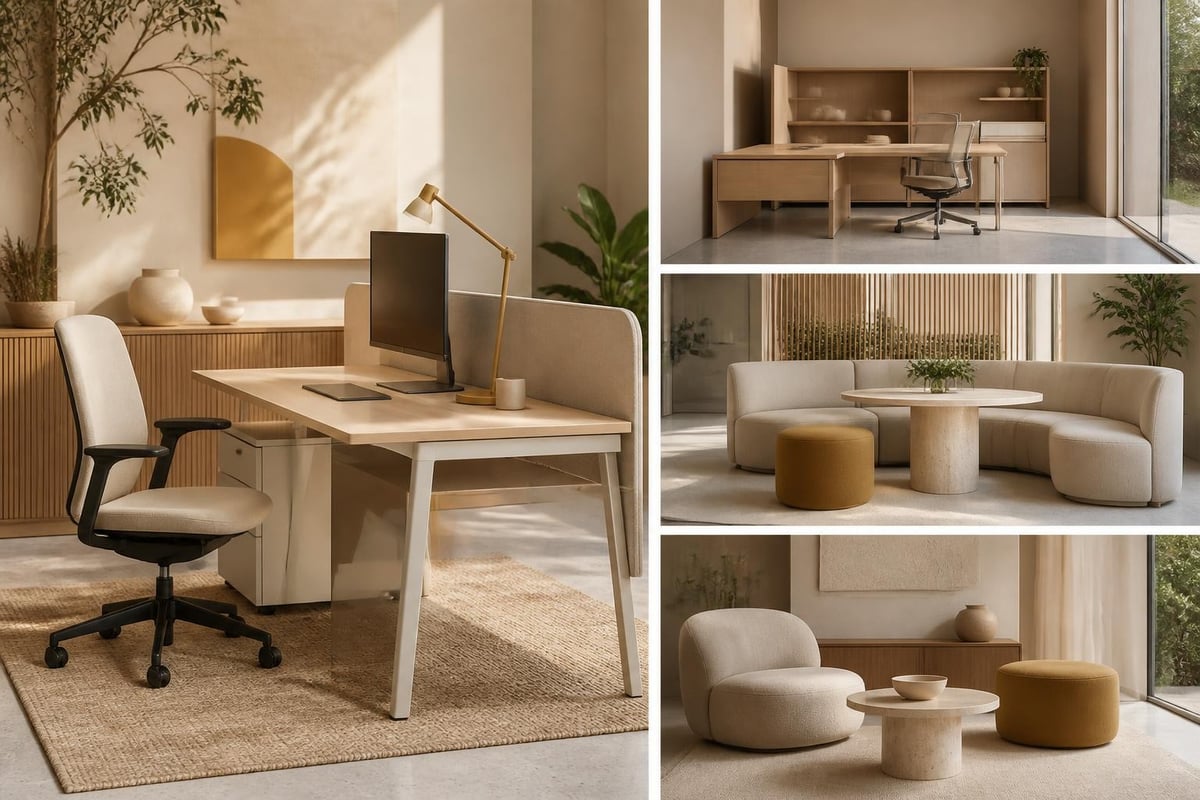
Commercial workspaces in New Zealand continue to evolve as hybrid work patterns, wellbeing frameworks, and fitout expectations shift the balance between residential comfort and task-focused function. Office furniture NZ procurement now demands more than desk-and-chair pairings: specifiers, developers, and business owners need pieces that align with WorkSafe NZ guidelines for ergonomic workstations, support varied working styles, and deliver on durability without sacrificing aesthetic coherence. Whether furnishing a small studio, a corporate floor plate, or a hybrid-ready workspace, the choices made in 2026 carry implications for productivity, injury prevention, and long-term operating cost.
Defining Office Furniture for New Zealand Workplaces
Office furniture NZ encompasses task chairs, workstations, meeting tables, storage systems, and ancillary seating designed for commercial use. Unlike residential pieces, commercial specifications prioritise longevity under continuous use, compliance with local safety and ergonomic standards, and adaptability as team structures and office footprints change. Task chairs require AFRDI or equivalent certification, adjustable lumbar support, and seat-depth controls that accommodate a range of body types. Desks need cable management, stable leg frames, and surface materials resistant to daily wear.
Core categories include:
- Task seating (ergonomic chairs with gas-lift, tilt, and lumbar adjustment)
- Work surfaces (fixed-height desks, sit-stand frames, and benching systems)
- Meeting and collaboration furniture (tables, stools, lounge seating)
- Storage (credenzas, mobile pedestals, overhead cabinets)
- Ancillary pieces (benches, coat racks, side tables for breakout zones)
Recent labour-market data from Stats NZ show that hybrid work remains entrenched, with approximately 28 per cent of employees working from home at least part of the week in the September 2024 quarter. This pattern has softened demand for high-density benching and increased interest in bookable desks, touchdown tables, and flexible lounge furniture that supports varied modes of work without dedicating permanent space to each worker.
Material and Construction Standards
Commercial-grade office furniture NZ relies on engineered timber, steel, and commercial-upholstery fabrics rated for abrasion resistance above 30,000 Martindale cycles. Task chairs use high-density moulded foam over steel or nylon seat pans, with gas-lift mechanisms rated for 100 kilograms minimum. Desktops often combine melamine, laminate, or linoleum surfaces over particleboard or MDF cores, with edge treatments in PVC or ABS to resist chipping.
Timber components in meeting tables or credenzas should specify joinery type (dowel, biscuit, or mortise-and-tenon), finish (oil, lacquer, or veneer), and timber grade. Engineered veneers offer consistency across large orders, while solid timber adds weight and tactile quality at higher cost. Metal frames require powder-coating or chrome plating to prevent corrosion, particularly in coastal offices where salt air accelerates surface degradation.
Upholstery for lounge seating and task chairs in commercial settings demands fabric or leather with antimicrobial treatments, flame-retardant certification (AS/NZS 3837 or equivalent), and cleanability for high-touch environments. Eco-leather and synthetic options reduce maintenance compared to top-grain leather, with textured finishes that disguise minor scuffs and wear.
Ergonomic Planning and Regulatory Context
WorkSafe New Zealand provides clear guidance on computer workstation setup, outlining screen height, keyboard placement, and chair adjustment to reduce musculoskeletal injury. Office furniture NZ selections must support these parameters: chair seat height between 38 and 54 centimetres from the floor, adjustable backrest angle, and armrests that allow forearms to rest parallel to the desk without shoulder elevation.
Sit-stand desks have become standard in many fitouts, with electric or manual lift mechanisms that transition between seated (70–75cm) and standing (100–115cm) heights. These systems suit open-plan environments where individual control over posture reduces fatigue during extended screen work. However, cost and power-distribution constraints mean sit-stand desks are often deployed selectively rather than universally.
| Ergonomic Parameter | Recommended Range | Adjustability Required |
|---|---|---|
| Seat height | 38–54 cm from floor | Gas-lift minimum |
| Desk height (seated) | 70–75 cm | Fixed or adjustable |
| Desk height (standing) | 100–115 cm | Electric or manual lift |
| Screen distance | 50–70 cm from eyes | Articulated monitor arm |
| Backrest lumbar support | 15–23 cm above seat | Vertical and depth adjustment |
ACC's 2024 injury report highlights the ongoing burden of workplace musculoskeletal claims, many linked to poor workstation setup and prolonged static postures. Investing in adjustable, certified task seating and appropriately sized work surfaces delivers measurable reductions in discomfort and absenteeism, with payback periods often under two years when injury and productivity losses are factored.
Adaptable Furniture for Hybrid and Activity-Based Working
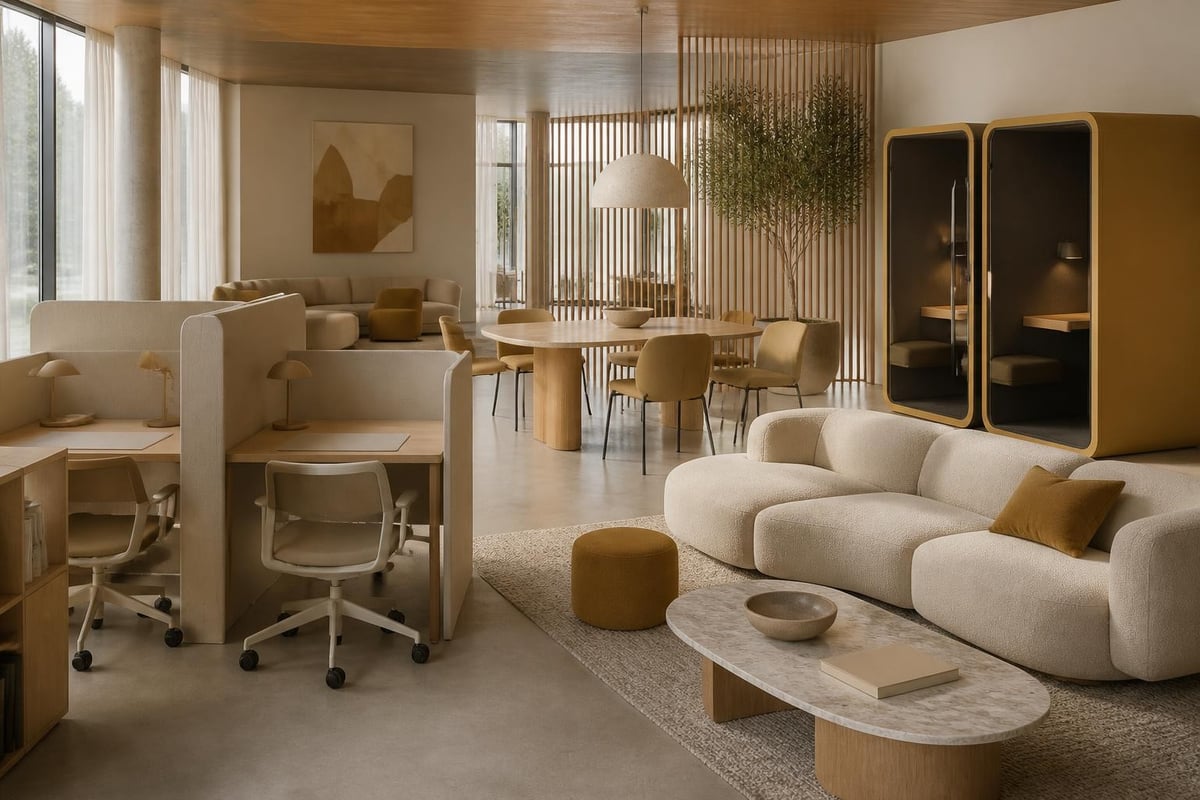
Activity-based working (ABW) strategies allocate furniture types to task modes rather than individuals. Focused work requires enclosed booths or benching with acoustic panels; collaborative sessions need large tables with power access and writable surfaces; phone calls demand privacy pods or high-backed lounge chairs that absorb sound without requiring full enclosure.
Office furniture NZ suppliers increasingly offer modular systems that combine fixed and mobile components, allowing layouts to shift as teams grow or shrink. Mobile whiteboards, nesting tables, and stackable stools enable reconfiguration without specialist installers, reducing downtime and capital expense.
WELL Building Standard guidance on adaptable spaces emphasises biophilic design, circadian lighting, and furniture that supports postural variety. While WELL certification remains concentrated in premium fitouts, its principles inform broader market expectations for sit-stand options, natural-material finishes, and multi-use furniture that accommodates different body sizes and work styles.
Specifying Desks, Tables, and Work Surfaces
Desks form the functional backbone of office furniture NZ procurement. Fixed-height benching suits cost-sensitive fitouts and open-plan environments where standardisation simplifies specification. Single or dual-leg frames in steel or aluminium provide stability, with beam or cantilever designs allowing underdesk access for cables and personal storage.
Top materials vary by budget and aesthetic intent. Melamine-faced particleboard delivers cost efficiency and colour range, while laminate offers higher abrasion resistance and easier repair. Linoleum surfaces provide tactile warmth and comply with low-VOC targets for Green Star projects, though edge details require careful detailing to prevent moisture ingress.
Cable management remains a persistent challenge. Integrated cable trays, grommets, and vertical risers reduce visual clutter and trip hazards, but require coordination with electrical services during base-build or fitout. Wireless charging pads and USB-integrated power modules are becoming standard in premium benching systems, reducing reliance on trailing leads.
Meeting tables for boardrooms or collaboration zones demand larger spans and higher load capacity than individual workstations. Timber-veneer tops over engineered cores suit formal settings, while compact-laminate tops withstand marker pens and frequent cleaning in breakout areas. Pedestal or trestle bases should specify steel gauge and cross-bracing to prevent wobble under leaning or laptop loads.
Material Choices and Surface Durability
| Surface Material | Abrasion Resistance | Maintenance | Cost Relative |
|---|---|---|---|
| Melamine particleboard | Moderate | Low; wipe clean | Baseline |
| High-pressure laminate | High | Low; resistant to scratching | +15–25% |
| Linoleum | Moderate-high | Moderate; resealing optional | +20–30% |
| Timber veneer over MDF | Low-moderate | High; touch-up for scratches | +30–50% |
| Solid timber | Moderate | High; periodic refinishing | +60–100% |
The Verge Desk exemplifies a residential-informed approach to office furniture NZ, with clean lines, timber construction, and a drawer module that suits home offices or executive private spaces. Its design prioritises aesthetic coherence over mass-production modularity, appealing to smaller studios and design-conscious businesses seeking differentiation from corporate benching systems.
Task Seating and Ancillary Chairs
Task chairs carry the highest specification burden in office furniture NZ procurement. AFRDI Blue Tick Level 6 certification (or AS/NZS 4438 compliance) ensures gas-lift safety, tilt-mechanism durability, and dimensional ranges that accommodate a broad user population. Mesh backrests provide breathability in warm climates, while upholstered backs offer lumbar contouring and noise absorption in open-plan layouts.
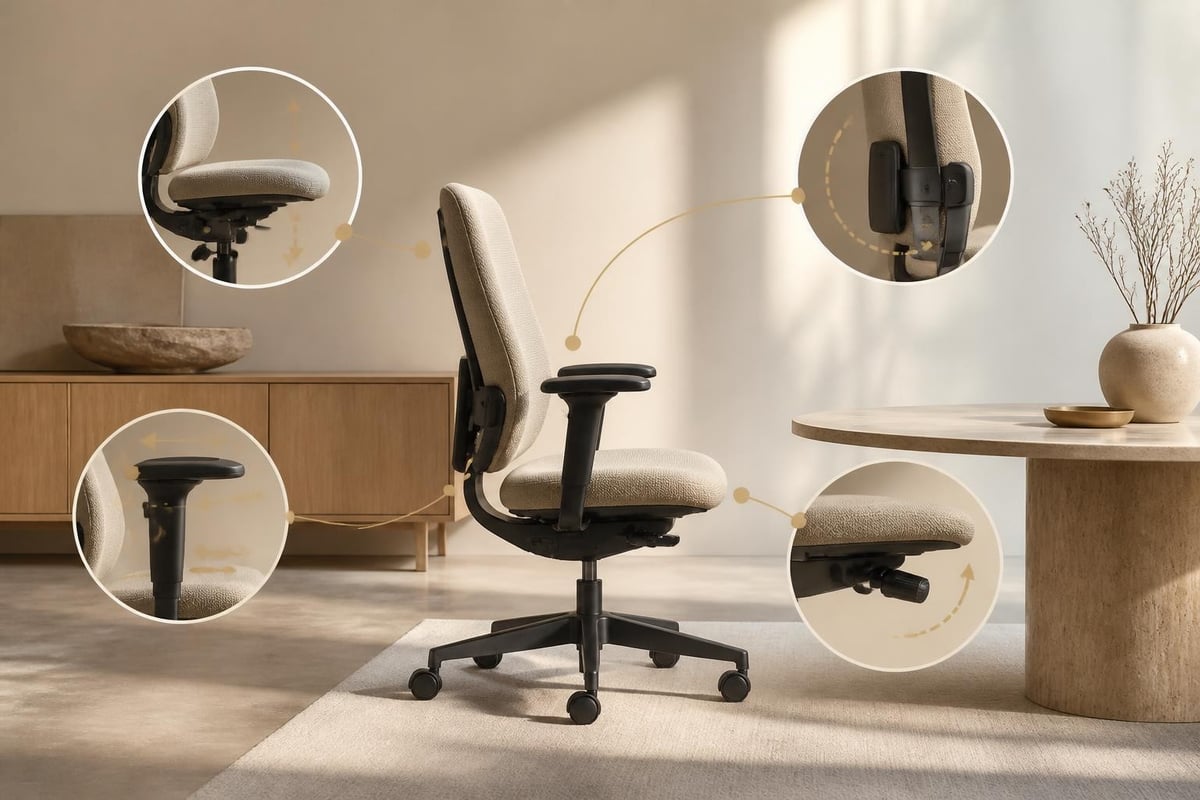
Armrests should adjust in height and width, with 3D or 4D mechanisms allowing forward/backward and rotational movement. Fixed armrests often force awkward postures or prevent proper desk proximity, undermining the chair's ergonomic benefit.
Key task-chair features:
- Gas-lift mechanism (tested to 100kg+ capacity)
- Seat-depth adjustment (minimum 5cm range)
- Lumbar support (height and depth adjustable)
- Tilt-tension control (adjustable resistance)
- Five-star base with dual-wheel castors (for hard or carpet floors)
Ancillary seating for breakout zones and meeting spaces balances comfort with durability. Lounge chairs and sofas in commercial settings require firmer foam than residential equivalents to maintain shape under repeated use. Rubber webbing, sinuous springs, or steel-mesh bases provide support without the sag associated with cheaper polyfoam. Modular lounge systems allow reconfigurations as space use evolves, with individual modules replaced if damage or wear occurs.
Bar stools and counter-height seating for standing tables or café areas need footrests, stable bases, and seat padding rated for prolonged sitting. Swivel mechanisms add flexibility in collaborative settings, though fixed stools reduce cost and mechanical failure points.
Storage, Shelving, and Organisational Systems
Storage furniture in office settings includes mobile pedestals, credenzas, overhead cabinets, and open shelving. Mobile pedestals (typically two or three drawers on castors) provide personal storage under hot-desking arrangements, with locking mechanisms for security. Drawer runners should specify full-extension ball-bearing or soft-close systems to prevent slamming and extend hardware life.
Credenzas and sideboards suit meeting rooms and executive offices, combining enclosed cupboards with open shelving or display niches. Timber-veneer finishes align these pieces with higher-end residential aesthetics, while laminate or powder-coated steel options suit tighter budgets and high-traffic environments.
Overhead storage reduces floor-plan footprint but requires structural attachment to walls or partition systems rated for the load. Open shelving in breakout areas or libraries benefits from adjustable brackets, allowing shelf spacing to adapt as book sizes or object collections change.
Storage planning considerations:
- Drawer dimensions (standard A4 filing vs. shallow trays for stationery)
- Lock types (keyed alike, master-key, or combination)
- Material finish (scratch resistance, cleanability)
- Mobility requirements (fixed, castors, or modular stacking)
- Cable-access provisions for credenza-mounted IT equipment
Fire-rated storage cabinets are mandatory for archival or compliance-sensitive documents, with insulated walls and intumescent seals that protect contents during a fire event. These units carry cost premiums and weight implications that require structural sign-off.
Sustainability, Certification, and End-of-Life
Sustainability in office furniture NZ procurement encompasses material sourcing, manufacturing impact, and end-of-life disposal. NZGBC's Responsible Products Programme provides guidance on Environmental Product Declarations (EPDs), third-party certifications (Declare, Cradle to Cradle), and low-emission materials that contribute to Green Star or WELL fitouts.
Timber furniture should specify FSC or PEFC certification, confirming sustainable forestry practices. Steel and aluminium frames benefit from high recycled content (often 30–70 per cent post-industrial scrap) and full recyclability at end of life. Upholstery fabrics increasingly offer recycled polyester content, bio-based foams, and chemical formulations that avoid PVC, brominated flame retardants, and heavy metals.
Modular furniture systems extend product life by allowing component replacement rather than full-unit disposal. A task chair with replaceable upholstery, gas-lift cartridges, and armrests can remain in service for a decade or more with periodic refurbishment, reducing embodied carbon and landfill waste.
WasteMINZ guidelines outline reuse and recycling pathways for fitout waste, including furniture donations to social enterprises, material recovery for timber and metal, and responsible disposal of composite panels and contaminated upholstery. Planning for end-of-life at the procurement stage simplifies deconstruction and maximises value recovery when a fitout is refreshed.
Circular Economy and Leasing Models
Leasing office furniture NZ rather than purchasing outright transfers ownership and disposal responsibility to the supplier, who refurbishes and redeploys pieces across multiple clients. This model suits short-term tenancies, project-based fitouts, and organisations prioritising balance-sheet flexibility over long-term asset ownership.
Refurbishment services include reupholstery, frame repair, and mechanism replacement, extending the functional life of high-quality pieces and reducing demand for virgin materials. However, leasing economics only make sense for standardised, durable products; bespoke or lower-quality items typically cost more to refurbish than replace.
Design Cohesion and Aesthetic Consistency
Office furniture NZ selections reflect brand identity and cultural values. Minimalist Scandinavian-inspired designs suit tech startups and creative studios, while traditional timber and leather combinations align with legal, financial, and heritage sectors. Consistency in material palette, leg finish, and edge profiles creates visual coherence without requiring identical pieces across every zone.
Mixing fixed and flexible furniture allows character and practicality to coexist. A formal boardroom might pair dining tables with refined upholstered chairs, while adjacent breakout zones use stackable stools and mobile tables that reconfigure for workshops or social events. Shared material cues (timber species, metal finish) tie disparate zones together without forcing uniform aesthetics.
Colour and texture choices influence perceived warmth and professionalism. Neutral greys and whites maximise flexibility and longevity, while accent colours in upholstery or screens add energy and aid wayfinding. Textile selections should balance cleanability, acoustic performance, and visual interest, avoiding overly busy patterns that date quickly or clash with branding.
Lighting integration with furniture enhances functionality and ambience. Task lights mounted to desk screens or credenzas reduce glare and supplement ambient lighting, while pendant fixtures over meeting tables define collaboration zones within open plans. Coordination between furniture, electrical services, and lighting design prevents retrofitting and optimises user experience.
Procurement, Lead Times, and Installation
Office furniture NZ procurement timelines vary by product complexity and supply-chain constraints. Stock items (task chairs, pedestals, basic desks) often ship within two to four weeks, while custom finishes, bespoke dimensions, or imported pieces require eight to sixteen weeks. Project managers should confirm lead times in writing and build contingency into fitout schedules to accommodate manufacturing delays or shipping disruptions.
Specification documents should detail materials, finishes, dimensions, and performance standards to ensure quotations are directly comparable. Requesting samples for high-volume items (task chairs, upholstery swatches, desktop finishes) reduces the risk of colour mismatches or quality surprises at delivery.
Installation services range from basic delivery-and-placement to full assembly and configuration, including cable dressing, screen mounting, and furniture anchoring. Multi-floor projects benefit from staged delivery to avoid congestion in goods lifts and minimise disruption to occupied floors. Post-installation snagging and ergonomic briefings help end-users adjust seating and desk heights correctly, maximising the investment in quality furniture.
Procurement checklist:
- Confirm lead times and stock availability
- Specify materials, finishes, and certifications in writing
- Request physical samples for upholstery and finishes
- Coordinate delivery windows with building access and lift bookings
- Schedule post-installation ergonomic training and adjustments
Warranty terms typically range from three years (standard task chairs) to seven years (premium task seating) and five to ten years for desks and tables. Warranties should cover manufacturing defects, frame integrity, and mechanism failures, with clear exclusions for misuse, unapproved modifications, or normal wear. Confirm local service availability for repairs and parts replacement before committing to imported products with limited New Zealand support networks.
Integrating Residential Comfort into Commercial Spaces
Hybrid work expectations have blurred the line between office furniture NZ and residential comfort. Workers accustomed to sofas and lounge chairs at home now expect breakout zones and touchdown spaces that feel less institutional and more inviting. This shift has increased demand for upholstered lounge furniture, soft textures, and timber finishes that echo domestic interiors without sacrificing commercial durability.
Selecting lounge furniture for commercial use requires attention to frame construction, upholstery durability, and maintenance requirements. Sofas built on hardwood or steel frames with sinuous-spring or webbed bases handle repeated use better than residential pieces reliant on softwood and polyfoam. Upholstery fabrics rated above 30,000 Martindale cycles withstand daily contact, while leather or eco-leather options simplify cleaning in high-traffic zones.
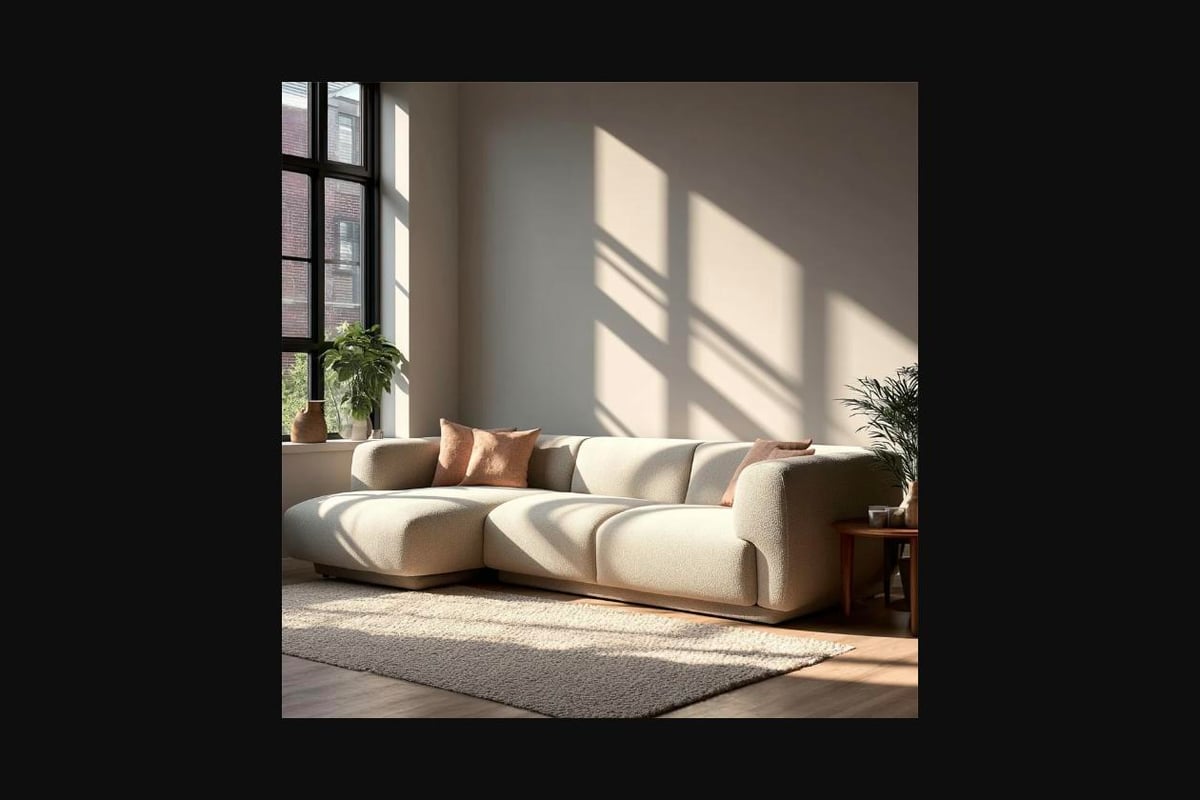
The Bowie L-Shape Sofa illustrates how modular residential-quality seating can adapt to commercial environments, offering reconfigurable layouts and durable construction suited to reception areas, client lounges, or informal meeting zones. Its no-sag spring base and high-density foam provide long-term support, while the recessed leg plinth maintains a minimal profile that suits contemporary office aesthetics.
Bar stools and counter-height chairs in café or collaboration zones benefit from residential-inspired design that feels approachable without compromising stability. Timber frames, cushioned seats, and footrests transform utilitarian perches into comfortable seating for extended conversations or laptop work. The key is matching aesthetic intent with commercial-grade construction and finishes that hold up under continuous use.
Workplace Trends Shaping 2026 Furniture Demand
Commentary from Property Council New Zealand highlights ongoing tension between office attendance mandates and flexible work preferences, creating demand for adaptable furniture that supports multiple uses rather than dedicated desks. Touchdown tables, bookable meeting rooms, and lounge zones that reconfigure for events or training sessions maximise space utilisation in an era of lower occupancy density.
Acoustic performance has become a procurement priority as open-plan layouts persist despite noise complaints. Furniture with integrated acoustic panels, upholstered screens, and fabric-wrapped surfaces absorbs sound and provides visual privacy without full-height partitions. Freestanding screens on wheels or clamp-mounted panels add flexibility, allowing users to adjust privacy levels without permanent alterations.
Biophilic design principles encourage natural materials, organic shapes, and greenery integration. Timber furniture, planters incorporated into storage systems, and curved lounge seating soften hard-edged commercial environments and support wellbeing goals. While evidence for productivity gains remains mixed, occupant satisfaction scores consistently favour spaces with natural materials and visual complexity over sterile, minimalist fitouts.
Technology integration continues to evolve, with wireless charging, USB-C power delivery, and cable-free data connectivity reducing desk clutter and improving aesthetics. However, planning for technology obsolescence remains critical: hardwired solutions risk becoming outdated as standards shift, while modular systems allow component upgrades without replacing entire furniture suites.
Commercial Furniture for Small and Medium Businesses
Small and medium enterprises (SMEs) face distinct office furniture NZ challenges, balancing budget constraints with the need to attract talent and project professionalism. Prioritising spend on task seating and adjustable work surfaces delivers the highest ergonomic return, while ancillary furniture can draw from cost-effective or second-hand sources without compromising function.
Leasing task chairs and desks can preserve capital for other fitout elements, though SMEs should model total cost of ownership over anticipated tenancy duration to ensure leasing remains competitive with purchase. Purchasing outright often proves cheaper for stable, long-term occupancies, while leasing suits short leases or businesses anticipating rapid growth or relocation.
Mixing new and refurbished furniture allows character and sustainability without uniform blandness. A refurbished boardroom table paired with new task chairs, or vintage lounge seating combined with contemporary desks, creates visual interest and reduces embodied carbon. Specialist dealers in second-hand commercial furniture offer inspected, warranty-backed pieces at significant discounts, though selection varies and lead times can be unpredictable.
Bauhaus's approach to residential furniture, emphasising durable materials and timeless design, translates well to smaller commercial spaces where domestic-quality pieces can perform dual roles. Dining tables function as meeting tables, lounge chairs serve reception areas, and occasional furniture fills breakout zones without requiring dedicated commercial specification.
Office furniture NZ in 2026 demands attention to ergonomic compliance, material durability, and adaptability as hybrid work and wellbeing frameworks reshape fitout priorities. Whether furnishing a corporate floor plate or a compact studio, selecting pieces with robust construction, certified performance, and aesthetic coherence supports productivity, reduces injury risk, and delivers long-term value. Bauhaus brings over twenty years of experience in sourcing and designing quality furniture for New Zealand homes and workplaces, offering a curated selection of sofas, tables, chairs, and occasional pieces built to last. Visit Bauhaus to explore how our collections can support your next project with pieces that balance craftsmanship, comfort, and contemporary design.
Disclaimer: AI-supported images may differ from products on website.