A sofa in house settings dictates spatial hierarchy, circulation patterns and daily use more than any other single piece of furniture. It establishes where people gather, how rooms flow and whether a space feels balanced or cramped. Getting the placement, scale and material right requires understanding both the physical dimensions of your room and the construction quality that will support years of use. This guide examines the practical factors that separate a well-chosen sofa from an expensive mistake.
Room Dimensions and Sofa Scale
The relationship between sofa size and room footprint determines whether a space functions or fails. A three-seater sofa typically measures 200–220cm in length, while an L-shape configuration can occupy 280–320cm along two walls. These are not small pieces.
Before selecting any sofa for your house, measure the room perimeter and mark out existing circulation paths. You need at least 90cm of clearance between the sofa front edge and a coffee table, and 45–60cm between the sofa back and the wall for air circulation and aesthetic balance. These measurements come from established spatial planning standards used by architects and interior designers.
Calculating Usable Floor Area
Most living rooms dedicate 40–50% of floor space to seating. Calculate your total room area, then allocate space for the sofa, occasional chairs and side tables before committing to a specific configuration.
| Room Size | Recommended Sofa Length | Configuration |
|---|---|---|
| 3m × 4m | 180–200cm | Straight 2.5-seater |
| 4m × 5m | 200–240cm | Straight 3-seater or small L-shape |
| 5m × 6m | 240–280cm | Large L-shape or modular |
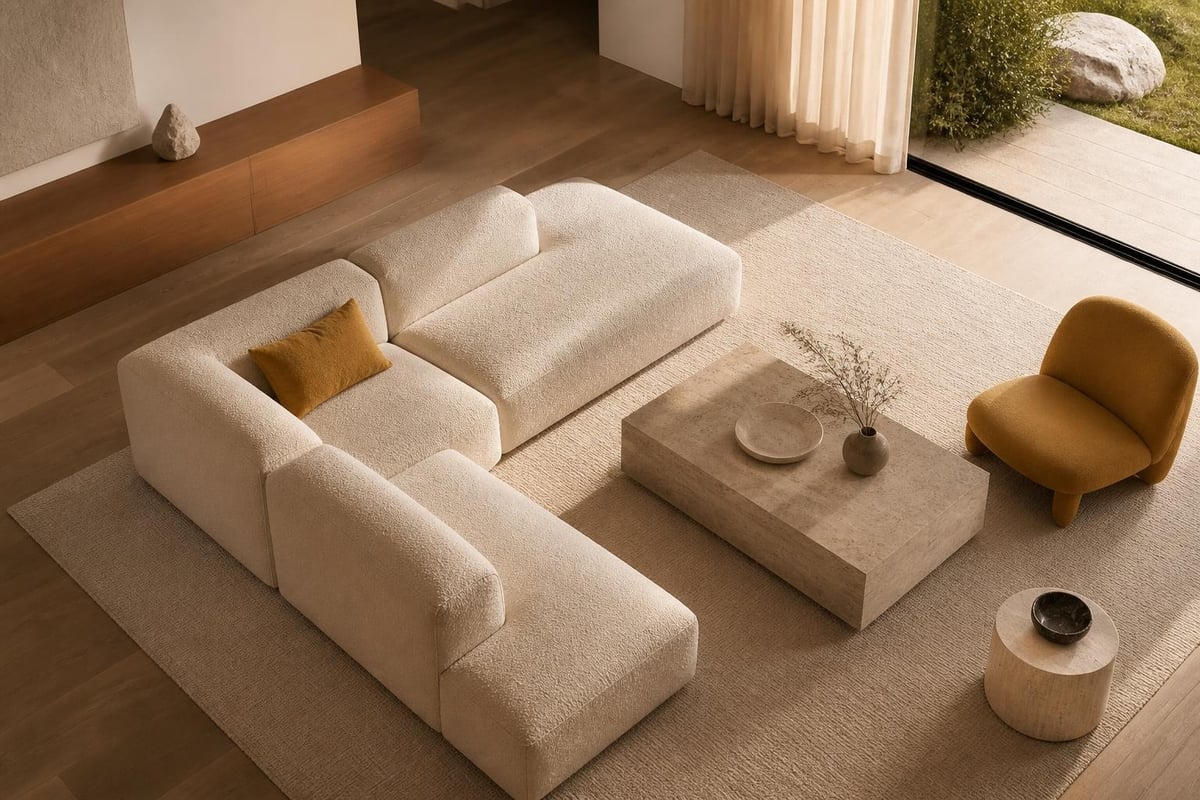
Open-plan homes present different challenges. The sofa often defines the boundary between living and dining zones, which means its back becomes a visible element. Full upholstery on the rear panel matters in these layouts. Skimping on back-of-sofa finish is a false economy when the piece sits in the middle of a space.
Frame Construction and Longevity
A sofa in house environments experiences constant stress. Sit-down impact, lateral movement from people standing up, and the weight of multiple users all transfer directly to the frame. Hardwood is standard in mid-to-high end construction; pine or engineered wood fails under sustained load.
Corner blocks, glued and screwed joints, and cross-bracing separate structural frames from decorative ones. Consumer Reports emphasises that frame quality correlates directly with lifespan. A hardwood frame with proper joinery will outlast cheaper alternatives by decades, not years.
Foam Density and Seat Support
Cushion comfort depends on foam density measured in kg/m³. High-resilience foam (35 kg/m³ or higher) maintains shape and support; standard foam (25–30 kg/m³) compresses and sags within two to three years.
Seat construction layers matter:
- Base support spring (sinuous springs or webbing)
- High-density foam core (35+ kg/m³)
- Softer top layer (memory foam or down wrap)
- Upholstery fabric or leather
Sofa manufacturers who list foam specifications are signaling construction transparency. Those who don't often use cheaper materials. Ask about foam density and spring type before purchasing any sofa for your house.
Upholstery Fabric Selection
Fabric choice affects maintenance, durability and indoor air quality. Natural fibres (linen, cotton, wool) breathe better than synthetics but may require more frequent cleaning. Polyester blends resist staining and wear but can trap heat.
Performance fabrics use tight weaves and stain-resistant treatments to handle daily use. These materials suit family homes where spills and pet contact are routine. Plain weaves show wear patterns less than textured fabrics, particularly on seat cushions and armrests.
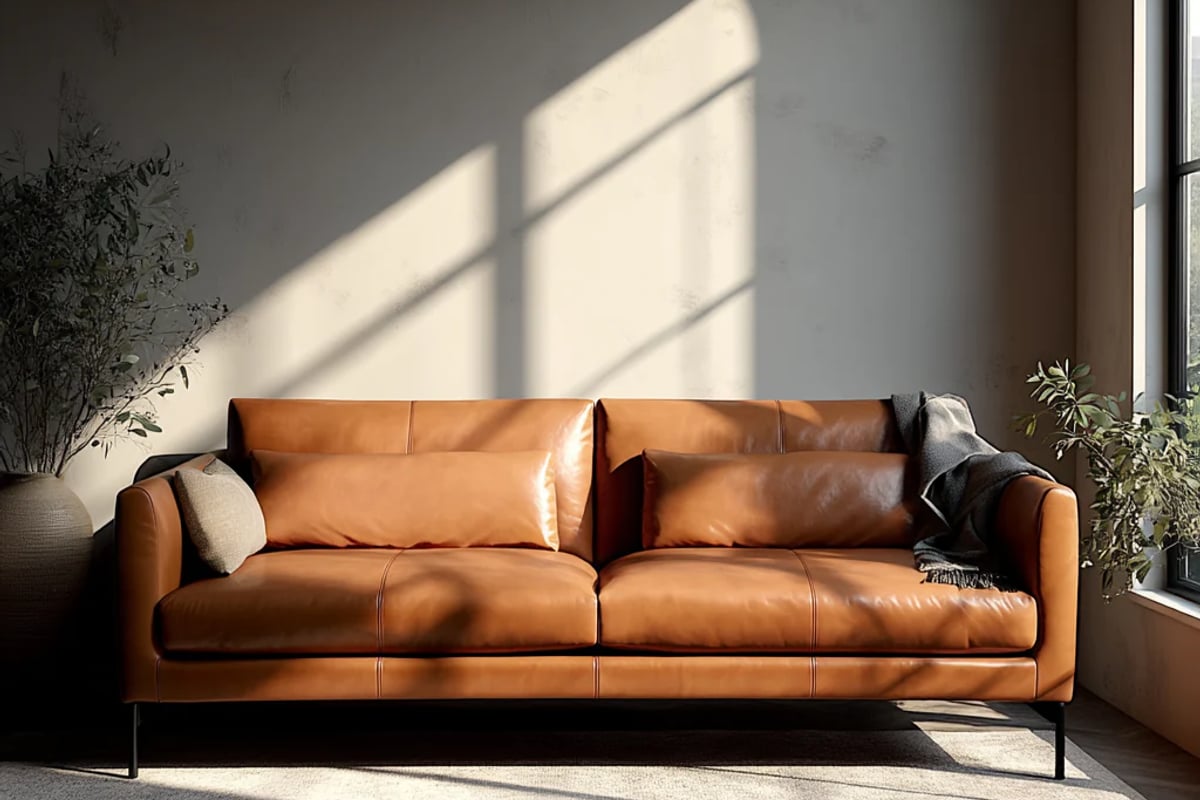
Leather adds cost but delivers longevity. Full-grain aniline leather develops patina; corrected-grain leather maintains uniform appearance. Both require conditioning to prevent cracking. The Linear Straight Sofa in Leather demonstrates how material selection shapes both aesthetic and practical performance.
Choosing a leather sofa for your house means committing to periodic maintenance and accepting surface variation as part of the material's character.
Volatile Organic Compounds and Off-Gassing
New furniture releases VOCs from adhesives, foams and finishes. The EPA's Indoor airPLUS specifications provide guidance on low-emission materials for residential interiors. Ventilate rooms during the first weeks after delivery, and select manufacturers who use water-based adhesives and CertiPUR-US certified foam when possible.
Sensitive individuals should inquire about off-gassing timelines and material certifications before bringing a new sofa in house.
Placement and Traffic Flow
Sofa placement shapes how people move through and use a room. Position the primary seating to face the focal point (fireplace, television, view window) while maintaining clear pathways to doorways and adjacent spaces.
Effective placement strategies:
- Float the sofa away from walls in larger rooms to create distinct zones
- Anchor corner placements with side tables or floor lamps
- Align sofa back with architectural features (columns, changes in ceiling height)
- Leave 90–120cm walkways between furniture groupings
The American Society of Interior Designers notes that contemporary layouts increasingly favor flexible arrangements over rigid wall-hugging configurations. This shift reflects how people actually use living spaces: multiple activities, varied group sizes, changeable technology setups.
A sofa in house layouts that adapts to different uses delivers better value than one locked into a single configuration.
L-Shape Configurations and Corner Solutions
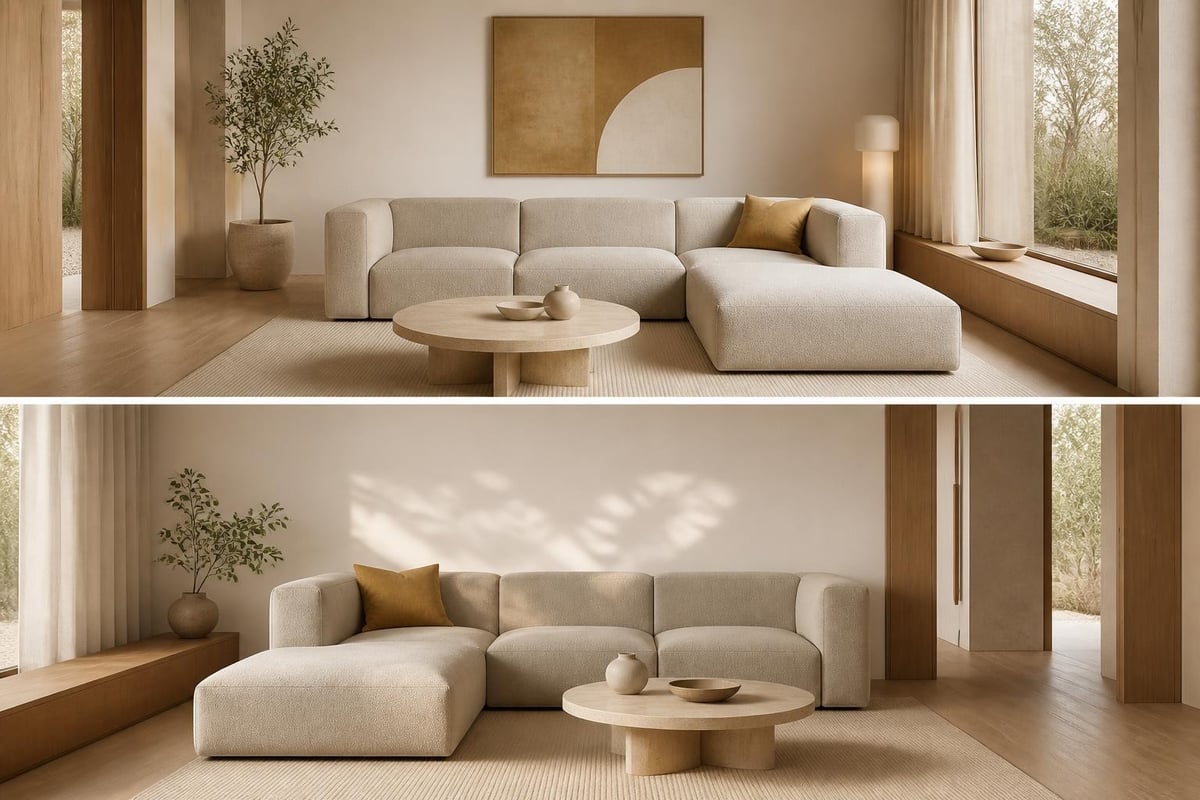
L-shape sofas maximize seating density while defining spatial boundaries. They suit open-plan homes and larger living rooms where a straight sofa would leave corners vacant or require additional chairs to complete a conversational grouping.
The corner section in an L-shape becomes dead space if constructed poorly. Look for models with full cushioning in the corner rather than a hard wedge filler. Corner seats should support actual sitting, not just bridge the two arms of the configuration.
The Bowie L-Shape Sofa illustrates how thoughtful corner construction and proportional depth create genuinely usable seating across the entire configuration.
Right-Arm Facing vs Left-Arm Facing
L-shape orientation matters. Right-arm facing (RAF) means the chaise or longer section extends to your right when you face the sofa. Left-arm facing (LAF) reverses this. Choose based on room entry points and window placement. Position the longer section where it won't block natural light or create awkward traffic patterns.
| Orientation | Best For | Avoid When |
|---|---|---|
| RAF | Entry from left side, windows on right | Blocks right-side window light |
| LAF | Entry from right side, windows on left | Blocks left-side window light |
Measure the room in both configurations before ordering. A sofa in house that blocks light or circulation creates daily frustration.
Material Sustainability and Sourcing
Contemporary furniture buyers increasingly consider environmental impact alongside aesthetics and comfort. Frame timber sourcing, textile production methods and end-of-life disposal all factor into a sofa's total environmental footprint.
The Sustainable Furnishings Council's Wood Furniture Scorecard evaluates manufacturers on forest certification, recycled content and supply chain transparency. FSC-certified timber ensures responsible forest management; reclaimed wood eliminates new harvest entirely.
Fabric choices carry similar weight. Textile Exchange research documents the climate impact of common upholstery materials. Organic cotton reduces pesticide use, recycled polyester diverts plastic from landfill, and responsibly sourced wool supports regenerative agriculture.
A sofa in house settings sits for 10–15 years on average. Selecting durable construction and repairable components reduces replacement frequency and long-term resource consumption. Ask about replacement cushion availability and frame warranties before purchasing.
Maintenance and Cleaning Protocols
Regular maintenance extends sofa lifespan and preserves appearance. Vacuum upholstered surfaces weekly to remove dust and prevent fibre abrasion. Rotate cushions monthly to distribute wear evenly across all seating positions.
The IICRC upholstery care tip sheet provides specific guidance on spot cleaning and stain removal. Always test cleaning solutions on hidden fabric areas first. Blot spills immediately; rubbing spreads stains and damages fibres.
Professional cleaning intervals:
- Light use (occasional seating): Every 24 months
- Moderate use (daily family seating): Every 12–18 months
- Heavy use (pets, children, frequent entertaining): Every 6–12 months
The IICRC S300 Standard establishes industry protocols for professional upholstery cleaning. Certified technicians understand fabric types, appropriate cleaning agents and extraction methods that remove soil without damaging materials.
Leather requires different care. Wipe spills immediately with a dry cloth, condition every 6–12 months depending on climate, and keep away from direct heat sources. Cracking results from dehydration, not age.
Complementary Furniture and Room Balance
A sofa anchors the living room but rarely functions alone. Side tables, coffee tables and occasional chairs complete the seating arrangement. Choose pieces that respect the sofa's scale without competing for visual attention.
Coffee table height should sit 2–5cm below sofa seat height. This allows comfortable reach while maintaining sightlines across the room. Table length typically runs 50–75% of sofa length. Oversized coffee tables dominate the space; undersized ones look provisional.
Side tables flank sofa arms or position between seating sections. They hold lamps, drinks and books. Match the table height to the sofa arm for visual continuity. Bauhaus offers complementary occasional tables designed to coordinate with contemporary sofa profiles, including the Arc Coffee Table series for mid-sized living rooms.
Layering Seating Options
Additional seating options create flexibility. Occasional chairs, ottomans and benches adapt to varying group sizes without requiring permanent floor space. Choose armless chairs for tighter areas; full upholstered club chairs for generous rooms.
Bar stools suit open-plan layouts where kitchen counters double as casual seating. The Loft Bar Stool demonstrates how consistent material choices and proportions tie disparate furniture types into a cohesive scheme.
Fire Safety and Regulatory Compliance
Upholstered furniture fire safety matters in residential settings. New Zealand follows specific regulations for domestic furniture, though standards vary by jurisdiction. ASTM E1537 establishes testing methods for upholstered furniture flammability, widely referenced in furniture safety specifications.
Flame-retardant treatments add chemicals to fabric and foam. Some manufacturers use inherently flame-resistant materials (wool, certain synthetics) to meet safety standards without chemical additives. Ask about fire safety compliance and treatment methods if chemical sensitivity is a concern.
Children and elderly household members face higher risks from furniture fires. Prioritise safety certification when selecting any sofa for house environments with vulnerable occupants.
Integration with Home Technology
Contemporary living rooms increasingly incorporate audio-visual equipment, charging stations and integrated lighting. Plan for these elements during sofa selection and placement, not as afterthoughts.
USB charging ports built into sofa frames add convenience but limit future flexibility. Freestanding side tables with integrated power offer similar functionality with easier upgrade paths. Consider how a custom home cinema setup from ANR Media might affect sofa positioning and sightlines in dedicated entertainment spaces.
Cable management matters. Sofas placed against walls can conceal power cables and HDMI runs. Floating arrangements require different solutions: recessed floor outlets, wireless alternatives or carefully positioned furniture to hide cable paths.
Property Value and Furnishing Investment
Well-chosen furniture affects property presentation and perceived value. Real estate professionals understand that furnished homes photograph better and help potential buyers visualize living in the space. The right sofa in house staging communicates quality and care.
Real estate specialists like Wendy Dean in Northern Virginia and Diana Burress in South Central Kansas advise clients on furniture that enhances rather than distracts during showings. Neutral upholstery, clean lines and proportional scale appeal to broader buyer demographics than bold patterns or oversized pieces.
Investment-grade furniture retains value. A well-constructed sofa purchased from a reputable maker holds resale value and justifies its initial cost over years of use. Cheap furniture depreciates immediately and costs more long-term through replacement cycles.
Seasonal Considerations and Climate Adaptation
New Zealand's varied climate affects furniture performance. Coastal homes face higher humidity; inland areas experience greater temperature swings. These conditions impact leather (which can dry and crack) and fabric (which may trap moisture and develop mildew).
Leather sofas suit climate-controlled interiors. They struggle in poorly ventilated spaces or rooms with significant humidity variation. Fabric options breathe better but require more frequent cleaning in damp conditions.
Direct sunlight fades upholstery. Position sofas away from unshaded windows or use UV-filtering window treatments. Rotate cushions to distribute sun exposure evenly across all surfaces. These simple steps preserve color and prevent uneven fading.
Living with Quality Furniture
A sofa in house settings becomes part of daily life. It supports morning coffee, evening television, weekend reading and family conversations. Quality construction makes these activities more comfortable; poor construction turns them into frustrations.
The difference between adequate and excellent furniture reveals itself over years, not weeks. Foam that maintains support, frames that stay rigid, fabric that resists pilling-these characteristics define long-term satisfaction. Initial cost matters less than cost-per-year-of-use when you properly account for lifespan.
After a long day, perhaps enjoyed over organic Pinot Noir from Fancrest Estate, your furniture should support relaxation without requiring conscious thought about whether the cushion will compress or the frame will squeak. That's the practical definition of quality: performance you don't have to think about.
Choosing furniture means choosing how you want to live. Rushed decisions produce buyer's remorse; thoughtful selection produces daily satisfaction. Take measurements, test materials, ask questions about construction. The sofa you bring into your house should earn its place, not just fill a space.
Understanding room dimensions, construction quality and material characteristics transforms sofa selection from guesswork into informed decision-making. When you're ready to find a piece that balances comfort, durability and contemporary design for your New Zealand home, Bauhaus offers curated collections backed by two decades of furniture expertise. Our Auckland showrooms and experienced team make the process straightforward, with personalised guidance that respects both your space and your standards.