Choosing chairs and a table that work together requires more than matching finishes or following a style guide. The relationship between seat height, table thickness, clearance and material determines whether a space feels generous or cramped, whether guests stay for dessert or shift uncomfortably after twenty minutes. In 2026, homeowners and specifiers increasingly prioritise construction detail, measured proportion and long-term durability over trend-led aesthetics. This guide examines the technical and practical considerations that shape successful combinations, from dimension standards and material longevity to accessibility requirements and real-world use across dining rooms, home offices and compact living spaces.
Understanding Standard Dimensions and Clearances
The relationship between chairs and a table starts with seat height and table height. Standard dining table height sits between 74cm and 76cm, with a seat height of 45cm to 48cm creating the 26cm to 30cm clearance needed for comfortable thigh space. Kitchen islands and bar leaners require counter-height or bar-height seating, with seat heights of 63cm to 66cm and 74cm to 76cm respectively.
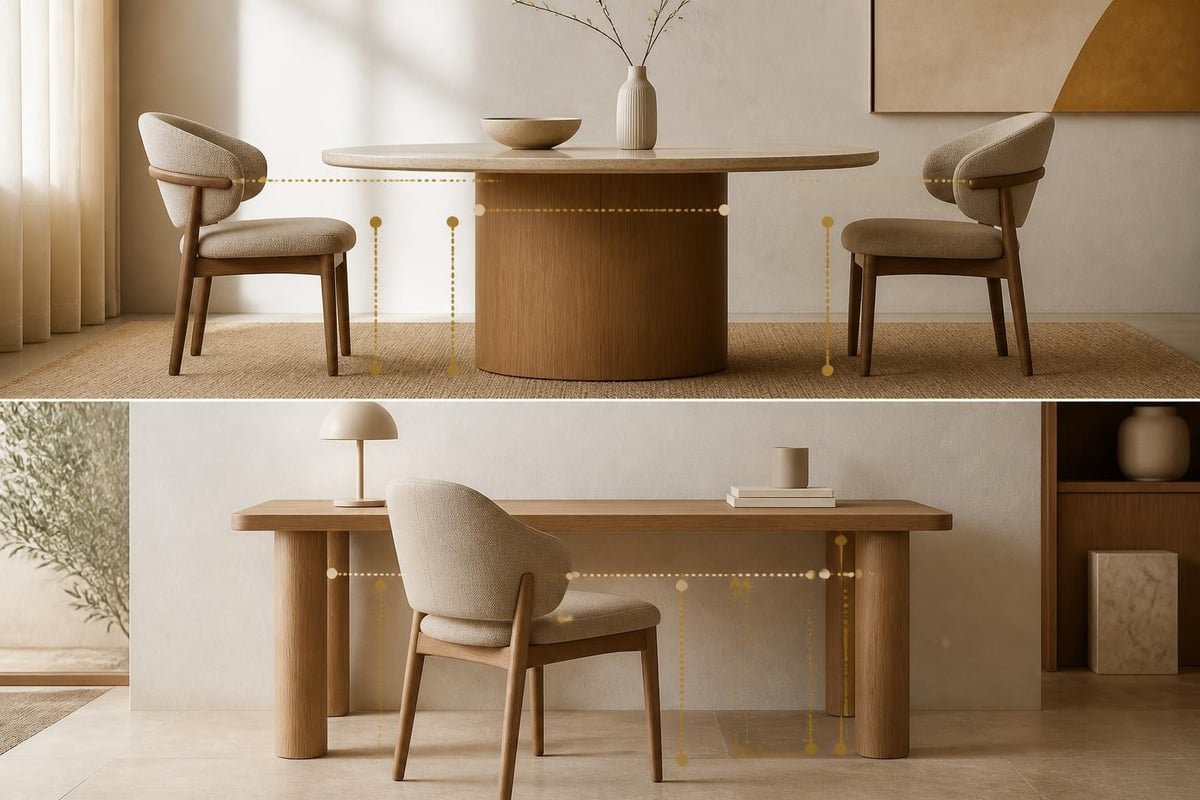
Beyond vertical clearance, horizontal spacing matters equally. Each seated person needs 60cm of table edge width as a minimum, with 70cm to 75cm preferred for elbow room during a meal. Behind each chair, allow 75cm from the table edge to the nearest wall or furniture for the chair to pull out and for a person to stand without turning sideways. In tighter spaces, 60cm will suffice if traffic doesn't pass behind during meals.
Accessibility and Universal Design
Public and commercial spaces must meet formal standards, but the same principles improve residential comfort. The ADA Standards for Accessible Design specify 76cm clear knee width, 68cm knee height and 48cm knee depth for accessible table seating, with top-of-table height between 71cm and 86cm. Wheelchair users and those with reduced mobility benefit from tables on a central pedestal or widely spaced legs rather than four-corner legs that obstruct approach.
Pull space behind chairs increases to 107cm when a wheelchair user needs to transfer, and aisles should offer 91cm clearance for passage. These measures aren't regulatory in New Zealand residential settings, but they future-proof a home and accommodate visiting family or guests with mobility aids.
Material Choices and Longevity
Material pairing affects both aesthetic cohesion and practical longevity. Timber chairs and timber tables share grain, tone and ageing characteristics, creating visual continuity as both develop patina. Solid ash, oak and walnut chairs pair naturally with timber dining tables, and surface finishes should match: oiled timber on oiled timber, lacquer on lacquer. Mixing finishes leads to mismatched sheen and uneven wear over time.
Metal-framed chairs suit both timber and stone-composite table tops, offering a material contrast that highlights each element rather than blending them. Powder-coated steel or black-finished metal legs provide a neutral anchor, particularly when paired with dining tables featuring a central pedestal or StoneSkin finish. The contrast keeps the eye moving without creating discord.
| Material Pairing | Durability | Maintenance | Suitability |
|---|---|---|---|
| Solid timber chair + timber table | High | Moderate (oil refresh every 18–24 months) | Dining rooms, long table sessions |
| Metal-frame chair + timber table | High | Low (wipe clean, check fixings annually) | High-traffic dining, family use |
| Upholstered chair + stone-composite table | Moderate to high | Moderate (vacuum fabric, wipe table) | Formal dining, indoor use only |
| Eco-leather seat + any table | High | Low (wipe spills immediately) | Everyday dining, homes with children |
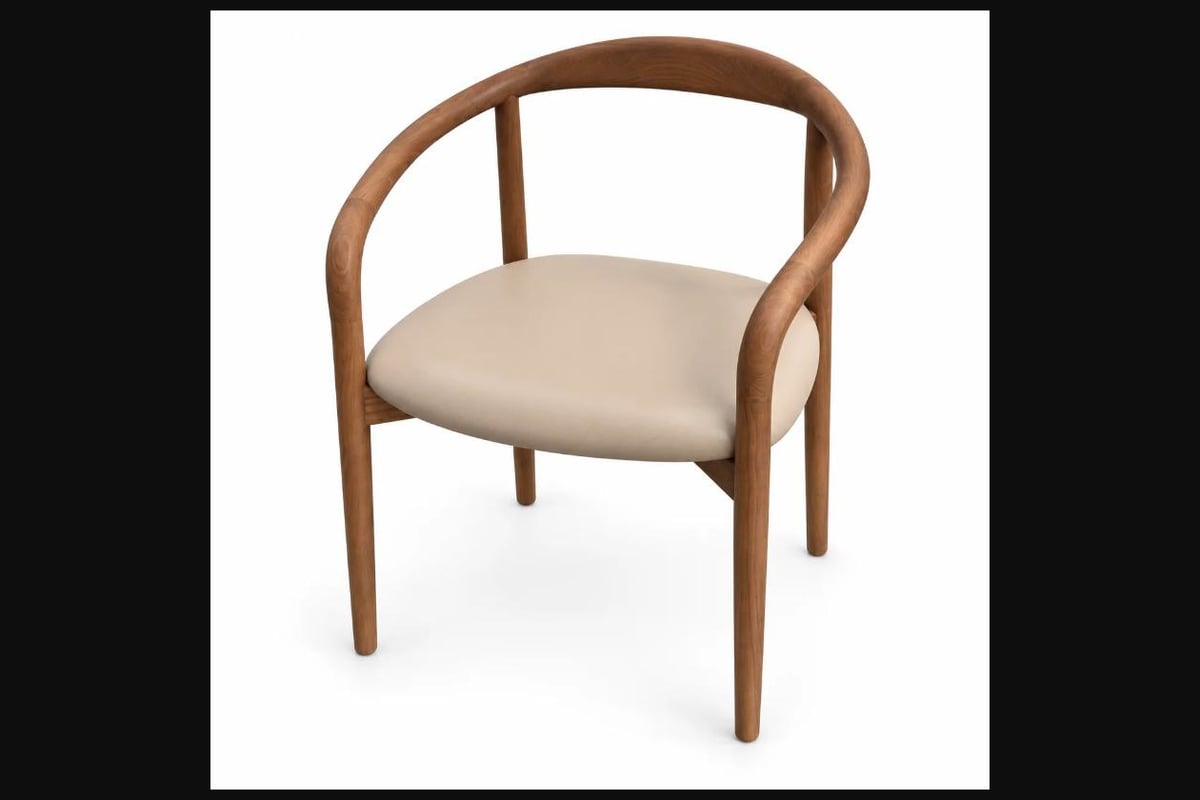
Eco-leather seats combine the appearance of leather with stain resistance and simplified cleaning, suited to homes where spills and daily wear matter more than absolute authenticity. Wipe-clean surfaces reduce maintenance time, and the material stands up to repeated cleaning without cracking or peeling when properly constructed. The Miso Chair in Coffee pairs a solid timber frame with an eco-leather cushioned seat, balancing structural longevity with practical upkeep for family dining.
Sustainable Sourcing and Environmental Impact
Material origin and certification increasingly influence purchasing decisions. Timber chairs and tables sourced from FSC-certified forests or reclaimed stock reduce environmental impact and support responsible forestry. The FSC's guide to sustainable wood sourcing outlines chain-of-custody requirements for manufacturers and specifiers seeking verified sustainable timber.
A comprehensive life-cycle assessment of furniture published in 2024 compared environmental impacts across materials and manufacturing processes, finding that solid timber pieces with durable joinery and repairable construction offer lower lifetime environmental costs than composite or short-lived alternatives. Chairs and a table built to last thirty years avoid the repeated embodied energy of replacement, making initial investment in quality construction a measurable environmental decision.
Proportion and Visual Balance
The ratio between table mass and chair scale determines whether a room feels anchored or top-heavy. Heavy pedestal tables or thick-topped designs need chairs with enough visual weight to hold their own, either through solid timber construction or substantial upholstered backs. Delicate tables with slender legs pair better with open-backed or metal-framed chairs that maintain lightness.
Architectural silhouettes and clean lines suit contemporary interiors, where furniture functions as spatial punctuation rather than decorative focal point. Rounded corners, chamfered edges and considered leg profiles contribute to a refined appearance without ornament. The Design Museum's overview of chair evolution traces how modernist designers prioritised form, material honesty and reduced detail, principles that remain relevant in 2026 for homeowners seeking understated, functional furniture.
Seat Depth and Back Angle
Seat depth and backrest angle affect posture and comfort duration. Dining chairs typically offer 40cm to 45cm seat depth with an upright back angle between 95° and 105°, encouraging alert posture during meals and conversation. Office chairs and task seating require similar depth but adjustable lumbar support and sometimes a recline function for extended sitting.
Lounge chairs and armchairs intended for relaxed seating increase depth to 50cm to 60cm and recline the back angle to 110° or beyond, supporting feet-up sitting and longer sessions. Mixing chair types around a single table works when the table serves multiple functions: upright dining chairs for meals, one or two lounge-style chairs at the ends for lingering over coffee or working on a laptop. For more on pairing considerations, see our guide to dining tables and dining chairs.
Style Cohesion Across Eras
Historical context informs material and form choices without dictating slavish reproduction. Modernist chair design from the early 20th century emphasised structural honesty and material efficiency, visible in cantilever frames, bent plywood and tubular steel. The Victoria & Albert Museum's essay on modernist chairs traces how designers such as Marcel Breuer and Alvar Aalto reduced ornamentation and celebrated material properties, creating chairs that remain in production nearly a century later.
Contemporary interpretations of these principles avoid pastiche while respecting proportion, joinery and material authenticity. A solid ash chair with a curved backrest and tapered legs nods to mid-century form without copying specific designs, suited to new builds and renovated homes that value design lineage without period styling. Mixing eras within a single room works when materials and scale align: a 1960s-inspired timber chair pairs comfortably with a 2026-designed stone-composite table if both share clean lines and considered proportion.
Compact Spaces and Multi-Use Rooms
Small apartments and multi-use living areas demand chairs and a table that adapt to shifting needs. Extendable tables add seating capacity without permanent floor space, and stackable or folding chairs store out of sight when not required. Pedestal tables eliminate corner legs, improving flow in tight spaces and allowing chairs to slide in from any angle.
In open-plan living, chairs and a table often serve dining, work and socialising functions within a single footprint. Choose chairs with enough back support for laptop work and enough comfort for two-hour dinners, avoiding overly upright task seating or excessively reclined lounge chairs. Bench seating along one side of the table increases capacity and tucks entirely beneath the table edge when not in use, freeing floor space for circulation.
Flexibility Without Compromise
Multi-use furniture shouldn't sacrifice quality for convenience. Lightweight folding chairs with flimsy frames fail under regular use, and extension mechanisms that jam or wobble undermine a table's practicality. Look for concealed extension leaves stored within the table structure, self-stabilising legs and locking mechanisms that engage positively without tools. Chairs intended for stacking should have protective buffers or feet to prevent finish damage, and joints should be dowelled or mortise-and-tenon rather than relying solely on screws.
Office and Work-From-Home Settings
Dedicated home offices require task-specific ergonomics rarely found in dining chairs. Desk height sits slightly lower than dining height, between 71cm and 73cm, allowing forearms to rest parallel to the floor when typing. Office chairs need adjustable seat height, lumbar support and a modest recline, features absent from fixed-height dining chairs. For readers considering chairs for work settings, our article on office furniture in New Zealand covers task seating in greater detail.
That said, many professionals prefer the aesthetic of a timber or upholstered chair over a conventional office chair, particularly in homes where the workspace remains visible to the rest of the living area. In these cases, choose a dining-style chair with a contoured back and seat depth around 42cm to 45cm, and pair it with an adjustable-height desk to achieve correct arm and wrist position. Sessions longer than two hours will likely prove uncomfortable without lumbar adjustment, so evaluate honestly how long uninterrupted work sessions typically last.
Matching Aesthetics Across Living and Dining Zones
Consistency in material and finish across chairs and a table in different rooms creates visual flow without requiring identical furniture. A solid ash dining chair in the kitchen echoes ash occasional tables in the living room, connecting spaces through shared grain and tone. Upholstery colour can repeat across dining chairs, lounge chairs and sofa cushions, tying the scheme together without matchy-matchy uniformity.
Avoid over-coordinating. Three or four timber species in a single home read as scattered rather than curated, but two species used consistently across joinery, tables and chairs establish clear material language. Similarly, limit upholstery palettes to three or four complementary tones, allowing pattern and texture variation within that framework.
For those furnishing multiple areas simultaneously, our overview of living and dining room furniture discusses coordinating pieces across open-plan layouts.
Upholstery Fabric and Leather Durability
Fabric and leather selection on dining chairs must account for spill risk, UV exposure and cleaning frequency. Performance fabrics with stain-resistant treatments handle everyday use better than untreated linen or wool, and tight weaves resist pilling and snagging. Leather develops patina and softens with age, but aniline-dyed finishes mark easily and require immediate attention to spills. Pigmented or semi-aniline leather offers better stain resistance at the cost of slightly reduced tactile softness.
Eco-leather and synthetic alternatives provide wipe-clean convenience, particularly on chairs used by children or in homes with pets. These materials lack the ageing characteristics of full-grain leather, but they withstand daily wear without the maintenance routine leather demands. Consider use context: formal dining rooms with infrequent use suit aniline leather and natural linen, while family kitchens and breakfast bars benefit from performance fabrics and eco-leather that tolerate spills and sticky hands.
Cleaning and Maintenance Schedules
- Timber frames: Dust weekly, oil or wax annually, check joints and fixings every six months.
- Metal frames: Wipe with damp cloth monthly, inspect welds and powder coat for chips annually.
- Fabric upholstery: Vacuum weekly, spot-clean spills immediately, professional clean every 12 to 18 months.
- Leather upholstery: Wipe with barely damp cloth weekly, condition every three to six months, avoid direct sunlight.
- Eco-leather seats: Wipe with damp cloth after use, no conditioning required, replace if cracking occurs after five to seven years.
Custom Sizing and Bespoke Options
Standard dimensions suit most spaces, but awkward room shapes, heritage proportions or specific functional needs sometimes require custom sizing. Bespoke tables can match existing floor dimensions precisely, eliminating wasted space or overcrowding. Custom chairs adapt seat height to non-standard table heights, accommodate taller or shorter users, or incorporate specific back angles for medical or ergonomic requirements.
Custom work incurs longer lead times and higher cost, but the investment makes sense when standard options compromise function or proportion. Work with makers or retailers who offer measured drawings and material samples before committing to production, and confirm joinery methods and finish details in writing. Custom pieces should exceed the durability and finish quality of mass-produced furniture, not merely replicate them at a higher price.
Mixing Chair Styles Around One Table
Uniformity isn't mandatory. Mixing chair styles around a single table adds visual interest and accommodates different seating preferences, provided materials and scale remain consistent. A common approach places two armchairs or carver chairs at the table ends, with side chairs along the lengths. The armchairs offer additional comfort for the host positions, and their slightly larger footprint signals hierarchy without formality.
Another option combines upholstered chairs on one side with timber or metal chairs opposite, balancing tactile softness against structural clarity. Avoid excessive variation: more than two chair styles around one table risks visual chaos, and wildly different seat heights or back angles disrupt the table line. Maintain a shared material or finish, such as black-painted legs or eco-leather seats, to anchor the mix.
For complementary occasional seating and armchair options that pair well with dining tables, explore our guide to armchairs in New Zealand.
Testing Before Purchase
Photographs and specifications communicate design and construction, but they can't convey how a chair feels after an hour or how a table surface responds to daily use. Visit showrooms when possible, sit in chairs for five to ten minutes, lean back, cross your legs, slide the chair in and out. Run your hand along table edges to assess finish smoothness and corner detailing. Check leg stability by applying gentle lateral pressure.
For custom or high-investment pieces, request material samples to test in your home lighting and against existing finishes. Timber and fabric tones shift dramatically between showroom and residential settings, and what reads as warm oak under commercial lighting may appear yellow or orange in a north-facing dining room. Test samples for several days at different times of day before finalising selections.
Investment and Cost Considerations
Quality chairs and a table represent a measured investment, with solid construction and durable materials extending usable life to twenty or thirty years. Price reflects material grade, joinery complexity and finish quality, not brand premium or trend surcharge. A solid timber chair with mortise-and-tenon joinery and a hand-rubbed oil finish costs more than a dowelled and stapled equivalent, but it outlasts cheaper alternatives by a decade or more and supports repair rather than replacement when joints eventually loosen.
Budget for the long term. A $2,000 table used daily for twenty years costs $100 per year, while a $600 table replaced every five years costs $120 annually and generates disposal waste. The same logic applies to chairs: six solid dining chairs at $400 each last longer and cost less per year than replacing budget chairs every three to five years. Calculate cost per year of use, not initial outlay, when comparing options.
Bar Stools and Counter-Height Seating
Kitchen islands and bar leaners introduce counter-height or bar-height seating into dining zones, requiring chairs and a table at different elevations within the same space. Counter-height seating (63cm to 66cm seat height) suits islands used for breakfast, homework or casual meals, while bar-height seating (74cm to 76cm seat height) aligns with traditional bar leaners and standing-height surfaces.
Footrests become essential at these heights, reducing pressure on the backs of thighs and supporting comfortable sitting beyond brief perching. Look for stools with a rung or rail positioned 23cm to 28cm below the seat, allowing feet to rest flat rather than dangle. Backs and armrests increase comfort for extended sitting, though backless stools tuck under counters more neatly when not in use.
For additional guidance on bar-height seating, visit Bauhaus to explore the full range of counter and bar stools suited to New Zealand kitchens and living spaces.
Repair, Refinishing and Lifecycle Extension
Well-made chairs and a table tolerate repair and refinishing, extending usable life far beyond initial purchase. Timber surfaces can be sanded and re-oiled or refinished when scratched or stained, and loose joints can be re-glued and clamped. Upholstery can be replaced without discarding the frame, particularly when seat pads attach with screws or clips rather than being permanently fixed. Metal frames can be re-powder-coated if chipped or corroded, though this requires professional equipment and is often uneconomic for low-cost pieces.
Plan for maintenance during the selection process. Choose finishes that support DIY refreshing, such as oiled timber or waxed surfaces, rather than spray lacquers that require professional reapplication. Select chairs with removable seat pads and accessible fixings, not glued assemblies. Ask retailers about spare parts availability and repair services before purchasing, particularly for complex mechanisms such as swivel bases or extension leaves.
Selecting chairs and a table that perform well over decades requires attention to dimension, material, construction and real-world use, not style trends or surface appeal. Focus on seat height, clearance, joinery quality and finish durability to create spaces that remain comfortable and functional through years of daily meals, work sessions and social gatherings. At Bauhaus, our Auckland showrooms offer the chance to test materials, measure proportions and discuss construction details with our experienced team, making it easier to find dining and occasional furniture that suits your home and stands the test of time.
Disclaimer: AI-supported images may differ from products on website.