A side table earns its place through function first. The right piece holds a lamp, a water glass, a book or a coffee cup without demanding attention. When you shop for a side table NZ furniture retailers stock, you'll find hundreds of options, but only a handful will suit your room's proportions, your furniture's height and the way you actually use the space. Good occasional furniture works quietly alongside sofas, beds and armchairs, supporting daily routines without visual clutter. This guide covers material choice, construction quality, sizing principles and placement strategies drawn from two decades of contemporary furniture retail in New Zealand.
Understanding Side Table Construction and Materials
Construction separates a side table that lasts from one that wobbles after six months. Solid timber frames, dovetail joinery and quality veneers cost more upfront but deliver years of stable service.
Timber Species and Engineered Options
New Zealand side tables typically use oak, walnut, ash or rubberwood for solid construction. Oak offers durability and a pronounced grain pattern. Walnut brings warmth and a fine, even texture. Ash sits lighter in tone with good structural strength. Rubberwood provides an affordable hardwood option, though it lacks the character grain of premium species.
Engineered panels (MDF, particleboard, plywood) appear in many mid-range side tables. The New Zealand Timber Industry Federation provides guidance on timber grades and treatment standards that apply to both solid and engineered options. Look for low-formaldehyde certification on particleboard cores. Quality veneers over stable cores can outlast poorly joined solid timber if the substrate is dense and the edging is well sealed.
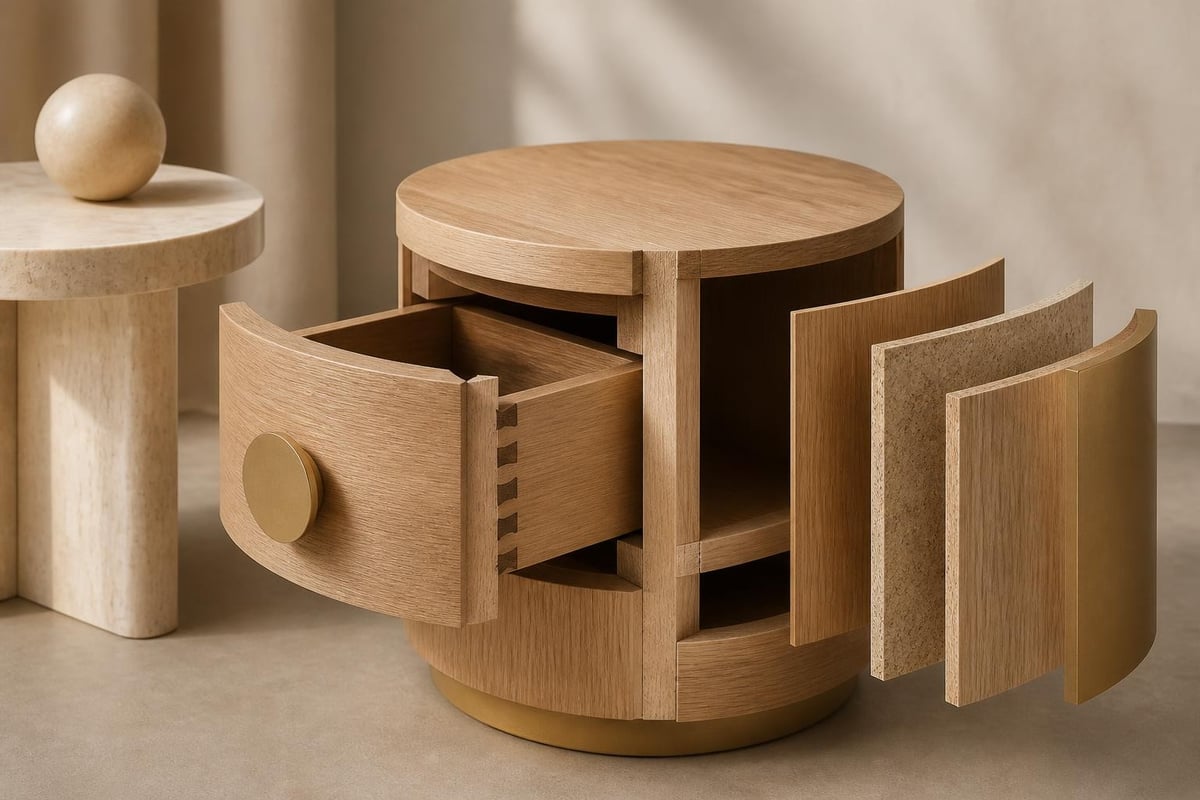
- Solid timber: superior longevity, repairable, visible grain and colour variation
- Veneer over plywood: stable, consistent appearance, lighter weight
- Veneer over MDF/particleboard: economical, check core density and edge finish
Joinery and Hardware Standards
Drawer construction reveals quality fast. Dovetail joints at the drawer front and back indicate hand-finished or CNC-precision work. Dowel or biscuit joints work adequately for lighter loads. Drawer boxes should use solid timber or high-grade plywood, not thin particleboard that sags under weight.
Undermount drawer slides offer smoother operation and cleaner sightlines than side-mounted runners. Full-extension slides let you access the entire drawer without lifting items over a front lip. Soft-close dampers reduce slam and extend hardware life. A well-specified side table NZ designers recommend will use European or Japanese slide mechanisms rated for 15–25 kg per drawer.
| Joinery Type | Durability | Typical Application | Repairability |
|---|---|---|---|
| Dovetail | Excellent | Premium drawer boxes | High |
| Dowel/biscuit | Good | Carcass assembly, light drawers | Moderate |
| Stapled butt joint | Poor | Budget flat-pack | Low |
| Mortise & tenon | Excellent | Solid timber frames | High |
Tabletop attachment matters too. Floating tops fixed with figure-eight fasteners or slotted brackets allow timber to move with seasonal humidity changes, reducing the risk of splits. Rigid glue-only attachment works for engineered cores that don't expand and contract.
Sizing and Placement in New Zealand Homes
A side table that's too tall forces you to reach down for a drink. Too low, and you crane your neck to see a lamp. Proportion and clearance define usability.
Height, Diameter and Clearance Standards
Match side table height to the arm or seat height of adjacent furniture, plus or minus 5 cm. For a sofa with a 65 cm arm height, a side table between 60 and 70 cm works comfortably. Bedside tables typically range 55–65 cm to align with mattress height after you account for base and topper.
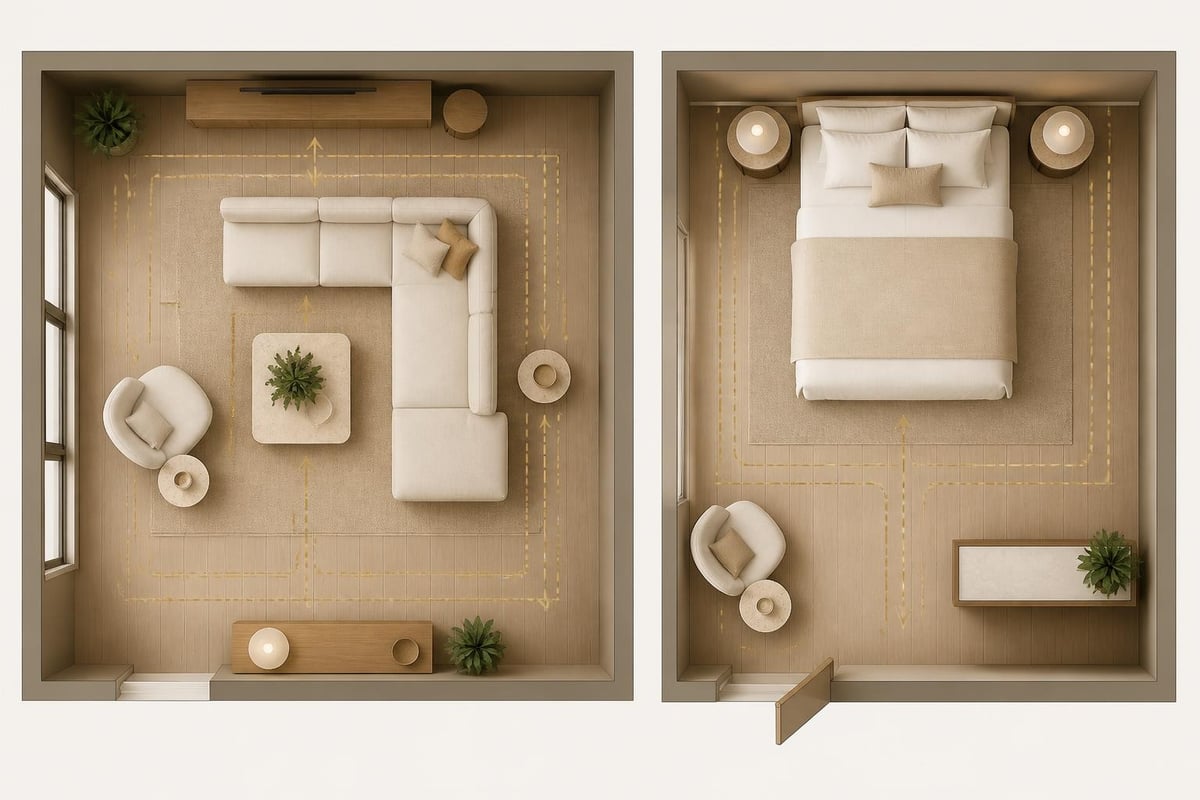
Diameter or width depends on available floor space and the items you'll place on top. A 40 cm round table fits a lamp, a phone and a small book. A 50 cm square surface adds room for a decorative object or a small plant. Leave at least 45 cm of walkway clearance between furniture pieces. Kāinga Ora's design requirements include circulation and furniture-sizing guidance that applies equally to private homes, particularly in tighter open-plan layouts common in Auckland and Wellington apartments.
- Sofa side tables: 60–70 cm height, 40–50 cm width, positioned within arm's reach
- Bedside tables: 55–65 cm height, 40–50 cm depth, minimum 10 cm clearance from bed edge
- Armchair accent tables: 50–60 cm height, 30–40 cm diameter for compact spaces
Spatial Planning for Living and Bedroom Zones
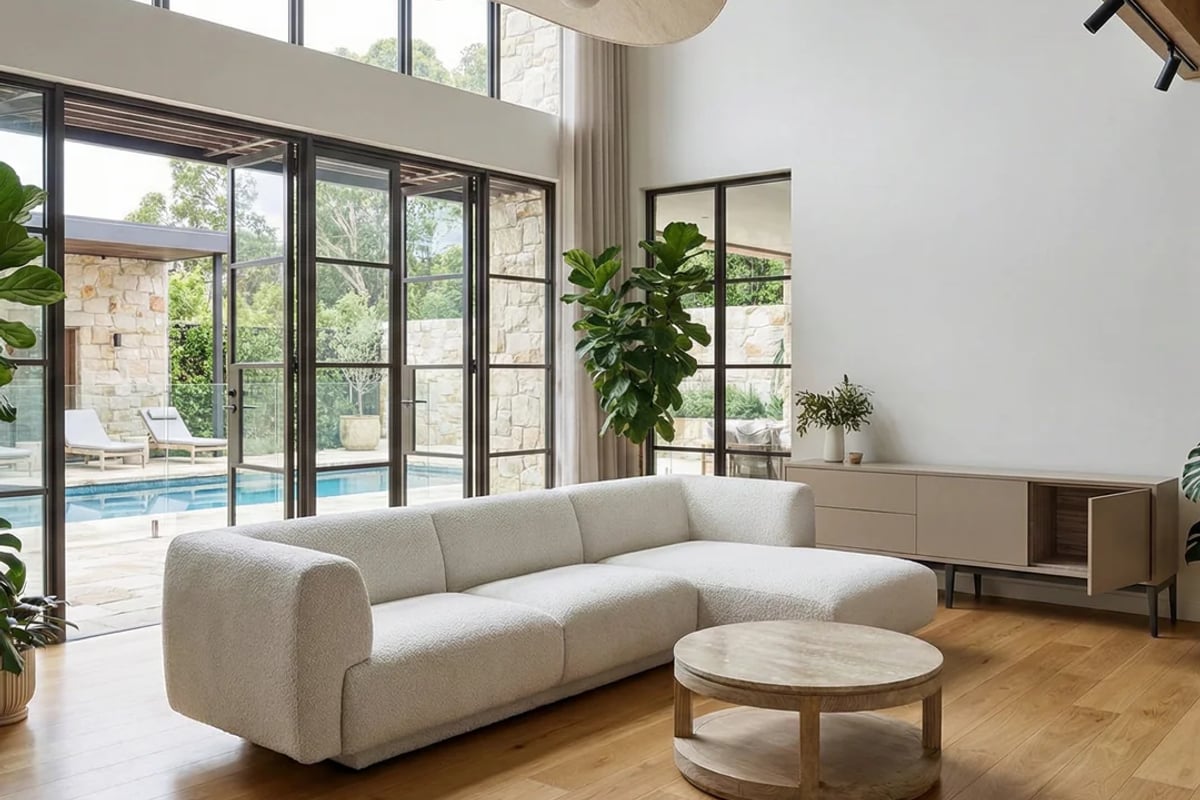
In living areas, side tables often flank a sofa or sit beside an occasional chair. If you're pairing a side table NZ retailers display with a sectional or L-shape sofa like the Bowie L-shape sofa, position the table at the open end of the chaise or beside the shorter arm. This keeps the tabletop accessible without blocking the main walkway through the room.
Bedroom layouts require more precision. Bedside tables should sit far enough from the bed to allow linen changes but close enough for easy reach at night. A narrow bedside (35–40 cm deep) suits compact rooms. Deeper tables (45–50 cm) provide shelf or drawer storage for books, chargers and reading glasses. The Max bedside table with two drawers and the open-shelf variant demonstrate how drawer configuration affects both depth and visual weight.
For home cinema or media setups, a low side table can hold a remote, a drink or a small speaker. ANR Media recommends keeping side surfaces within easy reach of reclined seating so you don't interrupt film viewing to retrieve a glass or adjust controls.
Material Sustainability and Environmental Credentials
Sustainable sourcing adds long-term value. Certified timber, low-emission finishes and repairable construction reduce environmental impact and support responsible forestry.
FSC and PEFC Certification
Forest Stewardship Council (FSC) certification verifies that timber comes from responsibly managed forests with transparent chain-of-custody records. PEFC (Programme for the Endorsement of Forest Certification) offers similar assurance, common in European and North American timber imports. When you choose a side table with FSC or PEFC credentials, you support replanting, biodiversity protection and fair labour standards.
New Zealand plantation timber (radiata pine, Douglas fir) rarely appears in contemporary side tables due to softwood limitations, but locally milled macrocarpa and sustainable rimu (from salvaged sources) offer distinctive grain and heritage appeal. Always ask for species and origin documentation if sustainability matters to your purchase decision.
Low-Emission Panels and Finishes
Engineered panels emit formaldehyde as adhesives cure. E0 and E1 ratings indicate low-emission formaldehyde levels, safer for indoor air quality. New Zealand Building Code requirements align with international standards, but not all imported furniture meets these thresholds. Check labelling or ask for environmental product declarations (EPDs) that detail emissions and material content.
Water-based lacquers and natural oil finishes emit fewer VOCs (volatile organic compounds) than solvent-based polyurethanes. Oil finishes penetrate timber, enhancing grain and allowing localised repairs. Lacquer builds a protective film that resists moisture and scratches but requires professional refinishing if damaged. The Enzo side table with drawer uses a clear lacquer over solid oak, balancing protection with grain visibility.
| Finish Type | VOC Level | Durability | Repair Method | Visual Effect |
|---|---|---|---|---|
| Water-based lacquer | Low | High | Sand & recoat | Clear, slight sheen |
| Natural oil (linseed, tung) | Very low | Moderate | Reapply oil | Matte, enhanced grain |
| Solvent lacquer | Moderate | Very high | Professional strip & refinish | Gloss or satin |
| Wax | Minimal | Low | Buff & reapply | Soft lustre |
MBIE's guidance on materials inside your home covers sustainable material choices, including timber treatment, engineered wood products and finishing systems that meet New Zealand's building performance expectations.
Design Styles and Functional Variations
Side tables come in forms as varied as the rooms they serve. Scandinavian minimalism, mid-century modern, industrial metal-and-timber hybrids, and contemporary organic shapes each suit different interiors.
Drawer, Shelf and Open Configurations
A single-drawer side table conceals remotes, cables and small items while maintaining a clean surface. Two-drawer versions like the Max narrow bedside with two drawers suit bedrooms where you need separate storage for books, medications or accessories. Open-shelf designs, including the Max narrow bedside with open shelf, provide quick access and display space but accumulate dust faster.
Pedestal or column side tables offer a single flat surface with no storage, ideal for sculptural forms or tight corners. Nesting tables and tiered designs add flexibility, you can pull a smaller table out for extra surface area during gatherings and tuck it away afterward.
- Single drawer: conceals clutter, suits minimalist schemes
- Two drawers: maximises bedroom storage, heavier visual weight
- Open shelf: display and access, requires regular tidying
- Pedestal: compact footprint, sculptural presence
Material Combinations and Textural Contrast
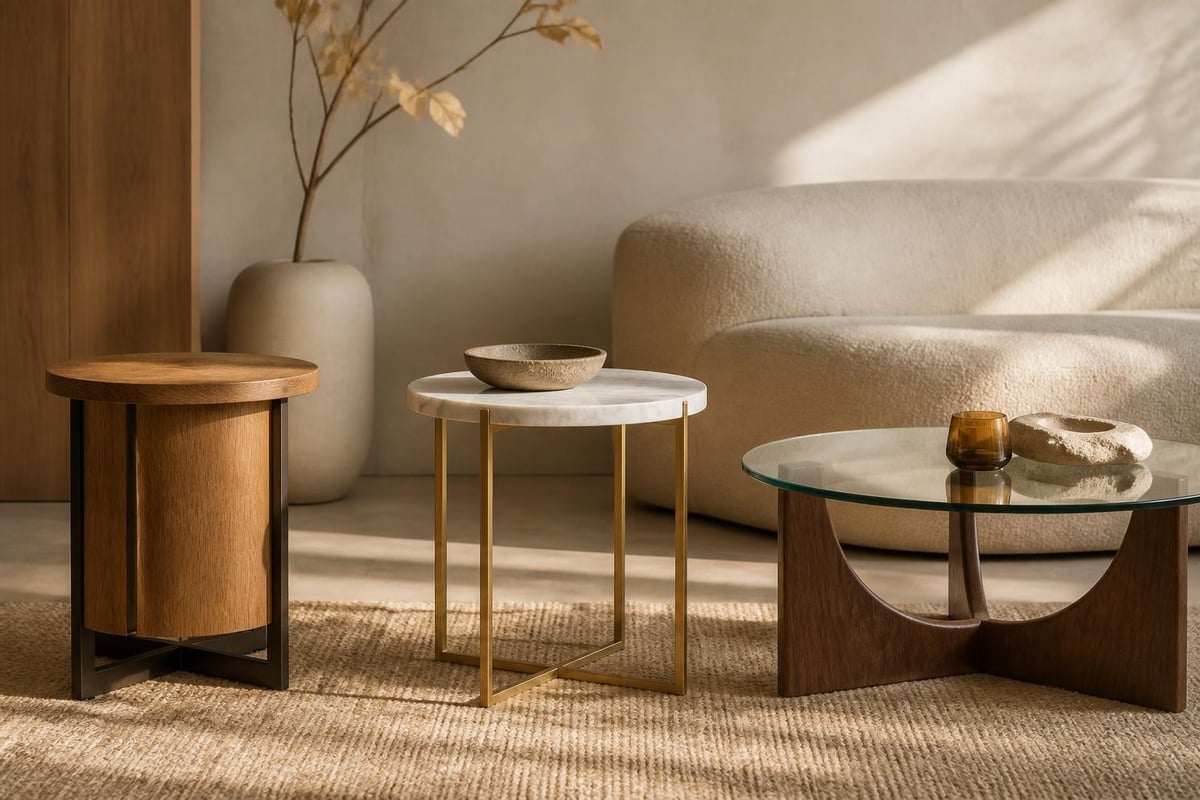
Timber-and-metal side tables pair warm oak or walnut tops with powder-coated steel or brass legs. This mix suits industrial and mid-century interiors. Marble or stone tops add luxury and weight, marble scratches and stains more easily than timber, requiring coasters and prompt spill cleanup. Glass tops lighten visual bulk but show fingerprints and need frequent cleaning.
The Pebble side table demonstrates how organic shapes in solid timber can anchor contemporary spaces without rigid geometry. The Calibre side table (low version) uses angular metal legs and a timber top to bridge modern and industrial aesthetics.
Coffee Table and Console Table Crossovers
Some side tables share proportions with small coffee tables or narrow consoles. The Element coffee table (oblong) and the Enzo coffee table work equally well as oversized side tables in large living rooms with deep sofas. The Enzo console can sit behind a sofa or against a wall, functioning as a side surface when space allows.
Height determines function. Coffee tables sit 40–50 cm high to align with sofa seat height. Side tables reach 60–70 cm to match arm height. Consoles typically stand 75–85 cm, serving entryways or dining room buffets. Check dimensions carefully when repurposing furniture types.
Bedside Tables and Bedroom-Specific Considerations
Bedside tables carry unique demands. You reach for them in the dark, they hold lamps that need safe cord routing, and they must accommodate phones, books, water and personal items without tipping.
Drawer vs. Open Storage for Night Use
Closed drawers hide clutter and keep dust off contents, but you need both hands to open them. Open shelves or cubbies allow one-handed access, useful when you're holding a phone or a book. Some bedside designs combine a single drawer at the top with an open shelf below, balancing concealment and convenience.
Depth matters in tight bedrooms. A 35 cm deep table fits comfortably beside a queen bed in a 3.5 m wide room, leaving walkway space on both sides. Deeper tables (45–50 cm) suit king beds in larger master suites, providing room for larger lamps, multiple books or decorative objects.
The Harmon bedside with drawer offers a compact footprint with sufficient surface area for a lamp and small essentials. The Arc side table and the Form double-top side table both provide layered surfaces that separate lamp bases from items you handle frequently, reducing the chance of knocking over a light when you reach for your phone at night.
Lamp Stability and Cord Management
A bedside lamp typically weighs 1.5–3 kg and has a base diameter of 20–30 cm. Make sure your side table surface is at least 40 cm wide to leave clearance around the lamp. Top-heavy lamps or those with narrow bases tip easily on tables under 10 kg, look for side tables with low centres of gravity or weighted bases if you plan to use tall ceramic or metal lamps.
Cord routing prevents trip hazards and damage to charging cables. Tables with rear cutouts or drilled grommets keep power cords tidy. If your bedside table lacks integrated cable management, use adhesive clips on the back edge or run cords through a small desktop organiser placed behind the lamp.
Side Table Styling and Everyday Use
A side table NZ homeowners choose rarely sits empty. Lamps, plants, coasters, books and decorative objects accumulate, so plan for both function and visual balance.
Layering Height and Texture
Vary object height to create interest without clutter. A tall lamp (50–60 cm from base to shade top) anchors the composition. Add a short stack of books (10–15 cm), a small plant (15–20 cm) or a low bowl (5–10 cm). This layering draws the eye up and down, making the side table feel curated rather than crowded.
Texture adds depth. Pair smooth ceramic lamps with woven baskets, rough linen book covers with polished timber surfaces, matte metal planters with gloss-lacquered tabletops. Mixing textures in a limited colour palette (neutrals, wood tones, one or two accent colours) keeps the composition cohesive.
Avoid overcrowding. If your side table measures 40 cm square, limit yourself to three or four objects: lamp, book, coaster, small plant. More than that competes for space and makes the table less functional.
Practical Object Choices
Choose objects that serve a purpose. A small tray corrals remotes, glasses and phones, preventing them from sliding off the edge. A lidded box hides charging cables, earplugs or reading glasses. A coaster protects the timber finish from water rings.
Books should reflect your actual reading, not stage dressing. A single hardcover or a small stack of two or three paperbacks suits most side tables. Large coffee-table books belong on, well, coffee tables. Side tables lack the surface area to display oversized volumes comfortably.
Plants add life but require maintenance. Succulents and snake plants tolerate low light and irregular watering, they suit bedside tables in rooms with limited natural light. Keep pot diameter under 15 cm to leave room for other items. Avoid plants that drop leaves or require frequent watering, timber surfaces stain if moisture seeps from saucers.
Assessing Quality Before Purchase
Not all side tables justify their price tags. Learn to spot the markers of quality construction and finish before you commit.
What to Check in a Showroom or Online
In person, open drawers and check for smooth, quiet operation. Drawers should glide without sticking or rattling. Soft-close mechanisms should engage smoothly in the final 5 cm of travel. Examine drawer interiors, quality tables use solid timber or plywood boxes with sanded, sealed surfaces. Particleboard drawer boxes sag and split under load.
Check tabletop finish by running your hand across the surface. It should feel smooth, consistent and free of rough patches, drips or dust inclusions. Inspect edges and corners for clean mitre joints and sealed end grain. Poor edge-banding peels away, exposing particleboard core.
Tip the table slightly to assess weight and balance. A well-built side table feels solid, not top-heavy or wobbly. Shake it gently, joints should not creak or flex. If shopping online, check product specifications for:
- Exact dimensions (height, width, depth in centimetres)
- Material breakdown (solid timber, veneer, engineered core, metal type)
- Weight (heavier often indicates denser materials and solid construction)
- Drawer slide type (undermount, soft-close, extension rating)
- Finish details (lacquer type, oil, wax, stain colour)
Warranty, Returns and After-Sales Support
A credible retailer stands behind its furniture with clear warranty terms. Expect at least 12 months' coverage on structural defects, drawer mechanisms and finish integrity. Premium side tables from established brands often carry 2–5 year warranties.
Ask about return policies if the table doesn't suit your space. Some retailers allow 30–60 day returns on unused furniture. Delivery damage should be covered separately, inspect parcels on arrival and photograph any issues before signing delivery documentation.
After-sales support matters for long-term satisfaction. Can you order replacement parts (drawer slides, handles, feet)? Does the retailer offer refinishing or repair services? A family-owned New Zealand furniture retailer like Bauhaus typically provides direct contact with experienced staff who can advise on care, repairs and compatible pieces years after purchase.
Common Pitfalls and How to Avoid Them
Even experienced buyers make side table mistakes. Here's how to sidestep the most common errors.
Ignoring Room Proportions
A delicate 30 cm round table disappears next to a deep three-seat sofa. Conversely, a chunky 60 cm square table overwhelms a compact armchair. Match table scale to adjacent furniture. Large, low-slung sofas pair well with substantial side tables (50–60 cm width, solid timber or thick tops). Slimline occasional chairs suit lighter, more compact tables (35–45 cm, open frames or tapered legs).
Measure before you buy. Write down sofa arm height, bed height and available floor space. Bring a tape measure to the showroom or create a cardboard template at home to visualise the table's footprint.
Choosing Style Over Function
A sculptural side table might look striking in a magazine, but if it can't hold a table lamp and a water glass without tipping, it fails its primary job. Prioritise function, then refine for aesthetics. Make sure the tabletop is level, stable and large enough for daily use. Decorative tables with irregular shapes or narrow tops work better as accent pieces than bedside or sofa-side surfaces.
Underestimating Storage Needs
If you plan to store items in side table drawers, measure what you'll keep there. Drawer interiors are often 5–10 cm smaller than the table's external width due to carcass thickness. A 45 cm wide table might have 35 cm internal drawer width, enough for books and cables but not bulky items like blankets or large electronics.
Open shelves collect dust and require regular styling upkeep. If you're not prepared to maintain an open-shelf table, choose a closed-drawer design.
Choosing the right side table comes down to material integrity, accurate sizing and honest assessment of how you'll use the piece. When you prioritise construction quality, sustainable sourcing and proportions that suit your existing furniture, you invest in occasional furniture that supports daily life without constant adjustment. At Bauhaus, our Auckland showrooms carry thoughtfully curated side tables, bedsides and occasional pieces designed for New Zealand homes. Visit us to see construction details firsthand, discuss material options with our experienced team, and find side tables that balance craft, function and enduring design.