Selecting lounge room sofas for New Zealand homes means balancing everyday comfort, durability, and the spatial reality of your room. A well-chosen sofa anchors the living space, supporting everything from weeknight reading to weekend hosting, and should hold its shape and support through years of use. Since 2003, we've helped homeowners, designers and developers find pieces that work in real rooms, not just showroom vignettes. The process centres on construction, materials, and how a sofa fits both your body and your floor plan.
Frame and Spring Systems
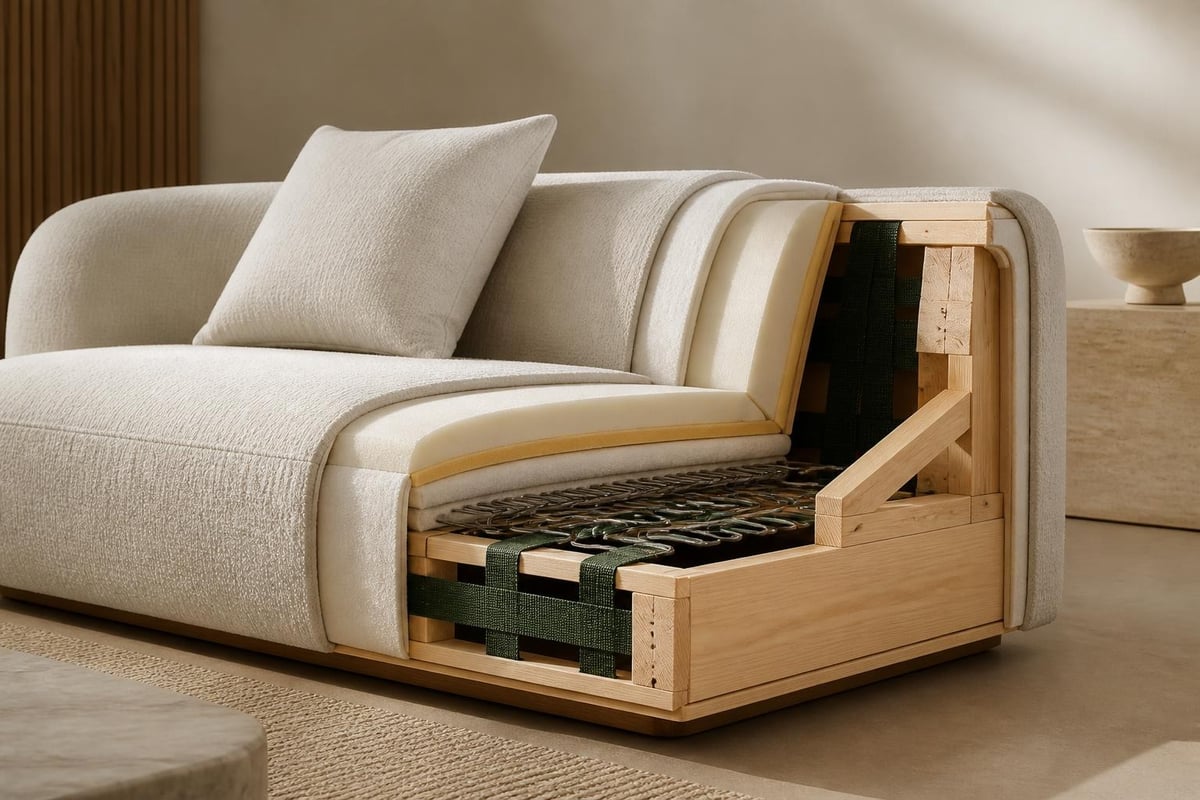
The foundation of any durable lounge room sofa is its frame and spring system. Solid timber frames, typically birch, ash or plantation-hardwood, offer the longevity required for daily use. Reinforcing panels of plywood or MDF add structural rigidity at stress points without adding unnecessary weight. Cheaper frames rely on softwood or particleboard, which can crack or sag within months of regular use.
Spring systems fall into three main categories: no-sag springs (sinuous steel wire zig-zagged across the seat deck), eight-way hand-tied coil springs (individual coils tied at every intersection), and webbed elastic platforms (cross-woven elasticated strips). Each has a distinct feel. No-sag springs deliver firm, responsive support that returns quickly when you stand. Eight-way hand-tied coil springs offer a softer, more cushioned sit with gradual give. Webbed elastic systems suit lighter-weight frames and compact sofas where traditional springs would add too much depth. Industry standards published by the American Home Furnishings Alliance provide benchmarks for testing spring durability and frame construction.
Foam Density and Cushion Fill
Cushion comfort depends on foam density, measured in kilograms per cubic metre, and the layering strategy. High-density foam (30 kg/m³ or higher) holds its shape better and resists sagging, while low-density foam (below 25 kg/m³) compresses faster and develops permanent depressions. A typical quality seat cushion layers high-resilient foam as the core, wrapped in softer modelling foam or polyester fibre for surface comfort. This combination provides support without the hard initial sit of foam alone.
Feather-down toppers, often compartmented or channelled, add a soft, enveloping feel but require regular plumping to redistribute fill. They're ideal for lounge room sofas used for reading or conversation, where you lean back and settle in. Pure foam cushions, on the other hand, need no maintenance and suit high-traffic households or families with young children. Consumer Reports testing consistently finds that foam-and-fibre blends balance comfort and durability better than foam or down alone.
Back cushions may be feather-down over foam cores, foam and fibre blends, or solid foam depending on how much support you prefer. Feather backs sink deeper and feel luxurious but lose shape between plumps. Foam backs maintain a consistent profile and work well for upright sitting, reading, or working on a laptop from the sofa.
Upholstery and Fabric Selection
Upholstery choices shape both the look and the maintenance requirements of lounge room sofas. Natural fabrics such as linen, cotton blends, and wool offer breathability and tactile appeal but can absorb stains and require professional cleaning. Performance fabrics, treated with stain-resistant coatings, repel spills and wipe clean with a damp cloth, making them practical for everyday family use.
Leather upholstery, both full-grain and top-grain, develops a patina over time and resists staining. Full-grain leather retains the natural grain and surface texture, ageing gracefully with use. Top-grain leather is lightly sanded and finished for a more uniform appearance. Both require occasional conditioning to prevent drying. Eco-leather, a coated synthetic, offers a wipe-clean surface at a lower price point and suits dining chairs or bar stools more than lounge sofas, where long sitting requires the breathability of real leather or fabric.
| Upholstery Type | Stain Resistance | Breathability | Maintenance | Longevity |
|---|---|---|---|---|
| Natural Fabric | Low | High | Professional clean | Moderate |
| Performance Fabric | High | Moderate | Wipe clean | High |
| Full-Grain Leather | High | High | Condition quarterly | Very High |
| Top-Grain Leather | High | High | Condition quarterly | High |
| Eco-Leather | Very High | Low | Wipe clean | Moderate |
Colour and pattern also affect the visual weight of lounge room sofas. Lighter tones reflect more light and make a room feel larger, while darker shades ground the space and hide wear better. Neutral palettes (greys, taupes, soft whites) offer flexibility as rooms evolve, whereas bold colours or patterns can date quickly or constrain future styling choices. For interior designers and developers furnishing multiple properties, neutrals simplify specification and resale appeal. Architectural Digest's guide to choosing a sofa emphasises selecting upholstery based on actual household use rather than aspiration.
Sizing and Layout Considerations
Lounge room sofas must fit both the physical dimensions of the room and the circulation patterns of daily life. Measure doorways, hallways, and stairwells before committing to a full-size three-seater. Modular designs, such as L-shape or curved sectionals delivered in separate pieces, navigate tight access points more easily than single-piece sofas. A standard three-seater runs 200–240 cm wide, with depths ranging from 90 cm for compact layouts to 110 cm for feet-up lounging.
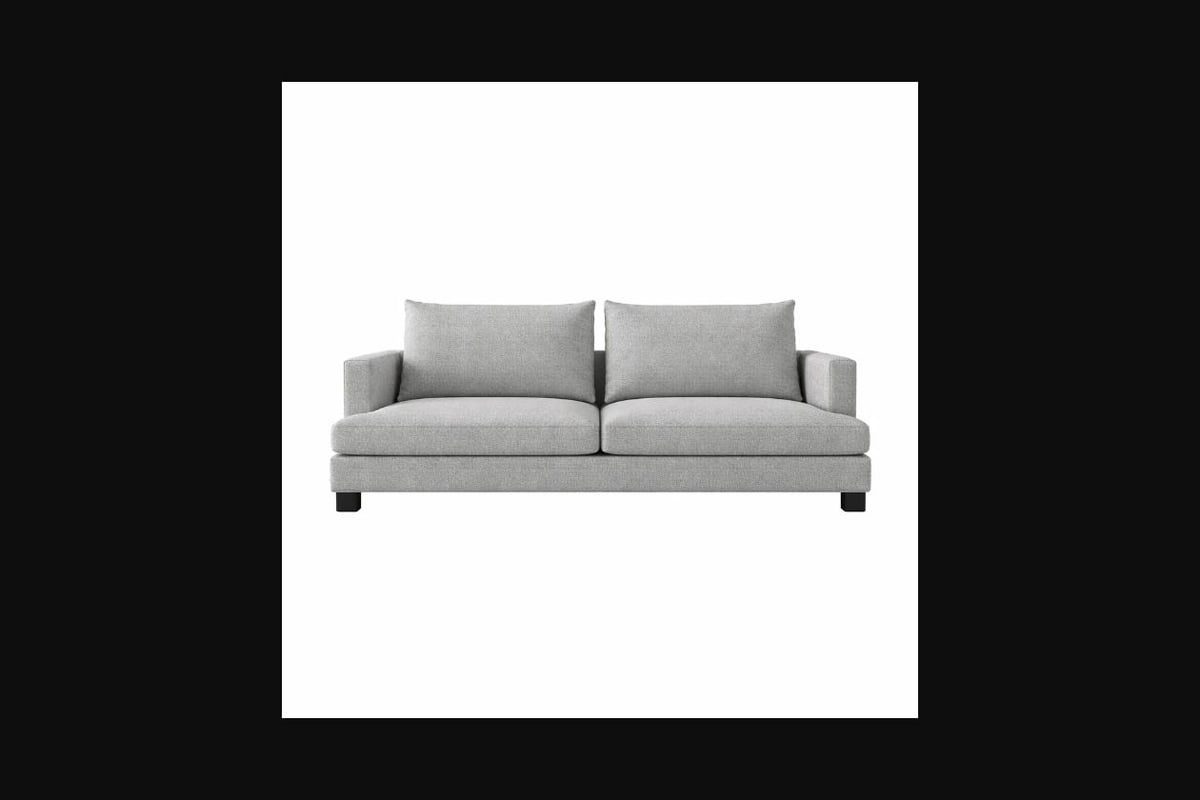
Seat height matters for comfort and accessibility. Lower seats (around 35–38 cm) feel relaxed and suit younger households, but can be difficult to rise from for older users or those with mobility concerns. Higher seats (40–45 cm) offer easier entry and exit, making them practical for multi-generational homes. The Bauhaus Studio Linear Straight Sofa, with its raised seat height and upright back, exemplifies this approach, combining easy-rise comfort with a clean architectural profile.
Clearances and Traffic Flow
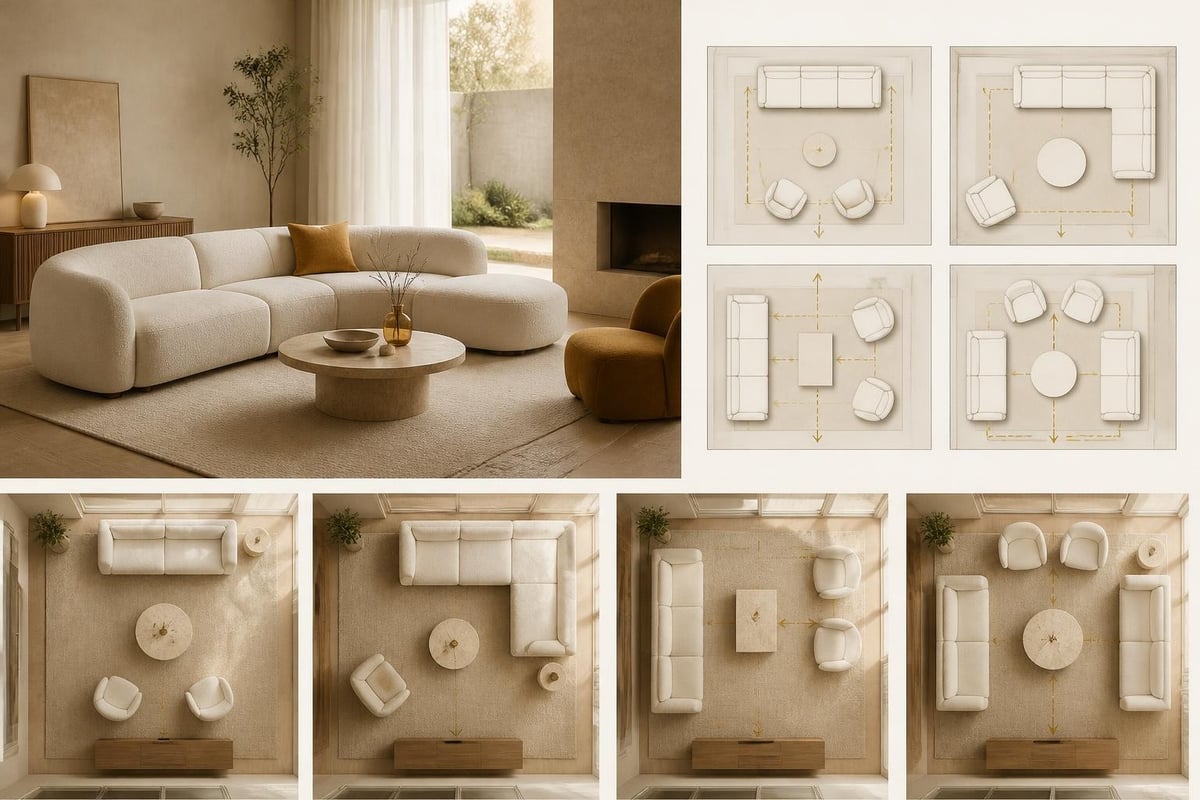
Plan at least 45 cm of clearance between lounge room sofas and coffee tables to allow comfortable leg extension and easy passage. Allow 90 cm between the sofa and the television wall for unobstructed walking paths. In open-plan living areas, position the sofa to define zones without blocking sightlines to the kitchen or dining space. Recessed or visible legs affect how much floor space appears beneath the sofa. Visible legs, especially slim metal or timber profiles, create a sense of airiness and make vacuuming easier. Recessed plinths or skirted bases give a grounded, upholstered look but can make small rooms feel more enclosed.
L-shape and modular configurations work well for larger lounge rooms, wrapping seating around a focal point such as a fireplace or view window. For compact spaces, straight two- or three-seaters paired with a separate armchair offer flexibility. Chaise extensions add feet-up comfort but require additional floor space. Always map furniture placement on graph paper or with painter's tape on the floor before ordering. What looks proportionate in a showroom may overwhelm a 3.5 × 4 m lounge room.
Durability and Indoor Air Quality
Durability in lounge room sofas is a function of frame construction, joint reinforcement, and upholstery wear resistance. Mortise-and-tenon or dowel joints offer superior strength compared to stapled or glued butt joints. Corner blocks, glued and screwed into place, prevent racking (the tendency of a frame to shift out of square under load). Upholstery fabrics are rated for abrasion resistance using the Martindale rub test or Wyzenbeek double-rub count. Commercial-grade fabrics rated above 30,000 double rubs suit high-traffic households, while lighter residential fabrics (15,000–25,000 rubs) suffice for moderate use.
Indoor air quality concerns stem from volatile organic compounds (VOCs) emitted by foam, adhesives, and flame retardants in upholstered furniture. The U.S. EPA highlights furniture as a potential source of indoor air pollution, particularly in new builds with limited ventilation. Look for GREENGUARD certification, which tests emissions against strict limits for chemicals known to affect indoor air quality. New Zealand's own building standards encourage low-VOC materials, though certification remains voluntary for most furniture categories.
Allowing lounge room sofas to off-gas in a well-ventilated space for 48–72 hours before regular use reduces initial emissions. Open windows and run extractor fans during this period. If sensitive to odours or chemicals, request fabric samples in advance to test for off-gassing at home.
Maintenance and Longevity
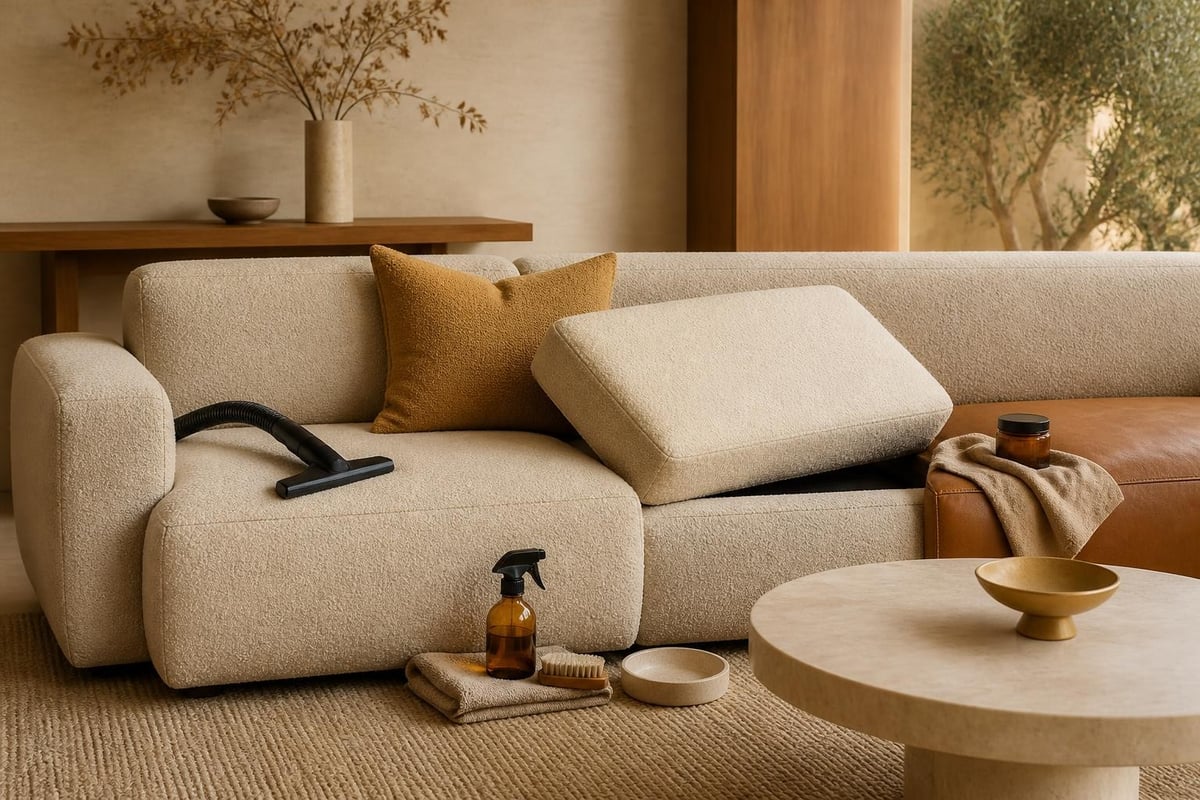
Regular maintenance extends the life of lounge room sofas and preserves their appearance. Vacuum upholstery weekly using a soft brush attachment to remove dust and pet hair before it embeds in the weave. Rotate and flip reversible cushions every month to even out wear and prevent permanent compression. Feather-down cushions need daily plumping to redistribute fill and maintain their shape.
Stain treatment depends on upholstery type. For natural fabrics, blot spills immediately with a clean, dry cloth, working from the outside in to prevent spreading. Avoid rubbing, which pushes the stain deeper into the fibre. Performance fabrics tolerate gentle dabbing with a damp cloth and mild detergent. Leather requires a different approach: wipe spills immediately with a soft, barely damp cloth, then condition the area once dry to prevent moisture damage. House Beautiful's cleaning guide offers detailed, material-specific protocols for common stains.
Professional Cleaning and Repairs
Deep-clean natural-fabric sofas professionally every 12–18 months, or more frequently in homes with pets or young children. Steam cleaning extracts embedded dirt but must be done carefully to avoid water damage to the foam or frame. Dry-cleaning solvents suit delicate fabrics that cannot tolerate water. Always test any cleaner on an inconspicuous area first.
Minor frame repairs, such as tightening loose joints or replacing worn webbing, are straightforward for a qualified upholsterer. Seek professional help at the first sign of sagging or creaking, before the problem worsens and requires more extensive work. Keep proof of purchase and warranty documentation. Quality manufacturers, including those represented by Bauhaus, typically offer frame warranties of five to ten years, reflecting confidence in construction.
Modular and Sectional Options
Modular lounge room sofas consist of individual units that lock or align to form larger configurations. This flexibility suits renters, growing families, or anyone who moves frequently, as modules can be rearranged or separated to fit new floor plans. Good Housekeeping's modular sofa testing emphasises the importance of secure connectors and uniform seat height across modules.
Typical modular components include:
- Corner units: right-angle pieces that form L-shapes or U-shapes
- Armless centre sections: extend straight runs without adding bulky arms
- Chaise modules: single-arm or armless pieces with extended leg support
- Ottoman units: backless squares or rectangles that double as footstools or extra seating
Modules connect via metal brackets, hook-and-loop straps, or simple alignment clips. Metal brackets offer the most secure connection but require tools to reconfigure. Hook-and-loop systems allow tool-free rearrangement but may shift slightly under heavy use.
When planning modular lounge room sofas, sketch the intended layout and confirm that modules are available in your preferred upholstery. Not all ranges offer every configuration in every fabric. Check lead times, as modular pieces are often made to order and can take six to twelve weeks for delivery. For those exploring modular layouts, Bauhaus's sofa collections include both fixed and configurable options suited to New Zealand living spaces.
Straight, L-Shape and Curved Profiles
Straight lounge room sofas suit formal layouts, narrow rooms, and symmetrical arrangements. They align neatly against walls or float in the centre of a room to define zones. A straight three-seater typically seats three adults comfortably, with each person claiming roughly 70 cm of width. Straight designs work well in pairs, facing each other across a coffee table for balanced conversation seating.
L-shape sofas anchor open-plan living areas and create a natural division between lounge and dining zones. The chaise or return section provides feet-up seating, while the main run accommodates multiple people. L-shapes maximise seating in corners and make efficient use of floor area. Choose left- or right-facing chaise based on room entry points and window placement. Position the chaise facing the view or television for optimal use.
Curved sofas soften angular rooms and suit spaces with circular or radial architecture. A gentle crescent creates an intimate conversation area, drawing occupants inward. Curved profiles take up more floor space than equivalent straight or L-shape sofas, so suit larger lounge rooms. Delivery and access can be more challenging, but modular curved designs split into manageable sections.
| Profile Type | Best For | Seating Capacity | Floor Space | Flexibility |
|---|---|---|---|---|
| Straight | Formal layouts, narrow rooms | 2–4 people | Minimal | High |
| L-Shape | Open-plan living, corner placement | 4–6 people | Moderate | Moderate |
| Curved | Large rooms, conversation areas | 3–5 people | High | Low |
Combining Sofas with Occasional Chairs
Lounge room sofas rarely work in isolation. Pairing a sofa with occasional chairs balances seating capacity, visual interest, and functional flexibility. A three-seater sofa with two armchairs offers seating for five and allows different postures and activities. One person reads in an armchair while another watches television from the sofa. Guests perch on the chair arm for overflow seating during gatherings.
Select occasional chairs that complement but don't match the sofa. Coordinating upholstery tones or textures creates cohesion without a matchy-matchy retail look. For example, a linen sofa pairs naturally with a leather armchair, the contrast adding depth and tactile variety. Ensure seat heights are compatible so conversation feels balanced. A 10 cm difference is noticeable; keep it within 5 cm for comfort.
Swivel chairs, such as barrel-backed or pedestal designs, add flexibility to lounge room layouts. They pivot to face the television, the view, or the sofa without rearranging furniture. Swivel mechanisms should turn smoothly and lock securely in place. Cheap swivels wobble or squeak within months. Quality mechanisms use sealed ball bearings and reinforced bases.
If you're considering complementary seating, a contemporary furniture set approach coordinates sofas, armchairs, and side tables for a cohesive living room scheme without sacrificing individuality.
Construction Details That Matter
The longevity of lounge room sofas depends on construction details often hidden beneath upholstery. Reinforced corner blocks, glued and screwed into place at each frame joint, prevent the structure from racking or loosening over time. Double-dowelled joints offer more surface area for adhesive and distribute stress better than single dowels. Avoid frames assembled with staples alone, which pull free under repeated stress.
Webbing, whether rubber or elastic, should be spaced no more than 5 cm apart and tensioned firmly across the frame. Loose or widely spaced webbing allows cushions to sag between gaps, creating an uneven sit. No-sag springs should be clipped or tied to the frame at regular intervals, not simply hooked at the ends, which can allow lateral movement and noise.
Upholstery attachment methods vary. Stapled upholstery is standard and durable when done correctly, with staples spaced every 2–3 cm and driven at consistent depth. Hand-tacked upholstery, using small nails or tacks, is a traditional method seen in bespoke or heritage-style sofas. It allows for easier fabric replacement during reupholstery. Adhesive-backed upholstery is rare in quality pieces but appears in budget furniture where speed trumps longevity.
Cushion casings should be made from durable cotton ticking or cambric, tightly woven to prevent foam or fibre migration. Zips allow for cover removal and washing, though not all cushions are designed for this. Fixed covers simplify construction and reduce cost but limit cleaning options. Removable covers, whether machine-washable or dry-clean-only, add flexibility and extend the usable life of the sofa.
Sustainability and Material Sourcing
Sustainability in lounge room sofas involves frame materials, foam chemistry, upholstery sourcing, and manufacturing practices. FSC-certified timber ensures wood comes from responsibly managed forests. Reclaimed or plantation-grown hardwood reduces pressure on old-growth forests. New Zealand's proximity to sustainable timber sources in the South Pacific and Australasia shortens supply chains and reduces transport emissions.
Foam production traditionally relies on petroleum-based polyurethane, but bio-based foams made from soy or castor oil offer a renewable alternative. These foams perform similarly to conventional polyurethane in density and resilience tests but reduce reliance on fossil fuels. They still emit some VOCs, so seek GREENGUARD certification regardless of bio-content.
Natural upholstery fibres, wool, linen, and organic cotton, are renewable and biodegradable. Wool offers natural flame resistance, reducing or eliminating the need for chemical flame retardants. Linen is durable and low-impact to produce, though it wrinkles easily. Organic cotton avoids pesticides and synthetic fertilisers but requires significant water input during cultivation.
Consider the full lifecycle: how easy is the sofa to repair, reupholster, or recycle at end of life? Sofas built with replaceable components, standard fittings, and accessible construction methods can be refurbished multiple times, extending their useful life from ten to thirty years or more. Welded frames, glued-foam assemblies, and non-removable upholstery create barriers to repair and force premature disposal.
Selecting for New Zealand Conditions
New Zealand's climate, from humid Auckland summers to dry Central Otago winters, affects lounge room sofas differently. High humidity can encourage mould growth in natural-fill cushions if rooms lack adequate ventilation. Leather may develop surface mildew in coastal homes with poor airflow. Run dehumidifiers or ensure daily cross-ventilation to keep indoor relative humidity below 60 per cent.
Conversely, dry winter air from heat pumps or underfloor heating can crack leather and cause timber frames to shrink slightly at joints. Condition leather every three months during winter and maintain indoor humidity around 40–50 per cent to prevent excessive drying. Avoid placing lounge room sofas directly against heat sources, as concentrated heat accelerates leather drying and can warp timber frames.
New Zealand's seismic activity requires furniture to be stable and well-anchored. Heavy sofas with low centres of gravity resist tipping during moderate shaking. Modular designs should interlock securely to prevent sections from separating. In regions with high seismic risk, consider securing freestanding tall furniture to walls, though this is more relevant for bookcases and cabinets than low-profile lounge room sofas.
For multi-storey homes, weight and disassembly matter. Solid-timber frames with dense foam can weigh 100 kg or more, requiring at least two people and careful planning to navigate stairs. Modular sections reduce individual piece weight, making upstairs placement more feasible without professional movers.
Choosing lounge room sofas that last and suit your household comes down to frame quality, cushion construction, upholstery durability, and honest assessment of how you use the space. At Bauhaus, we've spent more than two decades sourcing and designing sofas for New Zealand homes, working closely with homeowners, designers and developers to find pieces that balance comfort, materials, and real-world performance. Visit one of our Auckland showrooms to see construction details firsthand, test seat comfort, and discuss which configurations fit your floor plan and how you live.
Disclaimer: AI-supported images may differ from products on website.