A contemporary furniture set anchors your interior from the beginning. Rather than collecting pieces one at a time, specifying a set brings coherence to material, proportion, and finish across a room or home. The question shifts from "What do I like?" to "What works together?" and the result is a space that reads as intentional rather than assembled. Contemporary sets reflect current design thinking: cleaner lines than traditional, more comfort than mid-century, and a focus on materials that perform under daily use. For New Zealand homeowners, interior designers, and developers working on new builds or renovations in 2026, understanding what defines a contemporary furniture set and how to specify one is essential.
What Defines a Contemporary Furniture Set
A contemporary furniture set is a group of furniture pieces designed or curated to work together through shared design language, material palette, or finish. The most common configuration is living room focused: sofa, armchair, coffee table, and occasional chair. Other sets include dining (table, chairs, sideboard) or bedroom (bed frame, bedside tables, dresser). Contemporary refers to current design rather than a historical style, meaning pieces reflect 2020s proportions, materials, and expectations around comfort and durability.
Key characteristics include:
- Minimal ornamentation, with form driven by function and structure
- Material honesty: timber shows grain, metal remains matte or polished, upholstery emphasises texture
- Proportions suited to current room sizes and ceiling heights, particularly open-plan living
- Colours drawn from neutrals, earth tones, and Pantone seasonal palettes rather than bright primaries
- Modular or flexible configurations that adapt to different spaces
Contemporary furniture sets differ from "suites" in that they don't demand identical pieces. A sofa and armchair may share upholstery but sit on different leg styles, or a dining table and sideboard may use the same timber but different joinery. The connection is visual coherence, not uniformity.
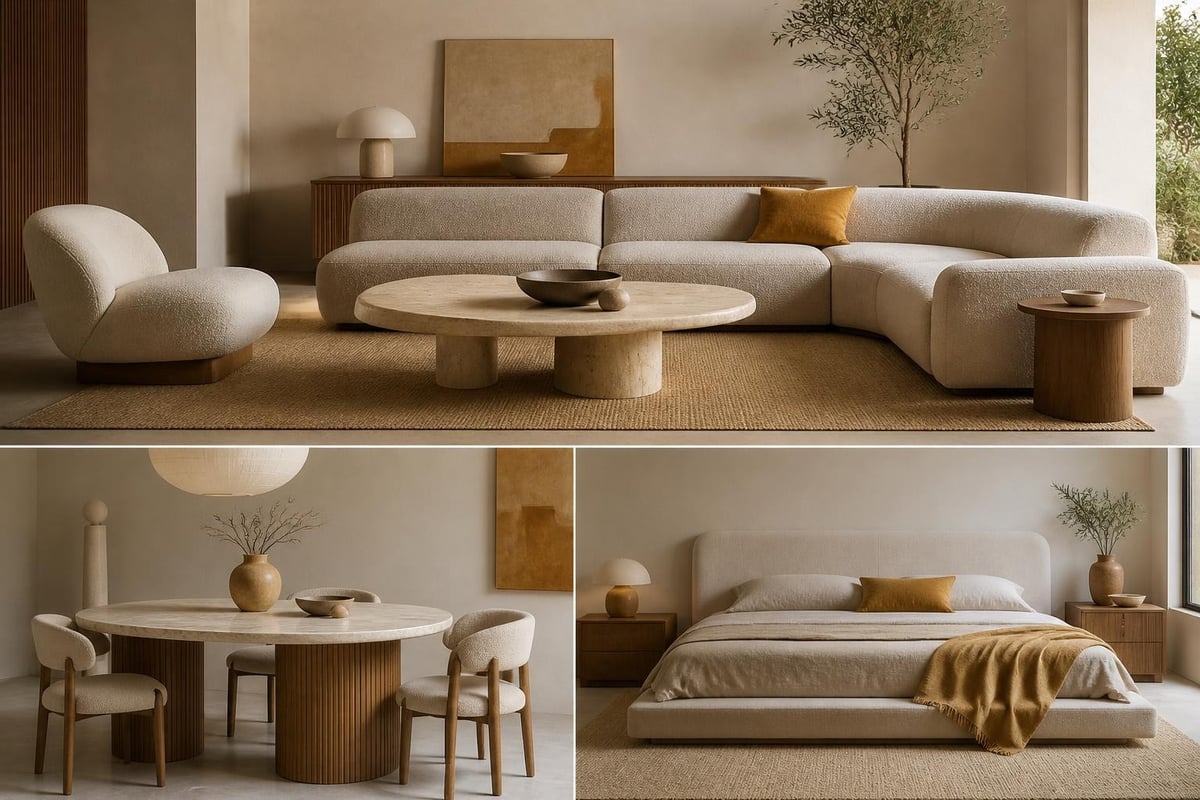
Sets also respond to contemporary furniture trends identified for 2025 and 2026, including sculptural curves, natural materials, and sustainable construction. These trends inform which sets feel current and which read as dated before they arrive.
Living Room Contemporary Furniture Sets
Living room sets are the most specified category. A typical set includes a sofa, armchair or occasional chair, coffee table, and side table. The sofa anchors the selection, with other pieces scaled and finished to complement it. For a contemporary furniture set to succeed in an open-plan New Zealand living room, the sofa must balance presence with proportion. Too small and it disappears; too large and it dominates.
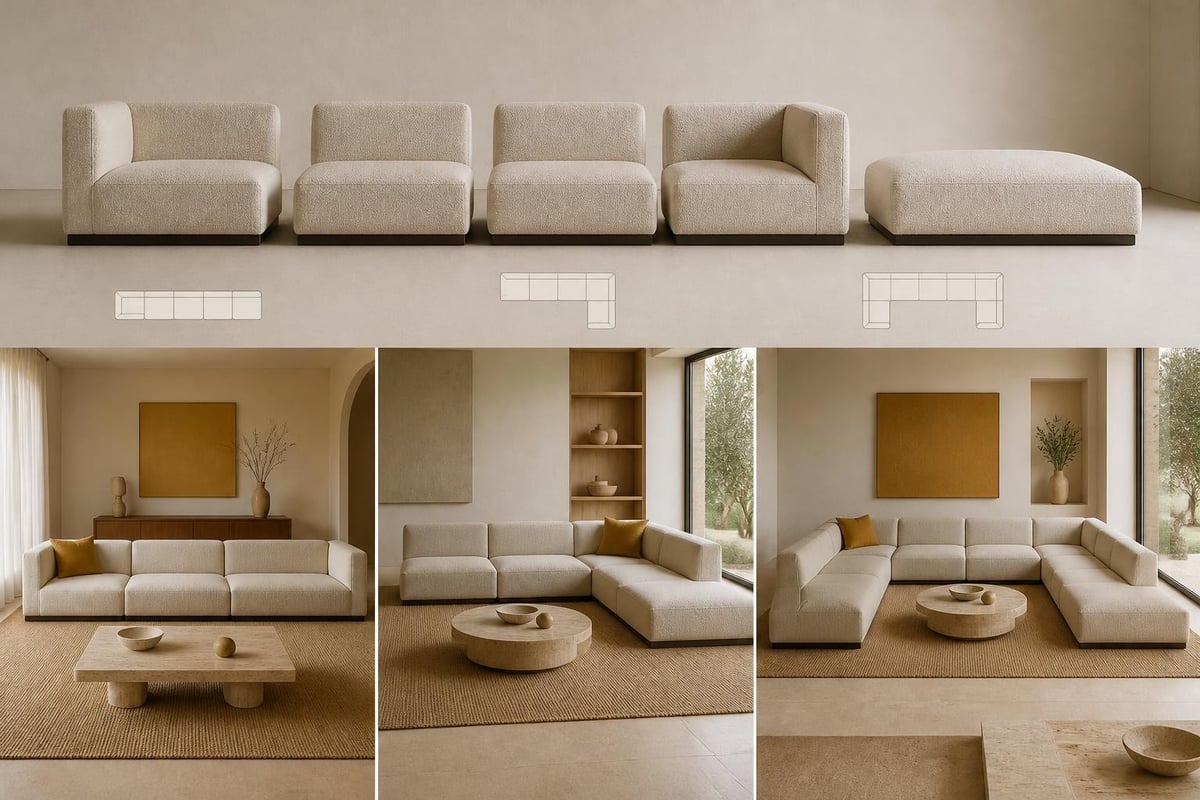
Modular sofas offer flexibility for L-shape or straight configurations. The Bowie L-Shape Sofa is a good example: no-sag spring base, high-density foam, and rubber-webbed backrests that hold support over time, with a recessed leg plinth for a low, minimal line. Modular design means you can configure the set to the room rather than forcing the room to suit the sofa.
Armchairs and Occasional Chairs
Armchairs in a contemporary furniture set need to offer support without visual bulk. Look for:
- Visible legs rather than skirted bases, which keep the floor plane open
- Proportions that suit the sofa's seat height and back angle
- Upholstery that either matches or contrasts deliberately (same fabric in a different colour, or leather paired with fabric)
Occasional chairs add flexibility. A swivel chair works in corners where a fixed armchair points the wrong way half the time, while a barrel-backed design offers wraparound support for reading or working.
| Feature | Straight Armchair | Swivel Armchair | Occasional Chair |
|---|---|---|---|
| Best for | Paired seating, symmetry | Flexible orientation, TV rooms | Extra seating, corner placement |
| Typical width | 70–85cm | 75–90cm | 60–75cm |
| Movement | Fixed | 360° swivel | Fixed |
| Upholstery | Fabric or leather | Fabric or leather | Fabric, leather, or timber with cushion |
For developers specifying contemporary furniture sets across multiple units, consistency in leg finish (black steel, natural timber, or matte bronze) simplifies procurement and maintains visual language across apartments or townhouses.
Dining Room Contemporary Furniture Sets
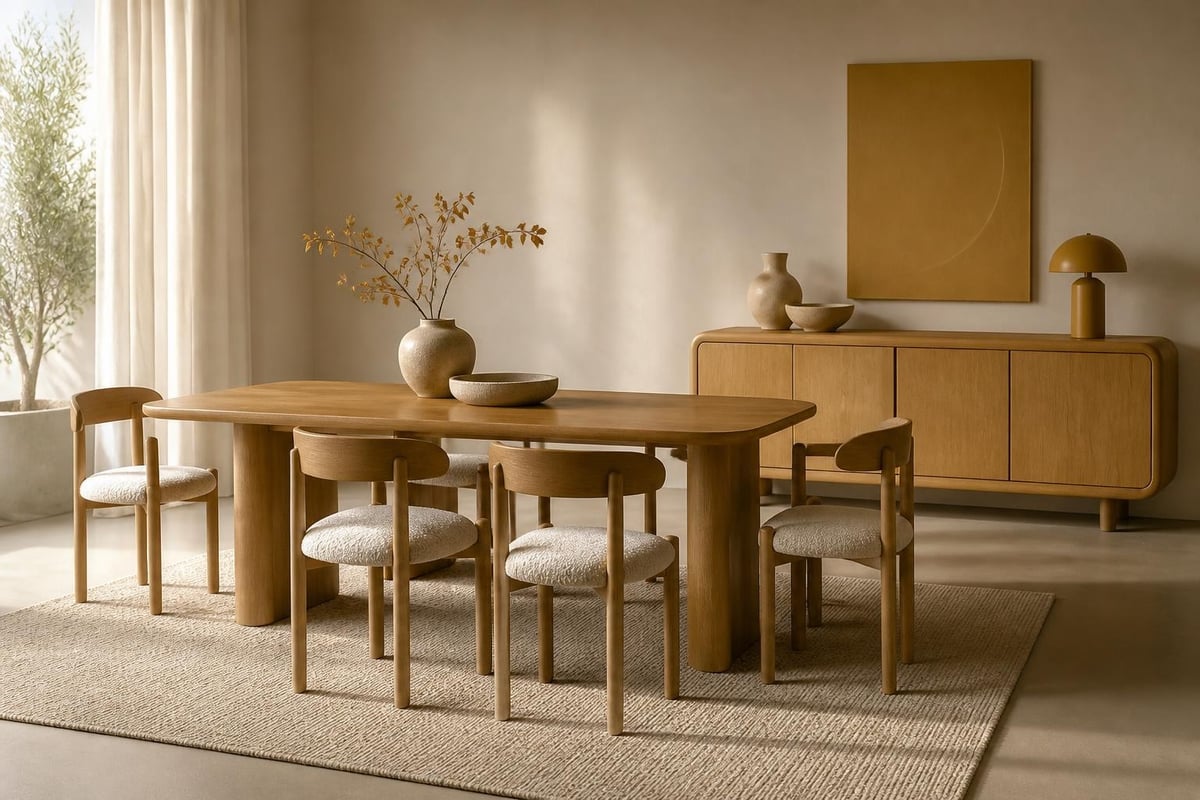
Dining sets are straightforward: table and chairs, sometimes with a sideboard or console. The table sets the material and finish, and chairs respond. Contemporary dining tables emphasise clean edges, minimal bases, and surfaces that withstand daily use. Timber, stone-look surfaces, and metal frames dominate the category.
Chairs should offer back support for long table sessions without looking heavy. Solid timber frames with cushioned seats are practical and visually light. Open backs keep the silhouette minimal, and eco-leather seats wipe clean, which matters for everyday dining. The timber finish on chairs should match or complement the table: coffee bean ash with walnut, natural oak with lighter timbers, smoked finishes with darker palettes.
Proportions and Scale
Dining sets must be scaled to the room. A 2.4-metre table seats eight comfortably but requires a room at least 3.6 metres wide to allow chair movement. Pedestal bases offer more flexibility than four-legged designs because chairs slide freely without hitting table legs. Round or oval tables suit smaller or square rooms; rectangular tables work for long, narrow dining spaces or open-plan kitchen-dining zones.
Checklist for specifying dining sets:
- Measure the room: allow 90cm clearance behind each chair when seated
- Count seats: plan for regular use, not occasional hosting
- Match leg or base style across table and chairs
- Specify chair seat height (typically 45–48cm) to suit table height (typically 75–76cm)
- Confirm finish compatibility: timber tone, metal colour, upholstery texture
Contemporary dining sets also benefit from coordinated occasional furniture. A sideboard in matching timber or finish stores tableware and anchors one wall, while a console or bar unit adds serving space without cluttering the table.
Bedroom Contemporary Furniture Sets
Bedroom sets typically include a bed frame, two bedside tables, and a dresser or chest of drawers. Some add a bench seat at the foot of the bed. The bed frame sets the tone: low platform designs suit contemporary interiors, while upholstered headboards add softness. Bedside tables should be proportional to the bed and offer drawer or shelf storage without visual bulk.
Timber is the dominant material. Oak, walnut, and ash provide grain and warmth, while lacquered or veneer finishes offer smooth, minimal surfaces. Contemporary bedroom sets avoid ornament, carved details, or heavy mouldings. Drawer fronts are flush, handles are recessed or minimal, and legs are slender or eliminated in favour of plinth bases.
Functional Considerations
Bedroom furniture must perform. Drawer joinery should be dovetailed or dowelled for strength, slides should be soft-close, and timber should be finished to resist marking. Contemporary sets often use mixed materials: timber frames with metal handles, or upholstered panels on timber beds. The Arc Side Table, for example, pairs solid timber with a refined profile suited to bedside use.
Bedside tables should sit at mattress height or slightly below. Too low and they're awkward to reach; too high and they dominate the bed. A height of 55–65cm suits most contemporary bed frames, which sit lower than traditional styles. Drawer depth matters for storage: 12–15cm is enough for books, devices, and small items; deeper drawers suit folded clothing or bulkier storage.
Material and Finish Selection for Sets
Material choice unites a contemporary furniture set. Timber, metal, upholstery, and composite materials each bring specific qualities and maintenance requirements. Timber offers warmth and grain variation. Oak is durable and widely available, walnut adds richness, and ash provides a lighter, more neutral base. Smoked or coffee-stained finishes deepen the tone without obscuring grain.
Metal frames in black steel, brushed bronze, or matte brass add structure without visual weight. Slender metal legs lift upholstered pieces off the floor, making rooms feel larger and floors easier to clean. Metal also suits outdoor or high-traffic areas because it resists moisture and impact better than timber.
Upholstery and Fabric Care
Upholstery fabric defines comfort and maintenance. Protecting textile upholstery requires regular vacuuming, avoiding direct sunlight, and rotating cushions to distribute wear. Contemporary fabrics include performance weaves treated for stain resistance, linen blends for breathability, and bouclé for texture. Eco-leather offers wipe-clean practicality for dining chairs and bar stools.
Leather upholstery improves with age if cared for correctly. Full-grain leather develops patina, while corrected-grain or bonded leather wears less gracefully. For contemporary furniture sets in family homes, performance fabrics or eco-leather balance durability with appearance.
| Material | Durability | Maintenance | Best Use |
|---|---|---|---|
| Solid timber | High (with proper finish) | Periodic oiling or waxing | Tables, chairs, bed frames |
| Metal (steel, aluminium) | Very high | Wipe clean, check joins | Legs, frames, occasional tables |
| Performance fabric | Medium to high | Vacuum, spot clean | Sofas, armchairs, dining chairs |
| Leather | High (full-grain) | Condition annually, wipe spills | Sofas, armchairs, executive chairs |
| Eco-leather | Medium | Wipe clean | Dining chairs, bar stools, casual seating |
Finish compatibility across a contemporary furniture set is critical. Black metal legs on a sofa should match black metal legs on a coffee table. Timber tones should be close enough to read as intentional rather than mismatched. For developers or designers specifying sets across multiple properties, maintaining a material library with samples ensures consistency.
Modular and Configurable Sets
Modular sets adapt to different spaces. A modular sofa can be reconfigured from straight to L-shape or extended with additional modules. Modular dining sets add or remove leaves to suit gathering size. The advantage is flexibility: the same set works in a two-bedroom apartment or a four-bedroom house, simply reconfigured.
Modular contemporary furniture sets also simplify staged purchasing. Buy the sofa and coffee table first, add the armchair later, extend the dining table when needed. The risk is discontinuation: if a manufacturer stops producing a module, completing the set becomes difficult. For this reason, choosing established New Zealand retailers with consistent ranges matters.
Standards and Sustainability
Specifying sustainable contemporary furniture sets aligns with broader environmental goals. The StopWaste Sustainable Purchasing Guide for indoor furniture outlines certification to look for, including FSC-certified timber, low-VOC finishes, and recycled content in foam or fabric. Sustainability extends to durability: well-constructed furniture that lasts twenty years has lower environmental impact than cheaper pieces replaced every five.
Ergonomic design and anthropometric considerations also inform contemporary furniture sets, particularly for work-from-home or study areas. Desk height, chair adjustability, and monitor positioning affect comfort and productivity. For developers specifying furniture for serviced apartments or co-living spaces, ergonomic compliance reduces liability and improves occupant satisfaction.
Specifying Sets for Developers and Designers
Interior designers and developers specifying contemporary furniture sets for new builds, apartment complexes, or staged properties need repeatable solutions that photograph well, withstand use, and remain available. Key considerations include:
- Lead times: Furniture manufacture and shipping can extend 8–16 weeks; confirm availability before specifying
- Warranty and after-sales support: Mid-to-high end pieces should include structural warranty; upholstery wear is typically excluded
- Consistency: Maintain finish samples and SKU records to ensure replacements match original specifications
- Budget allocation: Allocate 12–18% of total interior budget to furniture for standard residential fit-outs
For hospitality projects, durability increases in importance. Specify commercial-grade upholstery, reinforced frames, and replaceable components. Hospitality suppliers such as Hantermann, which specialises in hotel furnishings including beds, chairs, tables, and textiles, offer contract-grade options suited to high-traffic environments where residential furniture would fail.
Maintenance and Long-Term Care
A contemporary furniture set is an investment. Proper care extends lifespan and maintains appearance. Timber furniture benefits from regular dusting and periodic treatment with appropriate oils or waxes. Avoid placing timber pieces in direct sunlight or near heating vents, both of which cause warping or fading. The U.S. National Park Service offers practical conservation guidance on cleaning and maintaining wooden furniture, applicable to residential contexts.
Upholstered pieces require vacuuming to remove dust and debris from fabric weave. Rotate cushions monthly to distribute wear. Feather-filled cushions need plumping to maintain shape; foam cushions hold form without intervention. Leather requires conditioning once or twice annually to prevent drying and cracking. Spills should be blotted immediately, not rubbed, to prevent staining.
Seasonal maintenance checklist:
- Quarterly: Vacuum upholstery, check frame joints for looseness, dust timber surfaces
- Biannually: Condition leather, oil or wax timber, rotate cushions
- Annually: Inspect metal frames for corrosion, tighten hardware, assess fabric for fading or wear
For pieces used daily, consider fitted covers or throws to reduce direct wear. Contemporary furniture sets designed for New Zealand conditions should already account for humidity fluctuations and UV exposure, but proactive care reduces maintenance costs over time.
Bringing a Contemporary Furniture Set Together
Assembling a contemporary furniture set requires balancing aesthetic cohesion with functional performance. Start with the anchor piece, typically a sofa for living rooms or a dining table for dining spaces. Confirm dimensions fit the room with clearance for movement. Next, select complementary pieces that share material, finish, or proportion. A coffee table in matching timber or a sideboard with the same leg style reinforces the set's visual language.
For those furnishing open-plan living, the contemporary furniture set must work across multiple zones. A sofa and armchair define the lounge area, a dining table and chairs mark the eating zone, and occasional furniture (bar stools, side tables, consoles) bridge the spaces. Material consistency ties the zones together without requiring identical pieces. Black metal legs on the sofa, dining chairs, and bar stools create rhythm; timber tones in the coffee table, dining table, and sideboard add warmth.
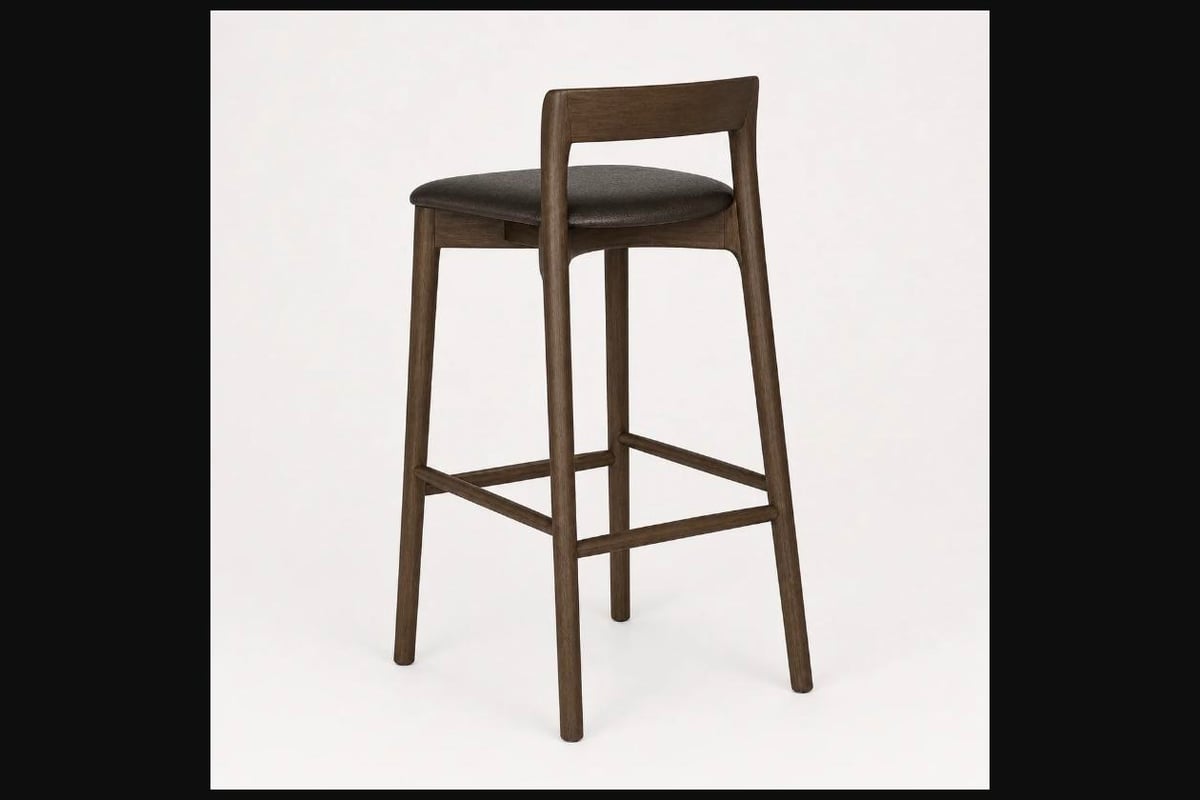
Bar stools deserve particular attention in open-plan homes where kitchen islands double as dining or work surfaces. The Raphael Bar Stool - Smoke combines solid timber construction with a cushioned eco-leather seat, suited to breakfast, homework, or the long end of a dinner party. Seat height at 65cm works with standard island heights, and the wipe-clean seat handles daily use.
Visit Bauhaus showrooms to see how contemporary furniture sets work in styled room settings, and consult with the team on fabric, finish, and configuration options tailored to your project or home.
Disclaimer: AI-supported images may differ from products on website.
A contemporary furniture set brings material coherence, proportional balance, and functional clarity to a room or home. Specifying pieces that share design language, finish, and construction quality ensures the space reads as intentional rather than accumulated. Whether you're furnishing a new build, refreshing a single room, or specifying for a development project, the right set anchors your interior. Bauhaus offers curated collections designed for modern New Zealand living, with experienced advisors ready to guide you through material, configuration, and finish choices that work for your space.