Choosing living room chairs and sofas demands more than a quick scan of online images. The pieces you bring into your home carry weight, occupy floor space, and shape how you spend evenings and weekends for the next decade or more. Frame construction, cushion fill, upholstery durability, and seat depth all influence whether a sofa feels right after six months or six years. For New Zealand homeowners, interior designers, and developers working with contemporary interiors, understanding these material and design decisions means fewer compromises and better long-term value.
Frame Construction and Material Durability
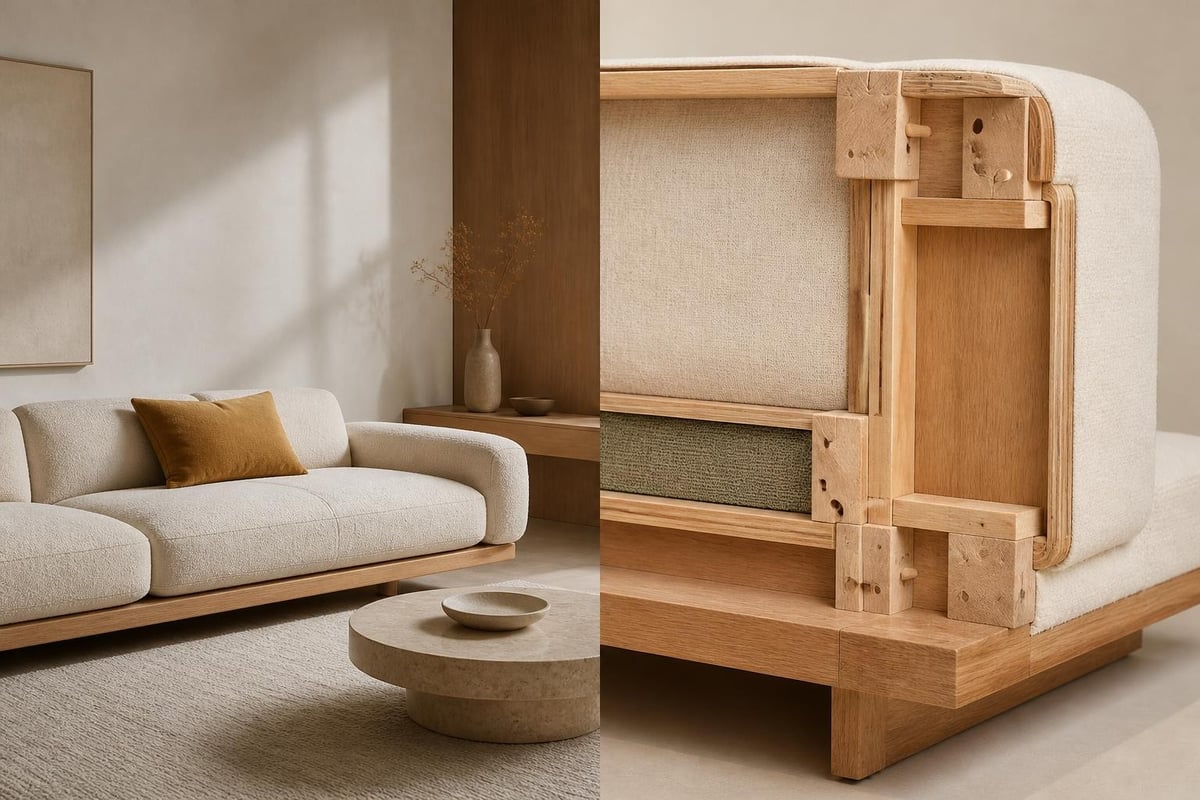
The frame forms the skeleton of any sofa or chair. Solid timber frames, typically birch or beech, offer the best longevity. Engineered timber and plywood composites can work well in supporting roles, reinforcing corners and back panels, but the main structure should rely on kiln-dried hardwood jointed with dowels, screws, and corner blocks.
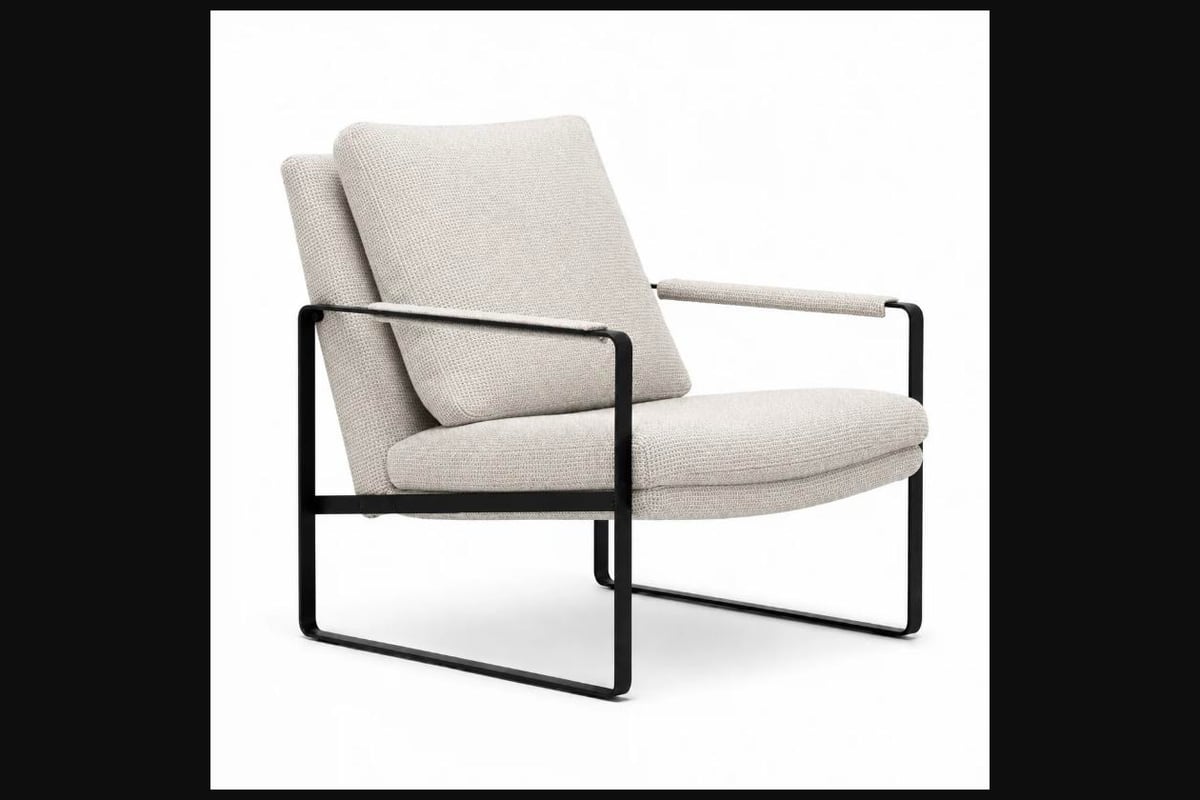
Metal frames in occasional chairs and bar stools bring different strengths. Steel tube or rod frames powder-coated in matte black resist rust and hold their shape under repeated stress. Look for welded joints rather than bolted connections where loads concentrate, particularly at seat-to-backrest junctions. Consumer Reports outlines key construction details worth checking before committing to a purchase.
Joinery and Load-Bearing Connections
Mortise-and-tenon joints, dowelled connections, and glued-and-screwed corner blocks distribute weight evenly across the frame. Stapled butt joints fail faster. When inspecting a sofa in a showroom, lift one end slightly. Excessive creaking or visible frame flex signals weak joinery. Quality pieces feel rigid and quiet.
Plywood seat decks spanning the frame support spring systems and cushion cores. Thinner decks sag over time, letting springs push through or cushions bottom out. A 12mm or thicker birch ply deck, screwed and glued to the frame rails, maintains structure and prevents the hollow drumming sound some sofas develop.
Spring Systems and Seat Support
Spring systems define how a seat feels and how well it recovers after use. Three main types appear in contemporary furniture: sinuous (no-sag) springs, eight-way hand-tied coil springs, and elasticated webbing. Each suits different seating styles and budgets.
| Spring Type | Construction | Longevity | Typical Application |
|---|---|---|---|
| No-sag springs | S-shaped wire run front to back | 10-15 years | Mid-range sofas, firm sit |
| Eight-way hand-tied | Individual coils tied with twine | 15-20 years | Premium sofas, traditional feel |
| Elasticated webbing | Rubber-reinforced webbing straps | 8-12 years | Occasional chairs, lighter frames |
No-sag springs, also called sinuous springs, run horizontally from front to back, clipped to the frame with metal brackets. They provide even, firm support without the labour cost of hand-tied coils. Rubber webbing works well in smaller chairs where individual coil springs add unnecessary weight and complexity.
Hand-tied coil springs remain the benchmark for premium seating. Each coil connects to its neighbours with twine in eight directions, creating a unified support platform that flexes and recovers as one system. The process takes time, which raises cost, but the result lasts decades and maintains its original firmness longer than simpler systems.
Cushion Fill and Comfort Layering
Cushion fill determines seat firmness, recovery speed, and maintenance needs. High-density polyurethane foam, feather-down blends, memory foam, and inner-coil assemblies each behave differently under load.
High-density foam (35kg/m³ or higher) holds its shape for years without sagging. Layering foam densities, firmer at the base and softer at the top, balances support with surface comfort. Foam-only cushions need no plumping and suit households wanting low-maintenance seating.
Feather-down cushions offer a softer, enveloping sit. Down and feather blends wrapped around a foam core provide initial support with a plush top layer. The trade-off: feather cushions compress and need regular plumping to maintain their shape. Some owners appreciate the lived-in aesthetic; others find the upkeep tedious.
Foam Density and Resilience Standards
Foam density measures weight per cubic metre. Lower-density foam (below 30kg/m³) compresses quickly and loses shape within a few years. Higher-density foam costs more but maintains firmness through daily use. ASTM D4852 standards guide manufacturers on upholstery fabric and foam performance testing, ensuring materials meet baseline durability thresholds.
Inner-coil cushions contain individual pocket springs encased in foam and fabric. They combine the responsiveness of springs with the contouring of foam. These cushions resist sagging and recover shape faster than foam alone, making them ideal for high-use sofas in family living rooms.
Upholstery Fabrics and Leather Options
Upholstery fabrics face daily friction, spills, UV exposure, and pet claws. Natural fibres, synthetics, and leather each respond differently to these stresses.
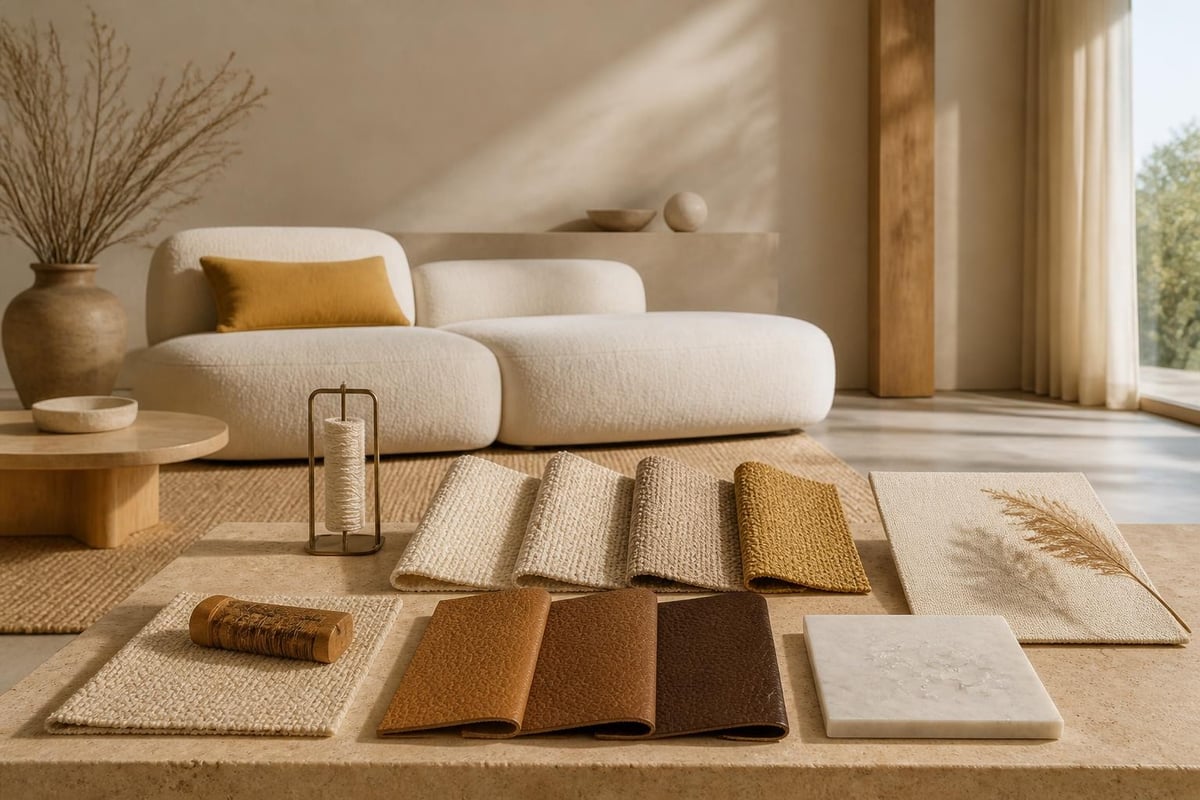
Linen offers a relaxed, textured look that suits coastal and contemporary interiors. It breathes well in warm weather but wrinkles easily and shows wear in high-contact areas like armrests. Cotton blends resist pilling better than pure cotton and hold dye more evenly. Synthetic fabrics, particularly polyester and acrylic blends, withstand stains and fading better than natural fibres, though some feel less breathable.
Leather upholstery, whether full-grain, top-grain, or corrected-grain, ages visibly. Full-grain leather shows natural grain and develops a patina over time, while corrected-grain leather receives an embossed surface that hides imperfections. Eco-leather, a polymer-coated fabric, wipes clean easily and suits dining chairs and bar stools exposed to food and drink.
When selecting fabric for living room sofas, consider rub count (Martindale or Wyzenbeek tests measure abrasion resistance). Residential-grade fabrics start at 15,000 rubs; contract-grade fabrics exceed 30,000. High rub counts matter for families with children or pets, less so for formal sitting rooms.
Seat Depth, Backrest Angle, and Ergonomics
Seat depth and backrest angle affect posture, comfort, and suitability for different activities. Deep seats (100cm or more) encourage reclining and feet-up lounging. Shallow seats (85-90cm) support upright posture for reading, conversation, or working on a laptop.
Research on seating comfort and spinal profile highlights the relationship between lumbar support, backrest shape, and long-term comfort. Sofas with adjustable headrests or lumbar cushions accommodate different body types and sitting preferences. Fixed backrests should angle between 100 and 110 degrees to support the natural curve of the spine without forcing an overly reclined posture.
Seat height also matters. Standard seat heights range from 38cm to 45cm. Lower seats (38-40cm) feel casual and suited to relaxed, sprawling sits. Higher seats (43-45cm) make standing easier for older users or anyone with limited mobility. Studies linking sofa posture to lower-back pain suggest that seats too deep or too soft can contribute to discomfort during extended sitting sessions.
Arm Height and Side Support
Arm height influences how you sit and whether the sofa works for side-sleeping or laptop use. Low arms (below 60cm) allow draping legs over the side and suit modern, minimalist aesthetics. Higher arms (65cm and above) provide better side support and enclose the sitter, creating a more traditional, cocooning feel.
Track arms, rolled arms, and sloped arms each change the silhouette and footprint of a sofa. Track arms run straight and square, adding width but maintaining clean lines. Rolled arms curve outward, softening the profile but claiming more floor space. Sloped arms angle inward, saving a few centimetres without sacrificing comfort.
Configuring L-Shape and Modular Layouts
L-shape sofas and modular systems adapt to open-plan living areas, defining zones without walls. Left- or right-facing chaise modules extend seating and encourage lounging. Corner units turn the configuration, while ottomans add flexible seating or footrest options.
Modular pieces ship in separate sections, simplifying delivery through narrow hallways and doorways. Each module connects via brackets or interlocking tabs, holding the configuration stable without permanent assembly. This flexibility lets you reconfigure the layout when moving house or rearranging a room.
When planning an L-shape layout, measure the room carefully and account for door swings, traffic paths, and sight lines to televisions or windows. A chaise that blocks a hallway or forces awkward navigation around the coffee table creates daily friction. Aim for at least 50cm of clearance between the sofa edge and other furniture.
Occasional Chairs and Accent Seating
Occasional chairs and armchairs add seating capacity without the footprint of a full sofa. Lounge chairs with higher backs and generous seat depth work well in reading corners or bedroom spots. Accent chairs with slimmer profiles fit beside windows or flanking a fireplace.
Swivel chairs on concealed bases turn to face conversation, views, or screens without repositioning the whole piece. This flexibility suits corners and alcoves where a fixed chair points in only one direction. Swivel mechanisms should rotate smoothly and quietly, with a stable base that resists tipping.
If you're considering a chair that combines lean-back comfort with a compact footprint, the Leman Armchair offers a webbed steel seat frame and modelling foam backrest on a painted steel frame, suited to living rooms needing genuine support rather than an upright perch.
Barrel chairs, wingback chairs, and slipper chairs each serve different functional and aesthetic roles. Barrel chairs wrap the sitter in a curved back and arms, creating visual warmth. Wingback chairs add formality and side-draught protection in older homes. Slipper chairs sit low and armless, sliding under desks or console tables when not in use.
Material Selection and Indoor Air Quality
Furniture contributes to indoor air quality through off-gassing from adhesives, foams, and finishes. Volatile organic compounds (VOCs) and formaldehyde emissions decline over time but can affect sensitive individuals in the first weeks after delivery. EPA guidance on indoor air quality identifies furniture as a potential emissions source and recommends choosing low-VOC products where possible.
Water-based adhesives, CertiPUR-US certified foams, and natural fibre upholstery reduce chemical exposure. Solid timber frames and metal structures emit fewer VOCs than particleboard or MDF cores bonded with urea-formaldehyde resins. If indoor air quality concerns you, ask suppliers about certifications and let new furniture air in a ventilated room before regular use.
Natural materials like linen, wool, and leather bring their own considerations. Wool resists flame naturally and requires fewer chemical treatments. Linen breathes well but stains more easily. Leather requires regular conditioning to prevent drying and cracking, particularly in centrally heated homes.
Scale, Proportion, and Visual Balance
Living room chairs and sofas must balance physical comfort with visual proportion. A deep, low sofa in a small room overwhelms the space and blocks sight lines. A compact two-seater in a large open-plan area looks lost and under-scaled.
Measure your room before shortlisting pieces. A common guideline: sofas should not exceed two-thirds the length of the wall they face. Allow at least 40cm between the sofa front and the coffee table edge, and 50cm or more between the sofa back and the wall for circulation and cleaning access.
Leg height affects perceived weight and floor visibility. Sofas on low plinths or skirted bases feel grounded and substantial but make vacuuming harder. Sofas on tall legs (15cm or higher) appear lighter, simplify cleaning, and suit minimalist interiors. The choice affects both aesthetics and household practicality.
Mixing Sofa and Chair Styles
Pairing a sofa with occasional chairs in complementary but not identical styles adds visual interest without clashing. A structured, track-arm sofa pairs well with a curved barrel chair or a swivel lounge chair. The contrast in form prevents the room from feeling too matchy or staged.
Stick to a consistent material palette (all fabric, all leather, or fabric-and-leather mixes) and a shared colour temperature (warm or cool tones). Mixing a warm cognac leather sofa with a cool grey fabric chair creates tension unless you introduce bridging tones through cushions or throws.
Maintenance, Cleaning, and Longevity
Living room chairs and sofas last longer with routine care. Vacuum upholstery weekly to remove dust and prevent fibre abrasion. Rotate cushions monthly to even out wear patterns. Plump feather cushions after use to redistribute fill and maintain shape.
Spot-clean spills immediately with a damp cloth and mild detergent, working from the spill edge inward to avoid spreading. Practical cleaning routines from the American Cleaning Institute recommend seasonal deep-cleans and regular maintenance schedules to extend upholstery life.
Leather upholstery needs conditioning two to four times per year, depending on humidity and use. Apply leather conditioner sparingly with a soft cloth, buffing excess to avoid sticky residue. Avoid placing leather furniture in direct sunlight, which dries and fades the surface.
Fabric protectors like Scotchgard or Teflon treatments repel water and oil-based stains, buying time to blot spills before they set. Reapply protectors annually or after professional cleaning, following the product instructions.
Current Design Trends and Timeless Choices
Design trends in 2026 favour curved silhouettes, organic forms, and tactile fabrics. Architectural Digest notes the shift toward softer, more sculptural shapes that contrast with the sharp angles and minimalism of the past decade. Modular systems, boucle fabrics, and low-profile frames continue to gain traction in contemporary interiors.
Trends offer inspiration but should not override personal comfort and long-term suitability. A curved sofa that feels awkward to sit on will frustrate you long after the trend cycle moves on. Choose pieces that fit your body, your habits, and your space, drawing on current design language where it aligns with those priorities.
Neutral tones (greys, taupes, warm whites) remain popular for their versatility and resale appeal. Bold colours and patterns add personality but narrow future styling options. If you prefer vibrant hues, consider introducing colour through cushions, throws, or occasional chairs that can be swapped or moved more easily than a three-seater sofa.
Budgeting for Quality and Avoiding Common Pitfalls
Quality living room chairs and sofas represent a meaningful investment. Rushing the decision or prioritising price over construction leads to dissatisfaction and replacement costs within a few years. Common mistakes when buying a couch include underestimating size, ignoring frame construction, and choosing fabrics that don't suit household use.
Set a realistic budget that accounts for the piece's expected lifespan. A $3,000 sofa that lasts fifteen years costs less per year than a $1,200 sofa that needs replacing in five. Factor in delivery, fabric protection, and any custom options like contrast piping or upgraded foam.
Visit showrooms to test seating comfort, inspect joinery, and compare fabrics in person. Online images flatten dimensions and distort colours. Sitting on a sofa for two minutes in a showroom reveals more than a dozen photos. For those exploring contemporary furniture options, seeing pieces in three dimensions clarifies how they'll function in your home.
Delivery, Access, and Assembly
Measure doorways, hallways, and stairwells before ordering. Modular sofas and sectional pieces disassemble for easier delivery, but fixed-frame sofas may not fit through tight turns or narrow doors. Suppliers should provide dimensions for both the assembled piece and the largest single section.
Ground-floor delivery to the kerb is standard; inside delivery and assembly cost extra. If you lack help to move the sofa from the street to your living room, budget for professional delivery. Damaging a new sofa while wrestling it through a doorway negates any savings.
Assembly instructions for modular systems should be clear and require only basic tools. Brackets should align easily, and connectors should hold firmly without excessive force. Test the configuration before tightening all fixings, adjusting positions if sections sit unevenly.
Selecting Pieces for Multi-Use and Family Spaces
Living rooms in New Zealand homes often serve multiple roles: family lounging, guest accommodation, work-from-home zones, and children's play areas. Furniture for these spaces must balance formality with durability.
Performance fabrics with high rub counts, stain resistance, and easy cleaning suit family spaces. Leather and eco-leather wipe clean quickly, handling spills from snacks, drinks, and craft projects. Removable, washable covers let you refresh upholstery without professional cleaning bills.
Sofas with low, open bases and minimal crevices simplify cleaning underneath and reduce lost toys or dust accumulation. Avoid overly plush cushions that trap crumbs or delicate fabrics that show every fingerprint. Practicality here does not mean sacrificing aesthetics; many contemporary designs combine clean lines with hard-wearing materials.
Disclaimer: AI-supported images may differ from products on website.
Choosing living room chairs and sofas that balance comfort, construction, and visual appeal takes time, but the result shapes your daily experience for years to come. At Bauhaus, we specialise in mid-to-high end contemporary furniture designed for modern New Zealand living, with two Auckland showrooms and a team ready to guide you through frame types, fabric options, and configurations that suit your space. Visit us to test seating in person and find pieces built to last.