Creating a true home of furniture requires more than simply filling rooms with seating and storage. It demands a thoughtful approach to quality, design integrity, and how each piece contributes to the way you live. For New Zealand homeowners, interior designers, and developers, understanding the distinction between purchasing furniture and investing in pieces that define your space makes all the difference. The global home furnishings market continues to evolve, with emerging trends reshaping how we approach interior spaces, yet the fundamentals of quality, comfort, and craftsmanship remain constant.
What Defines a True Home of Furniture
A genuine home of furniture isn't merely a retail space stocked with inventory. It represents a carefully curated collection where every piece has earned its place through design merit, construction quality, and relevance to contemporary living. Since 2003, family-owned retailers like Bauhaus have demonstrated that specialisation in mid-to-high end contemporary furniture creates a different customer experience entirely.
The distinction lies in curation versus volume. While mass-market retailers focus on turnover and trend-chasing, a dedicated home of furniture prioritises longevity and design integrity. This approach serves homeowners who understand that furniture represents a long-term investment in their daily comfort and property value.
The Curation Philosophy
Expert curation involves understanding materials, construction methods, and how design translates to real-world use across New Zealand's diverse homes. Each piece must justify its inclusion through:
- Structural integrity: Hardwood frames, quality joinery, and robust suspension systems
- Material authenticity: Full-grain leathers, performance fabrics, and sustainably sourced timbers
- Design coherence: Pieces that complement rather than compete within contemporary interiors
- Functional versatility: Furniture that adapts to New Zealand's indoor-outdoor lifestyle
This selective approach means fewer SKUs but higher satisfaction rates. Customers aren't overwhelmed by endless variations of mediocre pieces. Instead, they encounter thoughtfully chosen furniture that represents genuine value.
Quality Markers That Matter in Contemporary Furniture
Identifying quality furniture requires understanding what separates well-made pieces from their mass-produced counterparts. The home furnishings market's projected growth highlights increasing consumer sophistication, yet many shoppers still struggle to assess true quality markers.
Frame Construction and Joinery
Premium sofas and seating begin with solid hardwood frames, typically beech or birch, kiln-dried to prevent warping. Corner blocks should be glued and screwed, not just stapled. Joints use mortise-and-tenon or dowel construction rather than simple butt joints.
For pieces like the Elan 2.5 seat sofa, frame quality determines longevity. A properly constructed frame will outlast fabric and cushioning, making reupholstering economically sensible decades later.
| Quality Level | Frame Material | Joinery Method | Expected Lifespan |
|---|---|---|---|
| Premium | Kiln-dried hardwood | Mortise-and-tenon, corner-blocked | 20+ years |
| Mid-range | Engineered wood/hardwood blend | Dowel joints, reinforced | 10-15 years |
| Budget | Particle board, softwood | Stapled, glued | 3-5 years |
Suspension Systems
Eight-way hand-tied springs represent the gold standard in seating comfort and durability. This labour-intensive method creates a supportive, responsive seat that maintains its shape through decades of use. Webbing suspension offers a more affordable alternative while still providing good support, particularly when paired with high-density foam.
Avoid sinuous springs in premium furniture. While acceptable for occasional seating, they lack the longevity and support serious homeowners expect from investment pieces.
Material Selection for New Zealand Conditions
Our unique climate demands particular attention to material selection. Auckland's humidity differs markedly from Central Otago's dry conditions, while coastal properties face salt air exposure. A proper home of furniture understands these regional variations.
Fabric Performance Considerations
Performance fabrics have evolved beyond commercial aesthetics to include sophisticated weaves suitable for residential settings. Key specifications include:
- Martindale rub count: Minimum 30,000 for residential; 40,000+ for family homes
- Colorfastness: Grade 4 or higher to resist fading from New Zealand's high UV exposure
- Cleanability: Removable covers or professional-grade stain treatments
- Breathability: Natural fibre content prevents moisture accumulation in humid climates
Natural linens and performance-treated wools work exceptionally well in New Zealand homes, offering breathability alongside durability. Synthetic blends provide excellent stain resistance for households with children or pets.
Leather Grading and Characteristics
Full-grain aniline leather develops beautiful patina but requires maintenance and accepts wear as character. Semi-aniline offers protective coating while preserving natural texture. Pigmented leather provides maximum durability and stain resistance, ideal for high-traffic areas.
For pieces like occasional chairs or dining chairs, leather selection depends on use patterns and aesthetic preferences. A home office benefits from aniline's tactile quality, while family dining spaces suit protected leathers.
Designing Your Home of Furniture: Room by Room
Creating cohesive interiors requires strategic furniture selection that balances individual room requirements with overall design harmony. Contemporary design trends for 2026 emphasise both maximalist 'city glow' and minimalist 'cottage flow' aesthetics, yet timeless design transcends these polarities.
Living Areas: Anchoring Your Home
The living room serves as your home's social heart, demanding furniture that combines comfort with visual impact. Start with seating that accommodates your typical gathering size plus two additional guests. The Elan L-shape sofa demonstrates how modular configurations adapt to various room proportions while maintaining design integrity.
Coffee tables should sit 40-45cm from seating, with height matching seat cushions for comfortable reach. Consider storage requirements early; concealed storage maintains clean lines while accommodating the realities of daily living.

Dining Spaces: Where Function Meets Form
Dining furniture balances frequent use with occasional entertaining. Allow 60cm width per person at table, with 90cm clearance behind chairs for comfortable seating and serving. Extendable tables like the Hanna dining table offer everyday practicality without compromising aesthetics when hosting larger gatherings.
Chair comfort matters significantly for spaces doubling as work-from-home areas. Upholstered seats and supportive backs transform dining chairs into viable desk seating when needed.
Bedroom Sanctuaries: Prioritising Rest
Bedroom furniture should promote restful environments through cohesive design and practical storage. The Max collection's various configurations demonstrate how a unified design language across bedside tables, chests, and storage creates visual calm.
Nightstand height should align with mattress top for easy reach. Consider charging requirements and lighting early; integrated solutions maintain clean surfaces while meeting modern needs.
The Commercial Furniture Consideration
Developers and interior designers furnishing commercial spaces or multi-unit developments require different considerations than residential buyers. Volume doesn't justify compromising quality; rather, it demands greater attention to durability and maintenance requirements.
Specifying for Durability
Commercial applications need documented specifications:
- Frame warranties (minimum 10 years for premium pieces)
- Fabric certification for fire retardancy (NZ Building Code compliance)
- Maintenance protocols and expected service intervals
- Replacement part availability for long-term stock matching
Design Cohesion Across Multiple Units
When furnishing apartment buildings or hospitality projects, consistency matters. Work with suppliers maintaining stable collections rather than constantly rotating inventory. This ensures replacement availability and creates design continuity across developments.
Modular systems offer particular value, allowing configuration flexibility while maintaining aesthetic coherence. Bar stools like the Loft bar stool work across café, residential, and commercial applications.
Investment Value: Cost Per Year Analysis
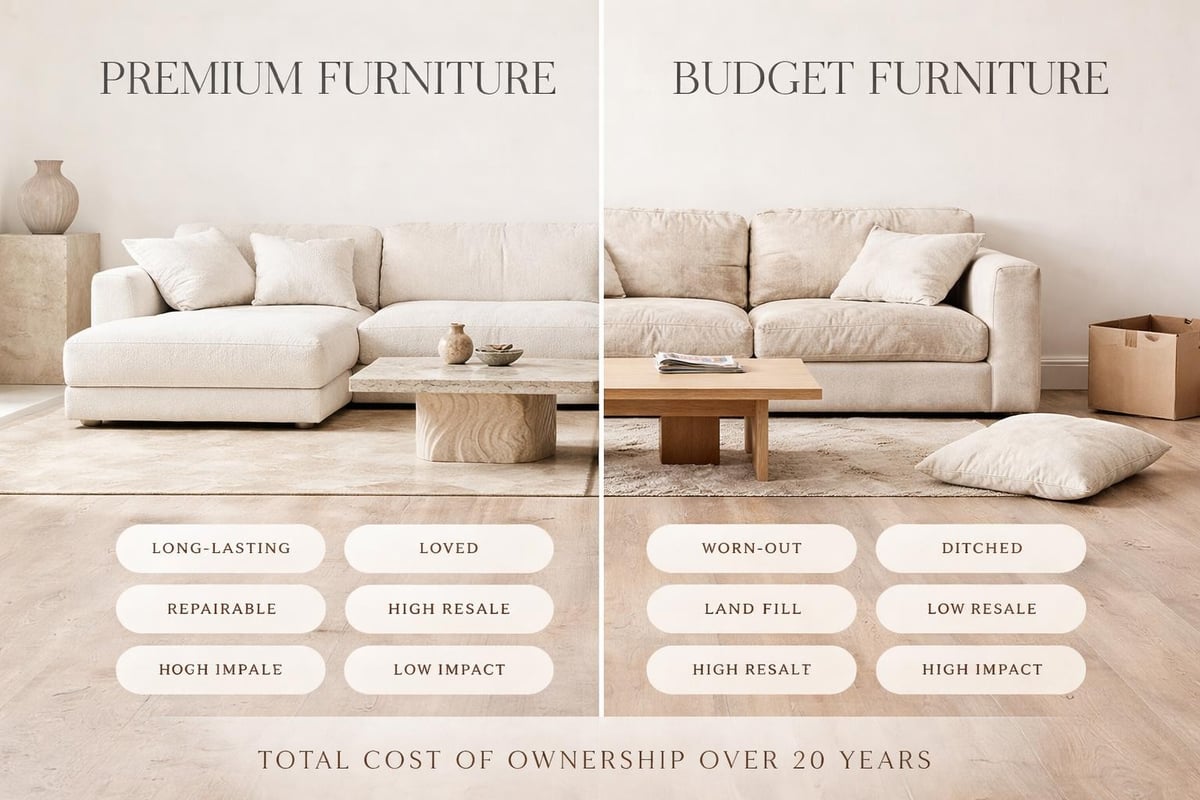
Understanding furniture value requires moving beyond sticker price to cost-per-year thinking. A premium sofa costing $8,000 with a 20-year lifespan costs $400 annually. A $2,000 sofa lasting five years costs the same per year, excluding replacement hassles and disposal costs.
This calculation shifts particularly when considering reupholstering. Quality frames justify fabric updates, effectively creating a new piece at fraction of replacement cost. Budget furniture rarely warrants this investment, as frame quality doesn't support it.
| Purchase Price | Expected Lifespan | Annual Cost | Reupholster Option |
|---|---|---|---|
| $8,000 premium | 20+ years | $400/year | Yes, economical |
| $4,500 mid-range | 12 years | $375/year | Possibly, marginal |
| $2,000 budget | 5 years | $400/year | No, not worthwhile |
Environmental Considerations
Quality furniture's extended lifespan significantly reduces environmental impact. Manufacturing represents furniture's largest carbon footprint; maximising use years minimises per-year impact. Additionally, quality pieces enter secondhand markets rather than landfills, extending useful life further.
The broader economic challenges facing home furnishings partially stem from fast-furniture culture's unsustainability, both environmentally and economically.
The Showroom Experience: Why Physical Matters
Despite e-commerce growth, furniture benefits enormously from physical evaluation. Photographs cannot convey seat firmness, fabric texture, or proportional relationships within actual spaces. A proper home of furniture provides this tactile experience through well-designed showrooms.
Auckland showrooms allow customers to test multiple configurations, compare fabrics in natural light, and understand scale relationships. This hands-on evaluation significantly reduces purchase regret and returns.
Expert Consultation Value
Experienced furniture consultants translate aspirations into practical selections. They understand:
- How specific pieces perform in various settings
- Fabric suitability for individual lifestyles and maintenance preferences
- Configuration options maximising space efficiency
- Lead times and customisation possibilities
This personalised service differentiates specialist retailers from online-only competitors or big-box stores with transactional staff.
Furniture Care and Maintenance Protocols
Investment pieces justify proper maintenance. Establishing care routines extends lifespan and preserves appearance.
Upholstery Care Essentials
- Weekly: Vacuum with upholstery attachment to remove dust and prevent particle abrasion
- Monthly: Rotate and flip reversible cushions to equalise wear patterns
- Quarterly: Professional cleaning for high-use pieces in family environments
- Annually: Assess for minor repairs before they worsen
Leather requires conditioning every 6-12 months depending on climate exposure. Auckland's humidity needs more frequent attention than drier regions.
Timber Furniture Maintenance
Dust regularly with microfibre cloths to prevent buildup. For pieces like the Enzo coffee table, use coasters consistently and wipe spills immediately. Oil-finished timbers benefit from annual re-oiling; lacquered finishes need only cleaning unless damaged.
Avoid furniture polish containing silicone, which builds up and complicates future refinishing.
Styling Your Home of Furniture Collection
Furniture curation extends beyond individual pieces to how they interact within spaces. Contemporary design favours mixing materials and eras rather than rigid matching.
Material Mixing Principles
Combine warm and cool tones: Oak tables with steel-legged chairs, marble surfaces with timber credenzas. This prevents monotony while maintaining sophistication. Limit material palette to three primary finishes per room for coherence.
Accessories like the Grain pendant lamp or Around coffee table demonstrate how distinctive pieces elevate spaces without overwhelming them.
Proportional Balance
Vary furniture heights and profiles to create visual interest. Low-profile sofas pair with tall bookcases; substantial dining tables balance with delicate chairs. This tension creates dynamic spaces that feel collected rather than purchased wholesale.
Rugs anchor seating groups; ensure front legs of sofas and chairs rest on the rug, with appropriate sizing for room proportions.
Navigating Contemporary Design Without Trend-Chasing
While the resurgence of 1970s design elements captures attention, timeless furniture transcends trend cycles. Focus on pieces with enduring design merit rather than moment-specific aesthetics.
Contemporary doesn't mean ultra-modern minimalism. It represents furniture designed for current living patterns: open-plan spaces, indoor-outdoor flow, and multi-functional rooms. Pieces like the Crescent small sofa offer clean lines adaptable to evolving decor preferences.
Identifying Timeless Design
Quality contemporary furniture shares characteristics:
- Honest material expression rather than artificial embellishment
- Proportions based on human scale and comfort
- Functional details that enhance rather than decorate
- Craftsmanship visible in construction details
These principles endure regardless of passing trends, ensuring your furniture investment remains relevant decades forward.
Regional Considerations for New Zealand Homes
New Zealand's architectural diversity demands furniture versatility. Mid-century weatherboard villas differ dramatically from contemporary concrete homes, yet quality furniture adapts to both contexts.
Architectural Compatibility
Consider ceiling heights, window proportions, and architectural details when selecting furniture scale. High-stud villas accommodate taller pieces; modern homes with lower ceilings benefit from horizontal emphasis.
Natural light intensity affects colour selection. North-facing rooms' abundant light supports deeper colours; south-facing spaces benefit from lighter tones preventing gloom.
Indoor-Outdoor Integration
New Zealand's temperate climate encourages indoor-outdoor living. Select furniture considering views through open doors and windows. Pieces like the Flora lounge chair bridge interior and exterior spaces through appropriate materials and weatherproofing.
Building Your Furniture Collection Strategically
Few people furnish homes in single purchases. Strategic collection-building prioritises high-use items while planning for future additions.
Priority Ranking
- Seating: Sofas and dining chairs receive daily use, justifying premium investment
- Sleep: Quality mattresses and bed frames affect health directly
- Work surfaces: Dining tables doubling as workspaces need durability
- Storage: Well-designed storage maintains home organisation long-term
- Accent pieces: Add after functional needs are met
This hierarchy ensures budget allocation matches actual use patterns and value delivery.
Future-Proofing Selections
Choose pieces allowing configuration evolution. Modular sofas adapt to relocations or room reconfigurations. Collections like the Max bedroom furniture range allow adding coordinating pieces over time without obsolescence concerns.
Creating a true home of furniture centres on understanding quality, selecting pieces aligned with your lifestyle, and working with specialists who value craftsmanship over volume. Whether you're furnishing a single room or an entire development, the right furniture transforms spaces into places you genuinely want to inhabit. Visit Bauhaus to explore our curated collection of contemporary furniture designed specifically for New Zealand living, backed by expert guidance and over two decades of experience helping customers create homes they love.