When you walk into a furniture showroom or scroll through an online catalogue, the brand name matters more than you might think. Furniture stores brands signal construction standards, material choices, customer service protocols and price positioning before you read a single product description. The landscape has changed substantially since 2020, with retail home sectors adjusting to new consumer expectations around omnichannel service, transparent sourcing and long-term value. For homeowners, interior designers and property developers in New Zealand, understanding how different furniture stores brands operate helps narrow your search and align expectations with budget.
How Furniture Stores Brands Define Their Position
Furniture stores brands typically anchor themselves around one of three axes: price leadership, design authority or service depth. The distinction shapes everything from frame joinery to delivery windows.
Price-Led Brands
Brands competing on price standardise SKUs, source flat-pack components offshore and optimise logistics over customisation. You'll see engineered timber frames, polyurethane foam, synthetic fabrics and bolt-together assembly. The trade-off is clear: lower entry cost, limited colour runs, faster stock turnover. These brands serve a definite market need, particularly for rental properties, first homes or rooms that refresh frequently.
Volume retailers publish extensive catalogues and rely on warehouse distribution. Lead times compress, but fabric upgrades and dimension changes rarely feature. Consumer research from Coresight confirms that price remains the top decision factor for approximately 40% of furniture shoppers, though that proportion drops sharply among buyers aged over 35 with established homes.
Design-Focused Brands
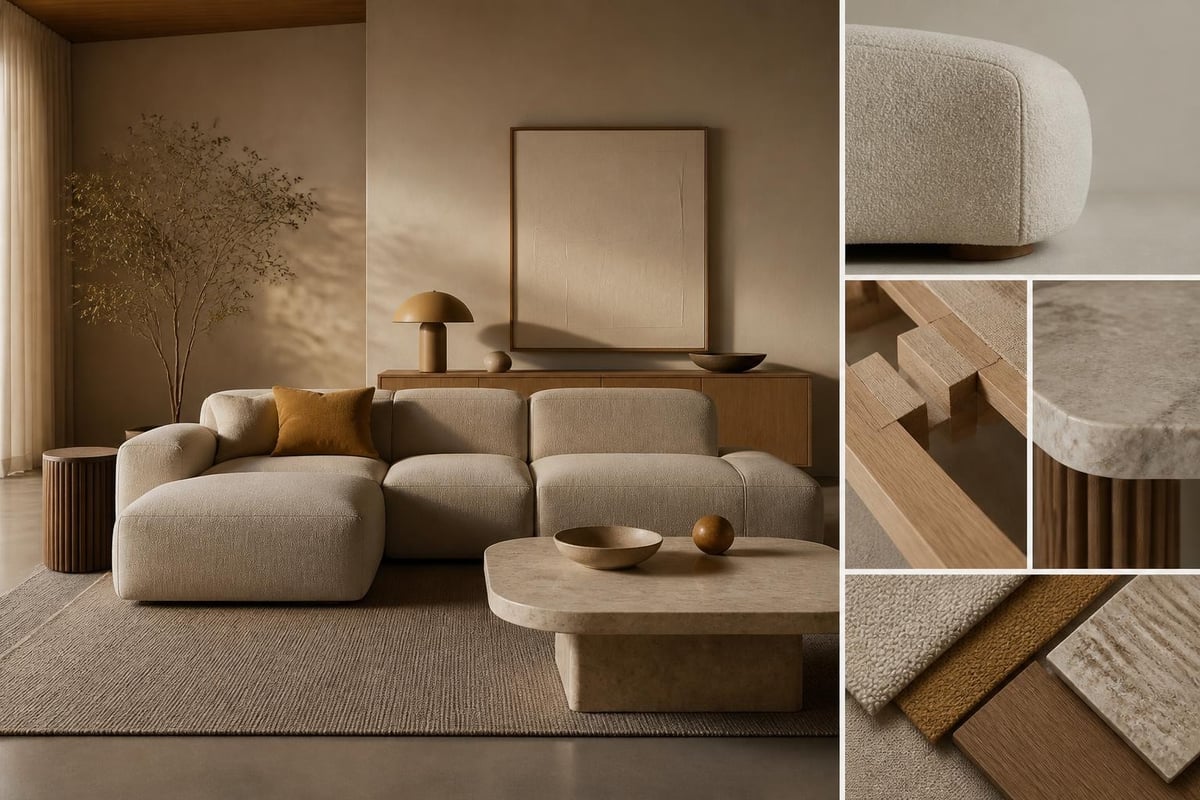
Design-led furniture stores brands curate collections from named manufacturers, often European or Scandinavian studios with in-house design teams. Pieces carry a signature aesthetic, whether that's minimalist oak dining tables, modular lounge systems or sculptural occasional chairs. Materials shift to solid hardwood, premium leathers, contract-grade fabrics and metal subframes with welded joints.
These brands usually operate showrooms rather than warehouses. You sit on the sofa, test the pitch, compare leather samples and discuss arm height. Lead times extend to eight or twelve weeks because frames are built to order and upholstered locally or imported in controlled batches. The Bauhaus approach sits firmly here: mid-to-high-end pieces selected for longevity, comfort and clean lines that suit New Zealand interiors without chasing European fashion cycles.
Service-Centric Brands
Service brands layer consultation, custom sizing, in-home trials and white-glove delivery onto their core range. You'll find interior design partnerships, trade programmes for architects and project management for multi-unit developments. Pricing reflects the labour hours: a showroom manager who visits your site, a fabricator who adjusts seat depth, a delivery crew who assembles and positions.
According to Modern Retail analysis, fulfilment and experiential service have become differentiators as pure e-commerce furniture sales plateau. Customers want to touch fabric, confirm scale and receive expert guidance, particularly on sofas where comfort is subjective and dimensions must fit the room.
Materials and Construction Standards Across Brands
Material specification separates competent furniture stores brands from opportunistic importers. Frame, suspension, foam density and fabric durability dictate how a sofa performs after five years of daily use.
| Component | Budget Brands | Mid-Range Brands | Premium Brands |
|---|---|---|---|
| Frame | Particleboard, stapled | Hardwood veneer, dowelled | Solid hardwood or steel, mortise-tenon joints |
| Suspension | Sinuous springs or webbing | Sinuous springs, some eight-way hand-tied | Eight-way hand-tied coil springs |
| Foam | Polyurethane 20–25 kg/m³ | High-resilience foam 30–35 kg/m³ | HR foam with feather wraps or latex |
| Upholstery | Synthetic microfibre or cotton blends | Linen, wool blends, entry leather | Full-grain leather, performance fabrics, bespoke weaves |
Solid hardwood frames with mortise-and-tenon or dowelled joints last decades. Particleboard frames can fail within five years under regular load. The Bowie L-shape sofa from Bauhaus, for instance, uses kiln-dried hardwood framing and high-resilience foam to handle daily family use without sagging. Similar construction standards apply whether you're selecting a three-seater or an L-shape configuration.
Foam Density and Cushion Longevity
Foam density, measured in kilograms per cubic metre, predicts lifespan. Budget brands use 20 kg/m³ polyurethane foam that compresses quickly. Mid-range brands specify 30–35 kg/m³ high-resilience foam, which recovers shape and supports weight more evenly. Premium brands layer HR foam with feather or down wraps for softness without sacrificing structure.
If you plan to keep a sofa for ten years, check the foam spec sheet. Replacing cushion cores after three years negates any upfront saving. Reputable furniture stores brands publish density figures, fibre content and origin on product pages or in showroom literature.
Brand Positioning in the New Zealand Market
New Zealand's furniture stores brands reflect import economics, domestic manufacturing constraints and consumer preference for understated design. The market lacks the vertical integration common in Europe, where manufacturers run their own retail chains. Instead, most local showrooms import finished goods or semi-finished frames for local upholstery.
Family-Owned Retailers vs. Corporate Chains
Family-owned stores, such as Bauhaus, typically curate tighter ranges and invest in customer relationships over marketing spend. You deal with the same sales advisor across multiple visits, receive tailored fabric recommendations and access trade pricing if you're furnishing a development. Corporate chains offer broader SKU counts and national distribution but less flexibility on custom requests.
The distinction matters when you need a sofa cut to 2.2 metres to fit a specific wall or a dining table extended by 300 mm. Family businesses often maintain relationships with local upholsterers and fabricators who can adjust dimensions without retooling a production line.
Imported Collections and Local Upholstery
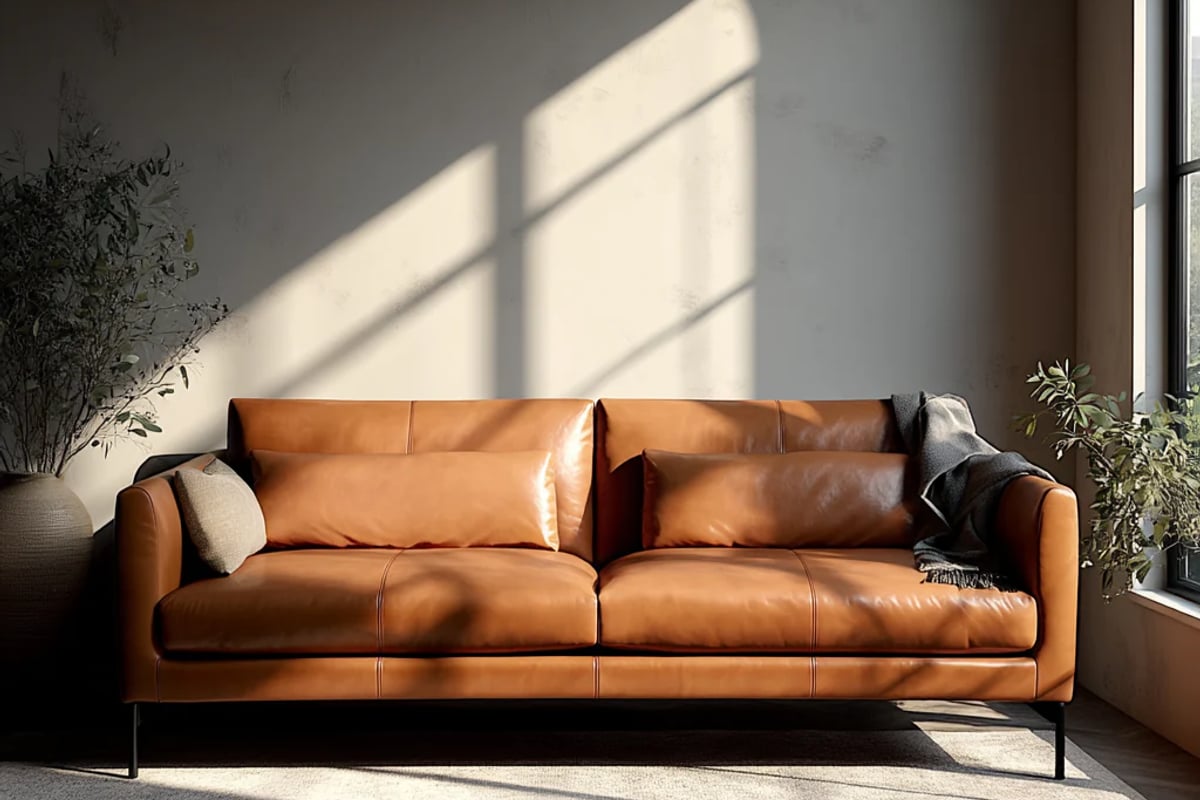
Many furniture stores brands import Scandinavian, Italian or Australian designs and upholster them locally to avoid shipping bulky finished pieces. This hybrid model balances design provenance with faster turnaround and lower freight costs. The Linear sofa in leather, for example, pairs a European-designed frame with premium leather selected for New Zealand's humidity and UV exposure.
Local upholstery also allows fabric substitution. If a European collection specifies linen that pills in high-traffic homes, a New Zealand retailer can offer a locally woven alternative with better abrasion resistance. This flexibility distinguishes independent furniture stores brands from direct-import chains locked into manufacturer catalogues.
Evaluating Brand Credibility and Longevity
A furniture stores brand's track record tells you whether it will honour a warranty, stock replacement parts or still exist in five years. Check registration history, showroom tenure and online reviews that mention post-sale service.
- Years in operation: Brands established before 2010 survived the global financial crisis and multiple property cycles.
- Showroom presence: Physical retail signals investment and accountability. Popup stores and online-only brands carry higher closure risk.
- Warranty terms: Two-year structural warranties are standard; five or ten years suggest confidence in construction.
- Replacement parts: Can you order a replacement cushion cover or foam insert in 2028? Ask before you buy.
- Trade references: Interior designers and developers rely on repeat suppliers. If a brand serves the trade, it values long-term reputation.
Industry data from IBISWorld shows furniture retail revenue volatility, with bankruptcy rates spiking during downturns. In New Zealand, the absence of large-scale domestic manufacturing means many brands are importers or distributors rather than manufacturers, which can complicate warranty claims if the offshore supplier exits.
Omnichannel Strategies and Customer Experience
Furniture stores brands now operate across showrooms, websites, social media and third-party marketplaces. The quality of this omnichannel experience predicts how smoothly your purchase will proceed.
Showroom and Digital Integration
Leading brands sync inventory, pricing and product specs across channels. You browse online, shortlist three sofas, then visit the showroom to compare fabric hand-feel and seat depth. Your wishlist transfers to the sales advisor's tablet, along with room dimensions you uploaded. After purchase, you track manufacturing progress and delivery windows through a customer portal.
Weaker brands maintain separate systems. The website lists a sofa as in stock, but the showroom reveals it's on six-week backorder. Pricing varies between channels. Fabric samples available in-store don't appear online. These friction points waste time and erode trust.
Virtual Consultations and Augmented Reality
Some furniture stores brands offer video consultations where a designer reviews your floor plan, discusses lifestyle needs and recommends pieces. Others provide AR tools that overlay 3D furniture models into smartphone photos of your room. Both services help bridge the tactile gap of online shopping, though neither replaces sitting on a sofa.
According to Statista's furniture retail data, online penetration in furniture sales reached 25% in 2024, up from 15% pre-pandemic, but in-store visits still dominate high-ticket purchases like sofas and dining sets. Customers want the confidence that comes from physical assessment before committing to a multi-thousand-dollar piece.
Sustainability Claims and Material Provenance
Furniture stores brands increasingly promote sustainability credentials, but claims vary in substance. Certified timber, low-VOC finishes and recyclable packaging are measurable. "Eco-friendly" without supporting detail is marketing noise.
Certifications to Verify
Look for Forest Stewardship Council (FSC) certification on timber products, which confirms legally harvested wood from responsibly managed forests. OEKO-TEX certification on fabrics indicates testing for harmful chemicals. GECA (Good Environmental Choice Australia) covers broader environmental and social criteria for furniture products.
Some European brands publish lifecycle assessments detailing carbon footprint from raw material extraction through manufacturing, transport and estimated disposal. New Zealand retailers who stock these brands can provide the documentation if asked. If sustainability matters to you, request third-party verification rather than accepting brand statements at face value.
Local vs. Offshore Manufacturing
Furniture manufactured in New Zealand reduces shipping emissions and supports local employment, but higher labour costs mean smaller production volumes and premium pricing. Offshore manufacturing in Indonesia, Vietnam or China offers scale and cost efficiency but longer lead times and variable quality control.
Neither origin guarantees superiority. A well-managed Vietnamese factory using kiln-dried hardwood and skilled joiners can outperform a New Zealand workshop with poor material sourcing. Evaluate the specific piece rather than defaulting to origin bias.
Pricing Models and Value Perception
Furniture stores brands structure pricing to reflect cost inputs, market positioning and margin targets. Understanding the model helps you assess whether a price is fair or inflated.
Cost-Plus Retail Pricing
Retailers calculate landed cost (manufacture, freight, duty, warehousing), apply a markup to cover overheads (showroom rent, staff, marketing) and add profit margin. Markup percentages vary by segment:
- Budget brands: 40–60% markup on landed cost
- Mid-range brands: 80–120% markup
- Premium brands: 150–250% markup
Higher markups aren't necessarily exploitation. They fund expert sales staff, custom services, generous return policies and longer warranties. A premium sofa priced at $8,000 might include in-home consultation, custom fabric selection, white-glove delivery and a ten-year frame warranty. A budget sofa at $1,200 includes none of that.
Promotional Strategies and Discount Cycles
Some furniture stores brands run continuous sales with rotating discounts (20% off this week, 30% off next month). This trains customers to wait for promotions and erodes brand equity. Other brands hold firm pricing year-round with occasional clearance events for discontinued lines.
Research from Deloitte's consumer insights indicates that frequent discounting correlates with lower perceived quality, even when products are identical. If a brand is always on sale, the "sale" price is effectively the real price, and the inflated RRP misleads.
Trade Programmes and Designer Partnerships
Furniture stores brands that serve interior designers, architects and developers operate trade programmes with project pricing, sample libraries and dedicated account managers. If you're furnishing a multi-unit development or collaborating with a designer on a renovation, these programmes accelerate specification and procurement.
How Trade Pricing Works
Trade discounts typically range from 15% to 40% off retail, depending on order volume and brand tier. In exchange, trade clients commit to minimum order values, accept extended lead times for custom pieces and handle their own delivery coordination. Some brands require proof of trade credentials (DINZ membership, registered business, portfolio of completed projects).
For property developers furnishing show homes or rental units, trade programmes offer consistency across multiple properties and preferential restocking terms if a piece doesn't sell with the home. Interior designers value access to broader fabric libraries and custom sizing that isn't advertised to retail customers.
Digital-First Brands and Direct-to-Consumer Models
A newer category of furniture stores brands sells exclusively online, eliminating showroom costs and passing some savings to customers. These direct-to-consumer (DTC) brands ship flat-pack or fully assembled pieces, rely on detailed photography and offer generous return windows.
Advantages of DTC Furniture Brands
Lower pricing for comparable construction is the headline benefit. Without showroom rent, DTC brands can offer a solid hardwood dining table at 20–30% below traditional retail. Free delivery, simple returns and transparent pricing (no haggling or unclear discounts) appeal to time-poor customers.
According to analysis from the National Retail Federation, online furniture sales surged in 2020 and maintained elevated levels through 2026, with DTC brands capturing market share from traditional retailers who were slow to improve digital experience.
Limitations and Risk Factors
You can't test comfort or assess fabric hand-feel before purchase. Product photography and monitor calibration mean colours may not match expectations. Returns involve repackaging and arranging courier pickup, often at your expense if you simply changed your mind rather than received a defective item.
DTC brands also face higher failure rates. Without the cash flow buffer of showroom inventory and established supplier relationships, a DTC startup can close abruptly, leaving customers with unserviceable warranties. Check how long the brand has operated and whether it maintains working capital reserves.
How to Match Brand to Your Needs
Selecting the right furniture stores brand starts with clarifying your priorities: budget, timeline, customisation, service level and expected lifespan.
Decision Framework
- Budget allocation: Assign realistic dollar ranges to each room. A $3,000 sofa budget excludes premium brands but opens mid-range options with good construction.
- Timeline pressure: If you're moving in four weeks, eliminate brands with eight-week lead times. Prioritise in-stock collections.
- Customisation requirements: Standard dimensions and fabric menus suit most homes. Awkward room shapes or specific colour matching require brands that offer custom orders.
- Service expectations: Do you want a designer to visit your home, or are you comfortable selecting pieces independently online? Service-heavy brands cost more.
- Lifespan and use intensity: A family with young children needs durable fabrics and robust frames. A couple furnishing a formal lounge can prioritise aesthetics over indestructibility.
If your priorities align (e.g., high durability, custom sizing, expert service), a premium brand makes sense. If you need budget pricing and fast delivery, a volume retailer fits better. Mismatched expectations cause frustration: don't expect bespoke service from a budget brand or bargain pricing from a design-led showroom.
Regional Availability and Delivery Networks
Furniture stores brands in New Zealand concentrate showrooms in Auckland, Wellington and Christchurch. Regional customers often rely on online orders and courier delivery, which works for smaller pieces but complicates large-format items like L-shape sofas.
Auckland-Based Showrooms
Auckland hosts the majority of contemporary furniture showrooms, including Bauhaus with two locations. Customers in Northland, Waikato and Bay of Plenty can visit Auckland showrooms within a day trip. Delivery to these regions adds modest freight charges and extends timelines by a few days.
South Island and Rural Delivery
South Island and rural North Island customers face longer delivery windows and higher freight costs. Some furniture stores brands partner with regional couriers who handle final-mile delivery and assembly. Others freight to a depot for customer pickup. Confirm logistics before ordering if you're outside main centres.
White-glove delivery (unpacking, assembly, rubbish removal, positioning) rarely extends beyond Auckland, Wellington and Christchurch. Budget for professional assembly separately if you order a complex modular sofa or dining set with extension leaves.
Comparing Online Reviews and Testimonials
Online reviews of furniture stores brands vary widely in reliability. Verified purchase reviews on Google or ProductReview.co.nz carry more weight than anonymous comments on forums. Look for patterns across multiple reviews rather than single extreme opinions.
What to Read For
- Construction quality after 6–12 months: Initial impressions don't reveal foam compression, loose joints or fabric pilling.
- Customer service responsiveness: How did the brand handle a damaged delivery, a warranty claim or a custom order error?
- Lead time accuracy: Did the sofa arrive in the promised eight weeks or drag to fourteen?
- Post-sale support: Could the customer order replacement cushions, touch-up pens or spare parts three years later?
Ignore reviews focused solely on subjective style preferences ("not my taste") or delivery courier issues beyond the brand's control. Focus on reviews that discuss materials, construction, service interactions and long-term performance.
Understanding furniture stores brands empowers you to make informed decisions that balance design, budget and service. Whether you prioritise Scandinavian minimalism, local craftsmanship or fast delivery, matching brand positioning to your needs ensures satisfaction long after delivery. At Bauhaus, we've spent over two decades curating contemporary pieces built to last, backed by personal service that makes furnishing straightforward. Visit our Auckland showrooms to experience quality materials, test comfort firsthand and work with our team to find furniture that feels right at home.