A dining table bar set occupies a unique position in modern home design, bridging the gap between formal dining tables and kitchen islands while creating a defined zone for casual meals, homework sessions, and evening drinks. These elevated tables paired with coordinated bar stools suit open-plan living, compact apartments, and breakfast nooks where vertical space matters more than footprint. In 2026, homeowners and designers increasingly favour sets that combine bar-height proportions with the materials and finishes of traditional dining furniture, delivering flexibility without compromising on craftsmanship or aesthetic cohesion.
Defining the Dining Table Bar Set
A dining table bar set comprises a table at bar height (typically 1050–1100 mm from floor to tabletop) and matching stools or chairs designed for that specific elevation. Unlike standard dining tables, which sit at 720–760 mm, bar-height tables require stools with seat heights between 750–800 mm to maintain comfortable clearance and posture. This configuration suits kitchens with peninsulas, entertaining spaces, and studio apartments where a single piece serves multiple functions throughout the day.
The term "set" implies coordinated design rather than arbitrary pairing. Leg profiles, finish colours, and material palettes should align across table and seating to create visual unity. Mismatched heights or disparate finishes undermine the cohesion that distinguishes a considered purchase from an improvised assembly.
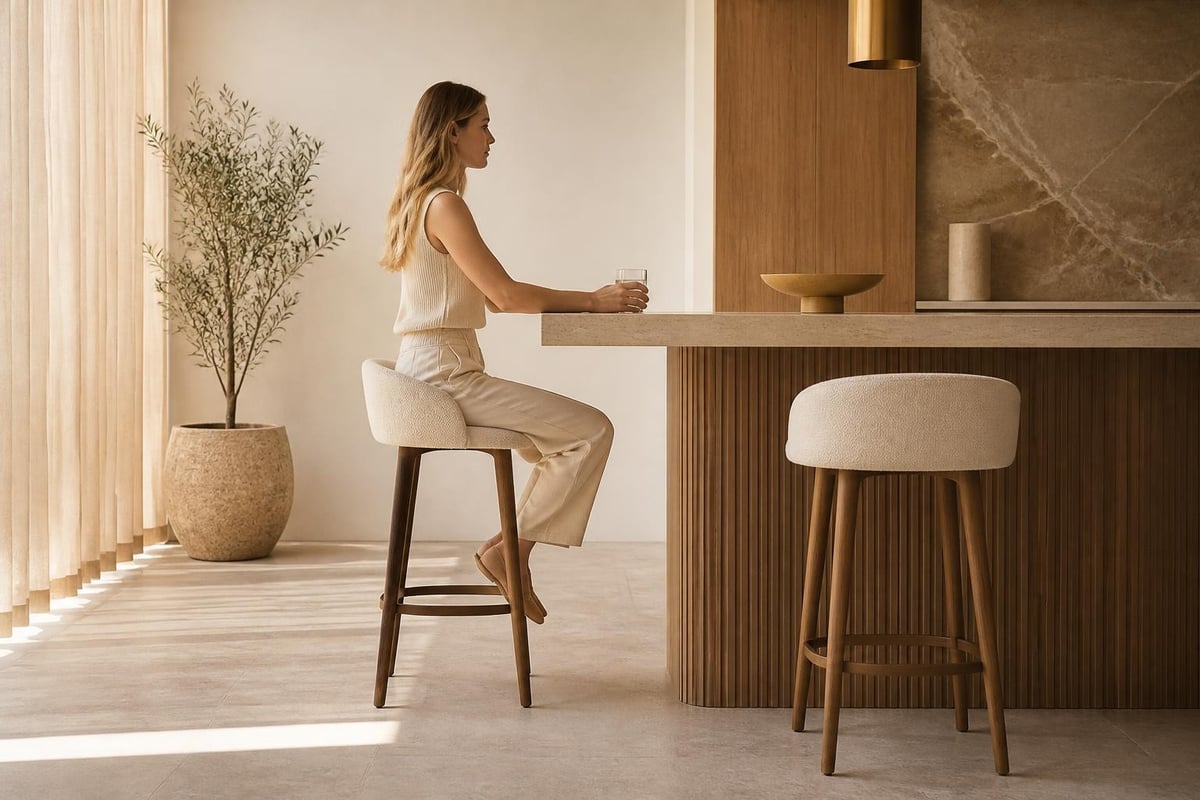
Bar, Counter, and Dining Heights Explained
Industry standards define three distinct table heights, each dictating corresponding seat heights and clearance requirements:
| Table Type | Table Height | Seat Height | Clearance | Typical Use |
|---|---|---|---|---|
| Dining | 720–760 mm | 450–480 mm | 270–300 mm | Formal dining, extended meals |
| Counter | 900–950 mm | 630–680 mm | 250–280 mm | Kitchen islands, breakfast bars |
| Bar | 1050–1100 mm | 750–800 mm | 280–320 mm | Entertaining, casual dining |
Clearance refers to the vertical distance between seat surface and table underside, allowing leg room without contact. Insufficient clearance forces awkward posture and limits usability, while excessive clearance leaves diners perched uncomfortably high. Manufacturers and ergonomic guides, such as standard table height recommendations, emphasise that maintaining these proportions ensures comfort during extended sitting.
Counter-height tables fall between dining and bar specifications, suited to kitchens where benchtop height determines seating. Bar-height tables offer the most elevated profile, creating visual separation in open-plan spaces and allowing sightlines over lower furniture.
Material and Construction Considerations
Material choice defines durability, maintenance, and aesthetic character in a dining table bar set. Solid timber, engineered composites, metal frames, and stone-look surfaces each respond differently to daily use, cleaning routines, and environmental conditions.
Timber and Composite Surfaces
Solid timber tabletops deliver warmth and natural grain variation but require regular conditioning to prevent drying and surface damage. Ash, oak, and walnut are common selections, offering dense grain structure and resistance to denting. Timber bar stools with cushioned seats, such as the Raphael Bar Stool – Smoke, pair curved timber backrests with eco leather pads for easy cleaning and comfort during extended conversations.
Engineered composites, including MDF and particleboard cores veneered with timber or laminate, reduce weight and cost while delivering stable surfaces resistant to seasonal movement. New Zealand retailers must ensure compliance with formaldehyde emission standards when sourcing composite materials, particularly for indoor furniture subjected to enclosed ventilation. Recent updates to these standards tighten certification requirements, affecting importers and local manufacturers alike.
Metal Frames and Bases
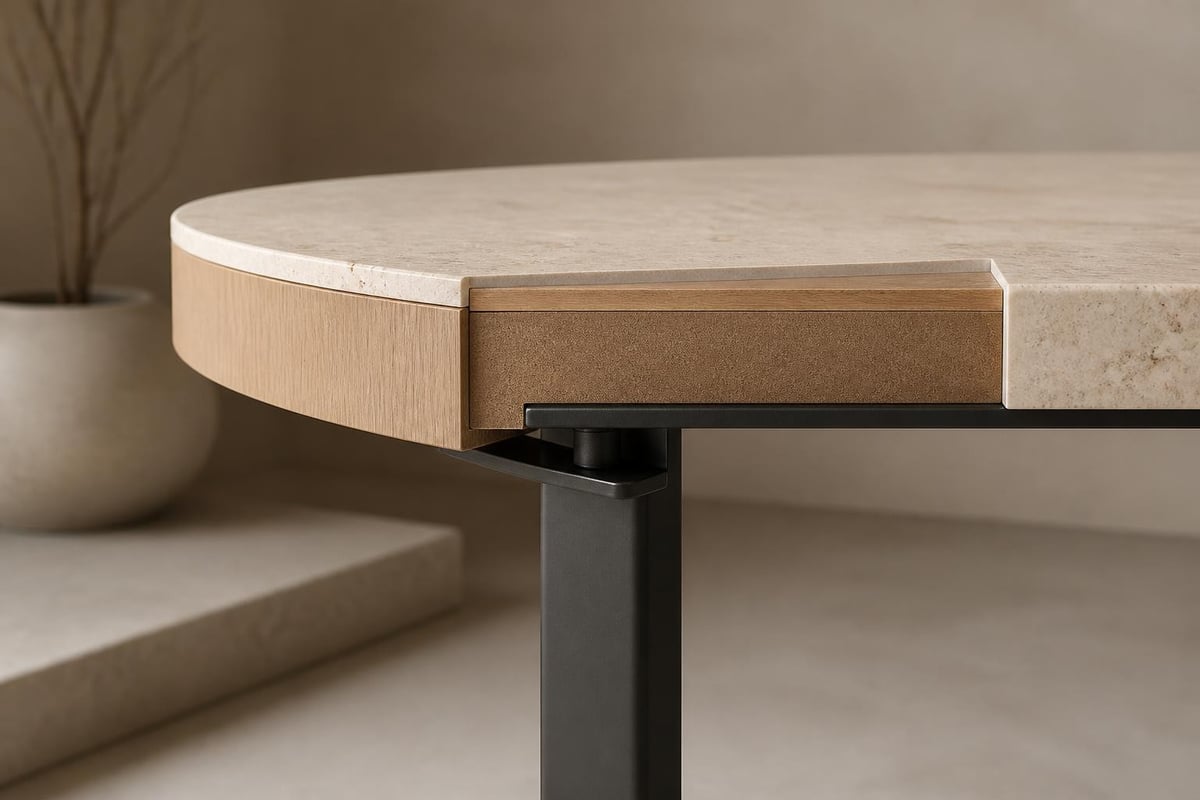
Steel and powder-coated aluminium provide the structural foundation for most bar-height tables, offering slim profiles and concealed mounting points that maintain clean lines. Black and matte finishes dominate contemporary design, pairing with timber tops or stone-look surfaces without visual competition. Hospitality-grade hardware specifications detail corrosion resistance, load capacity, and finish durability for commercial environments, standards equally relevant to home furniture expected to withstand daily use.
Pedestal bases eliminate corner legs, allowing chairs to slide freely around the table perimeter and ensuring every seat offers unobstructed leg room. This construction suits smaller spaces where corner legs would block circulation or force awkward seating angles.
Stone-Look and Composite Tops
StoneSkin and similar engineered surfaces combine mineral aggregates with resin binders, delivering the depth and texture of natural stone without the weight or porosity. These surfaces resist heat, staining, and scratching better than timber, requiring only damp-cloth cleaning. Variation in colour and grain ensures each piece carries individual character while maintaining consistency across production batches.
High-pressure laminate offers budget-conscious alternatives with improved scratch resistance compared to melamine or low-grade veneers. However, exposed edges and seams reveal the laminate construction, limiting aesthetic refinement in mid-to-high-end settings.
Pairing Stools and Chairs
Selecting stools for a dining table bar set demands attention to seat construction, backrest support, and footrest positioning. Stools without backrests suit short-term perching but fatigue users during extended meals or work sessions. Contoured backrests, cushioned seats, and foot rails extend comfort and encourage longer engagement at the table.
Seat Height and Clearance
Measure from floor to seat surface, accounting for cushion compression under weight. A 750 mm seat height paired with a 1070 mm table height provides 320 mm clearance, suitable for most adults. Taller individuals may prefer 280–300 mm clearance, requiring lower seats or higher tables within the bar-height range.
Adjustable-height stools introduce flexibility but often sacrifice stability and aesthetic refinement. Pneumatic mechanisms wear over time, and the cylindrical bases required for height adjustment interrupt the clean lines preferred in contemporary design. Fixed-height stools with robust joinery and considered proportions deliver superior longevity and visual coherence.
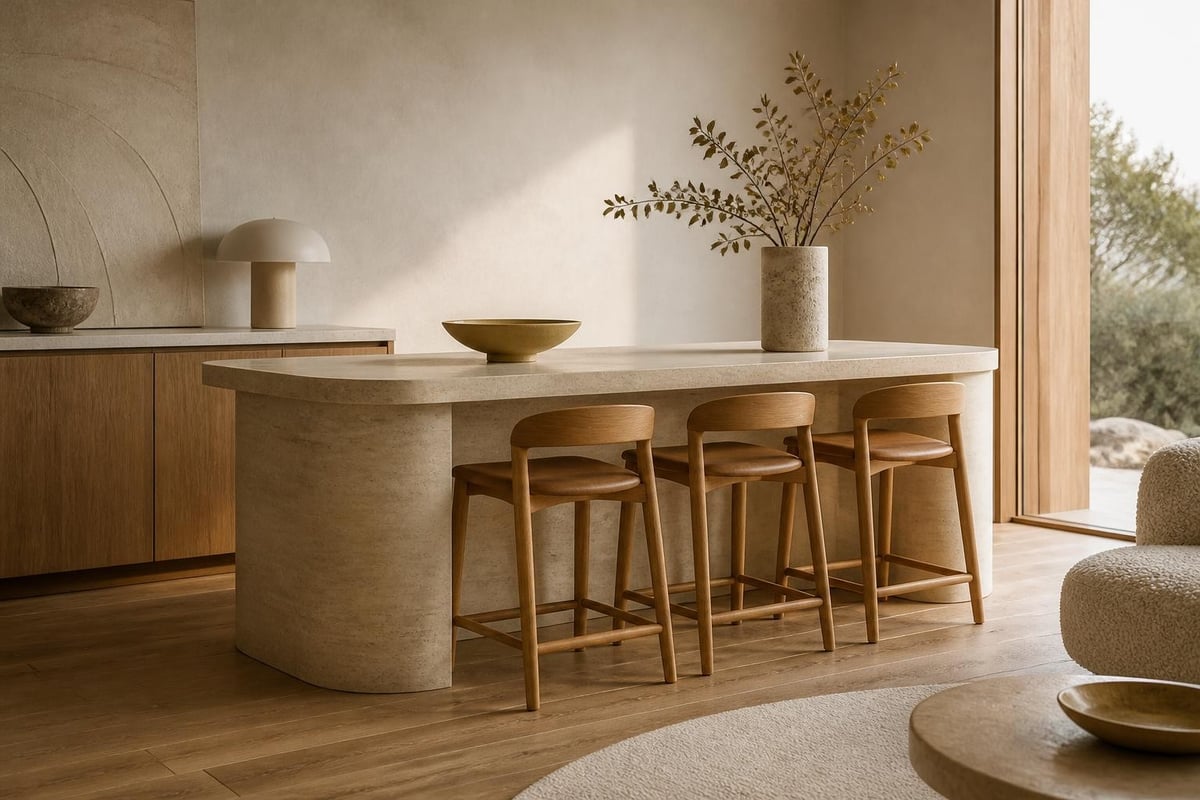
Backrest and Armrest Design
Open-back stools maintain sightlines and allow easy movement, suited to kitchens where stools tuck beneath the table when not in use. Upholstered backrests add comfort but increase visual weight and require regular cleaning, particularly in households with children or frequent entertaining.
Armrests limit lateral movement and increase the stool's footprint, reducing the number of seats that fit around a given table perimeter. Reserve armrests for dedicated dining areas where space permits and extended sitting justifies the added support.
Styling and Integration in New Zealand Homes
Open-plan living dominates contemporary New Zealand architecture, blurring boundaries between kitchen, dining, and lounge zones. A dining table bar set anchors the transition between cooking and relaxing spaces, providing a social focal point visible from multiple angles. Mixing and matching dining furniture offers aesthetic flexibility, though coordinated sets simplify decision-making and ensure proportional harmony.
Placement and Circulation
Position the table perpendicular to kitchen benches or parallel to living zones, maintaining 900–1200 mm clearance behind each stool for chair pull-out and circulation. In compact apartments, align the table against a wall or window, reducing required clearance on one side while preserving access on the opposite.
Pendant lighting emphasises the table as a destination, hanging 700–900 mm above the tabletop to illuminate the surface without obstructing sightlines. Choose fixtures with adjustable cord lengths to fine-tune placement after installation.
Material Layering
Combining materials across table and seating adds visual interest without sacrificing cohesion. Timber stools paired with a stone-look table introduce warmth against a cool mineral surface, while metal frames unify disparate materials through consistent finish and form. Bauhaus collections demonstrate this principle through pieces that balance contemporary furniture design with durable construction, suited to New Zealand homes prioritising longevity over trends.
Eco leather seats, such as those featured on timber bar stools, offer easy maintenance and resist staining better than fabric upholstery. Regular wiping removes spills and crumbs, extending the life of cushioned surfaces subjected to daily use.
Scale and Proportion
Bar-height tables occupy vertical space more aggressively than standard dining tables, creating visual weight that must balance against surrounding furniture. Pair elevated tables with low-profile sofas or open shelving to prevent the space from feeling top-heavy. In rooms with high ceilings, bar-height furniture enhances proportion by filling vertical volume and drawing the eye upward.
Rectangular tables suit linear spaces such as galley kitchens and narrow dining areas, while round or oval tables soften corners and encourage conversation in square or open rooms. Single-pedestal bases eliminate corner legs, allowing flexible seating arrangements and unobstructed leg room at every position.
Durability and Maintenance
Daily use subjects dining table bar sets to spills, impacts, and repeated cleaning, demanding materials and finishes engineered for resilience. Understanding maintenance requirements before purchase prevents premature wear and preserves aesthetic integrity.
Surface Protection
Timber surfaces require coasters, placemats, and trivets to prevent heat marks, water rings, and scratches. Hardwax oils penetrate grain structure and allow spot repairs, while polyurethane topcoats offer superior moisture resistance but require professional refinishing when damaged. Regular conditioning with appropriate oils or waxes maintains finish integrity and prevents drying.
Stone-look composites tolerate hot pots and wet glasses without damage, though abrasive cleaners and scouring pads should be avoided to preserve surface polish. Mild detergent and soft cloths suffice for routine cleaning, with occasional sealing recommended for porous composite materials.
Frame and Leg Care
Powder-coated metal frames resist rust and chipping but accumulate dust and cooking residue in open-plan kitchens. Wipe frames weekly with damp microfibre cloths, avoiding harsh chemicals that degrade finishes. Inspect welded joints and mounting hardware annually, tightening bolts and replacing worn glides to maintain stability.
Timber legs respond to seasonal humidity, expanding and contracting with environmental conditions. Maintain consistent indoor humidity between 40–60% to minimise movement and prevent joint loosening. Avoid placing furniture near heating vents or direct sunlight, which accelerates drying and finish degradation.
Safety and Stability
Elevated furniture introduces tip-over risks, particularly in households with children or elderly occupants. Tip-over injury data highlights the importance of stable base design, appropriate weight distribution, and secure mounting for furniture exceeding standard table heights.
Base Width and Weight Distribution
Bar-height tables require wider bases or heavier pedestals to counteract the raised centre of gravity. Single-pedestal designs should feature base diameters at least 70% of the tabletop diameter to prevent tipping when weight concentrates on one edge. Four-leg frames distribute load more evenly but reduce under-table clearance and limit seating flexibility.
Test stability by applying downward pressure to the table edge while standing. Excessive movement or lifting of the opposite side indicates insufficient base weight or width. Consider adding weight to hollow pedestal bases or opting for solid timber or stone bases in high-traffic areas.
Stool Stability
Bar stools with narrow footprints tip more easily than broader designs, particularly when users lean back or shift weight. Splayed legs increase base width without enlarging the stool's visual profile, improving stability while maintaining slim proportions. Footrests positioned 400–450 mm below the seat surface encourage proper posture and reduce the risk of falls when mounting or dismounting.
Rubber or felt glides prevent sliding on smooth floors, maintaining stool position during use and protecting flooring from scratches. Replace worn glides immediately to preserve stability and surface protection.
Custom and Made-to-Order Options
Standard dining table bar sets address common dimensions and aesthetic preferences, but custom configurations suit unique spatial constraints, specific material preferences, and coordinated interior schemes. Made-to-order furniture extends lead times but delivers precise fit and personalised finishes.
Sizing Adjustments
Custom fabrication allows precise table dimensions, matching available floor space and seating capacity requirements. Extending or reducing table length accommodates specific room proportions, while adjusted heights suit users outside average ergonomic ranges. Discuss dimensional requirements with manufacturers during initial consultation, providing floor plans and existing furniture dimensions to ensure accurate specifications.
Material and Finish Selection
Bespoke finishes align furniture with existing cabinetry, flooring, and architectural elements, creating cohesive interiors where off-the-shelf options introduce visual discord. Timber stain matching, powder-coat colour customisation, and fabric selection services allow clients to specify exact material palettes. Samples and swatches preview finishes under home lighting conditions, reducing risk of mismatched tones after delivery.
Bauhaus offers personalised service through its Auckland showrooms, where experienced staff guide material selection and configuration decisions. This hands-on approach suits clients furnishing new builds, renovating existing homes, or coordinating furniture for interior design projects requiring precise aesthetic alignment.
Integrating with Broader Dining and Living Collections
A dining table bar set functions as part of a larger furniture ecosystem, interacting with dining tables, dining chairs, sofas, and occasional pieces across the home. Coordinating finishes, materials, and design languages across rooms creates visual continuity that enhances spatial flow and perceived square meterage.
Finish Coordination
Black metal frames unite bar stools, dining chairs, and sofa legs, establishing a consistent structural language across furniture types. Timber tones should echo flooring, cabinetry, or architectural trim, selecting similar species and stain depths to maintain harmony without identical matching. Slight variation in grain and colour adds depth while preserving cohesion.
Upholstery fabrics and leather finishes should reference lounge seating, coordinating texture and tone without exact duplication. This approach suits homes with open sightlines between kitchen, dining, and living zones, where mismatched materials fragment visual continuity.
Proportional Relationships
Bar-height tables pair naturally with low-profile sofas and armchairs, creating layered elevation that guides the eye through distinct functional zones. Avoid clustering multiple elevated pieces, which competes for visual dominance and flattens spatial hierarchy. Instead, alternate high and low elements to establish rhythm and proportion.
Environmental and Health Standards
Furniture materials and finishes carry environmental and health implications, particularly in enclosed spaces with limited ventilation. Formaldehyde emissions from composite wood products, volatile organic compounds (VOCs) in adhesives and finishes, and sustainability certifications influence purchasing decisions for health-conscious consumers and environmentally aware designers.
Formaldehyde Regulations
Composite wood components, including particleboard and MDF, emit formaldehyde gas during curing and throughout the product's lifespan. Updated formaldehyde emission standards mandate third-party certification and ongoing compliance testing, ensuring furniture meets health-based exposure limits. Verify certification documentation before purchasing composite furniture, particularly for high-use items such as dining tables subjected to heat and moisture.
Low-emission adhesives, water-based finishes, and formaldehyde-free cores reduce indoor air quality impacts, suited to homes with young children, elderly occupants, or residents with chemical sensitivities.
Sustainable Sourcing
Certified timber from responsibly managed forests carries Forest Stewardship Council (FSC) or Programme for the Endorsement of Forest Certification (PEFC) labels, verifying sustainable harvesting practices. Recycled metal frames, reclaimed timber tops, and biodegradable packaging reduce environmental footprints across the supply chain.
Transparency in material sourcing and production methods distinguishes reputable furniture retailers from volume importers prioritising cost over accountability. Request documentation detailing timber origins, finish specifications, and compliance certifications during the purchasing process.
Practical Purchasing Considerations
Purchasing a dining table bar set requires evaluating spatial constraints, usage patterns, budget parameters, and delivery logistics before committing to specific pieces. Thoughtful assessment during the selection process prevents costly returns, fit issues, and aesthetic mismatches after installation.
Measuring and Fit
Measure available floor space, accounting for required clearances behind each stool and circulation paths around the table perimeter. Map door widths, hallway turns, and stairwells if delivering to upper floors, verifying that table and stool dimensions permit access without disassembly. Pedestal bases and removable legs simplify delivery but may compromise structural rigidity compared to fixed assemblies.
Template the table footprint using cardboard or masking tape, visualising the piece in situ and testing circulation patterns before purchase. This exercise reveals spatial conflicts and proportion mismatches invisible in showroom settings or online imagery.
Budget and Value
Mid-to-high-end dining table bar sets range from NZD 2,500 to NZD 6,500 depending on materials, construction methods, and brand positioning. Solid timber and stone-look surfaces command premium pricing, reflecting material costs and fabrication complexity. Engineered composites and metal frames reduce costs while maintaining aesthetic refinement when executed with attention to finish quality and joinery detail.
Consider total cost of ownership, including maintenance requirements, expected lifespan, and resale value. Durable materials and timeless design retain value better than trend-driven pieces requiring replacement within five years. Investing in quality construction and materials suited to intended use delivers superior long-term value compared to budget alternatives requiring frequent replacement.
Delivery and Assembly
Confirm delivery timelines, assembly requirements, and installation services during purchase. Made-to-order pieces extend lead times to 8–16 weeks, necessitating advance planning for new builds or coordinated renovations. Standard stock items ship within 2–4 weeks, suited to immediate needs and tighter schedules.
Professional assembly ensures proper installation, particularly for pieces with complex mounting hardware or adjustable components. Verify whether delivery pricing includes unpacking, assembly, and packaging removal, or if additional charges apply.
Disclaimer: AI-supported images may differ from products on website.
A dining table bar set delivers casual dining flexibility and social functionality, provided material quality, dimensional accuracy, and aesthetic cohesion align with spatial and lifestyle requirements. By prioritising construction detail, ergonomic specifications, and coordinated design, homeowners create functional zones that enhance daily living and entertaining without compromising on craftsmanship. At Bauhaus, our Auckland showrooms and experienced team help you navigate material selections, size configurations, and design decisions to find furniture that suits your home and stands the test of time.