Choosing a dining set NZ families will use every day requires more than scrolling catalogues. The right combination of table, chairs and construction detail determines whether a set holds up through morning coffee, weeknight dinners and weekend entertaining. From solid timber frames to upholstered seats and pedestal bases, each decision affects how the set functions in your home. This guide walks through materials, dimensions, chair construction and practical considerations for New Zealand living, backed by real construction detail and commercial grounding.
Understanding Dining Set Construction and Materials
A dining set consists of a table and matching chairs designed to work as one system. The table provides the surface, structure and visual anchor. Chairs deliver comfort, support and access. Both must share proportions, finish and durability to function as a cohesive unit.
Table Frame and Base Options
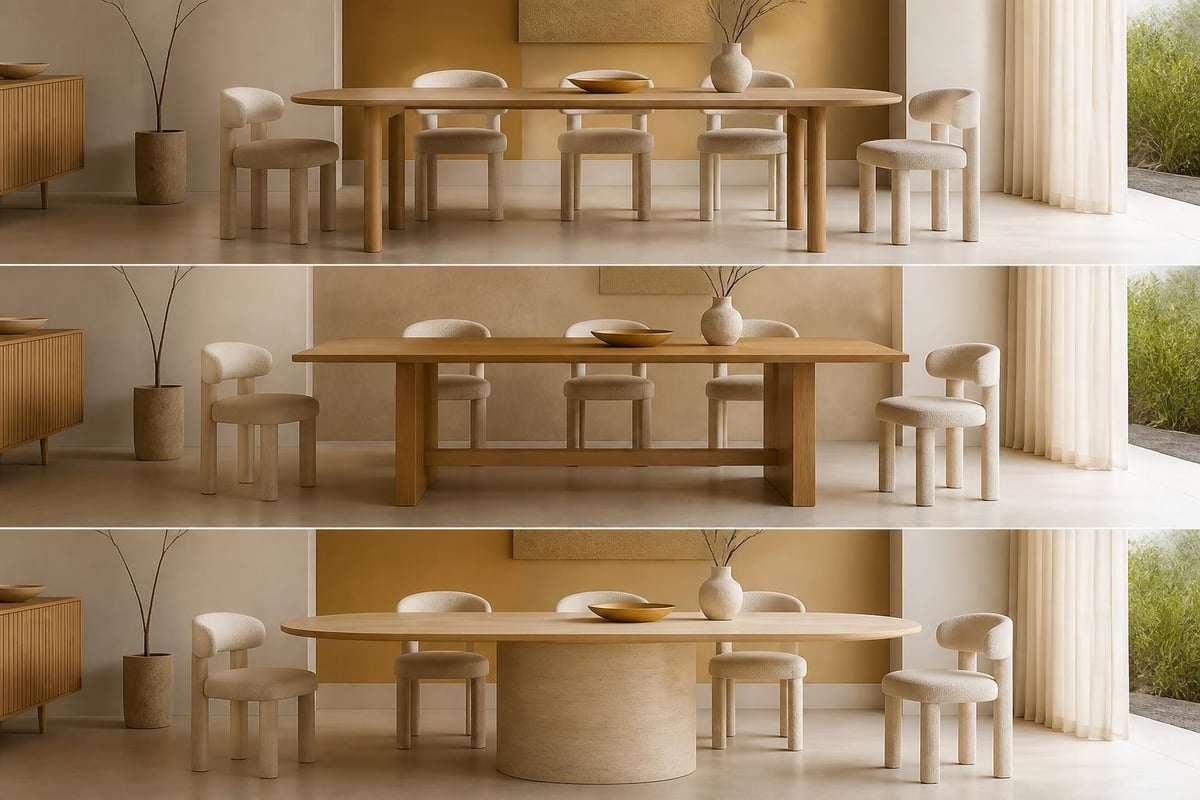
Most dining tables use one of three base structures: four-leg, trestle or pedestal. Four-leg tables offer traditional stability but corner legs can obstruct seating. Trestle bases use two wide supports, often timber or steel, leaving the ends clear. Pedestal bases place a single central support under the table, allowing chairs to slide in from any angle without leg interference.
Material choices for dining tables:
- Solid timber (ash, oak, walnut) with natural grain and colour variation
- Engineered surfaces (StoneSkin, laminates) offering uniform finish and stain resistance
- Veneered MDF or plywood with solid timber edging for stability at lower weight
- Metal frames (powder-coated steel, aluminium) paired with timber or composite tops
Solid timber expands and contracts with humidity. New Zealand's coastal climate means timber tables need space to move, finished with oils or lacquers that flex. Engineered surfaces stay dimensionally stable, resisting water rings and daily wear without refinishing.
Table tops typically range from 18mm to 40mm thick. Thicker tops feel substantial but add weight, thinner tops need sturdy frames to prevent flex. A 2.4-metre table in 25mm solid ash balances presence and practicality for most dining rooms.
Chair Frame, Seat and Backrest Construction
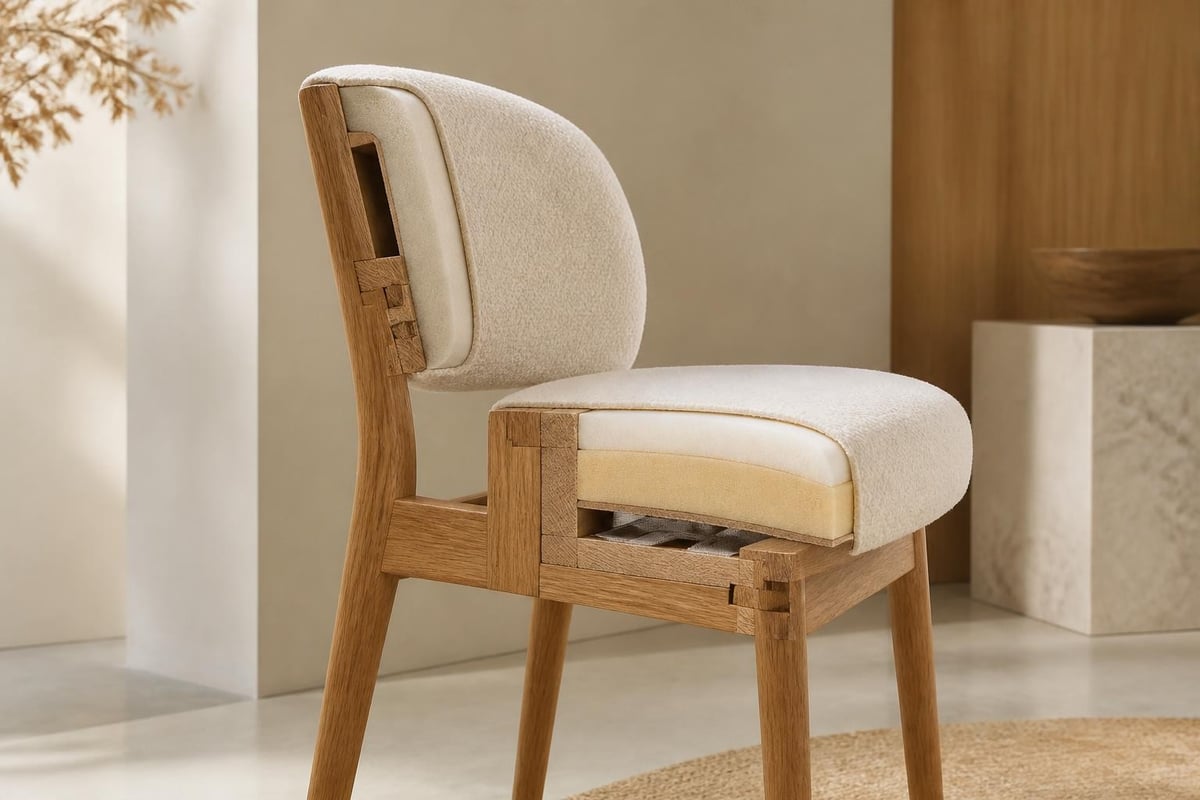
Dining chairs must support seated weight through meals that stretch from quick breakfasts to three-hour dinners. Frame construction determines longevity. Solid timber frames with mortise-and-tenon joinery outlast dowelled or screwed joints. Metal frames need welded corners and cross-bracing to resist racking.
Seat construction varies by comfort and maintenance preference:
| Seat Type | Construction | Maintenance | Best For |
|---|---|---|---|
| Timber | Solid plank or contoured ply | Wipe clean, oil annually | Minimal upkeep, visual consistency |
| Cushioned fabric | Foam over webbing, removable cover | Vacuum, spot clean, occasional dry clean | Comfort for long meals, softens acoustics |
| Eco leather / leather | Foam pad with upholstered surface | Wipe clean, condition twice yearly | Easy cleaning, suited to families and commercial use |
| Webbed / mesh | Elastic webbing or synthetic mesh | Wipe frame, minimal upkeep | Lightweight, indoor-outdoor crossover |
Backrest height and angle affect posture during long table sessions. Low backs (under 70cm from floor) suit compact spaces and café-style dining. Mid-height backs (75–85cm) support the lumbar curve without blocking sightlines. High backs (over 90cm) provide full support but dominate smaller rooms.
The Miso Chair pairs a curved solid timber frame with a cushioned eco leather seat for everyday dining. The open back keeps the silhouette light, and the wipe-clean seat suits real family use without fuss.
Sizing Your Dining Set for New Zealand Homes
Room size, table shape and chair count must align or the set becomes unusable. Too large and chairs scrape walls, too small and guests perch at the edges.
Table Dimensions and Seating Capacity
Standard dining table heights sit at 73–76cm, matching most chair seat heights of 45–48cm. This gives roughly 25–28cm clearance for thighs, adequate for most adults. Bar-height tables (100–110cm) need bar stools with 65–75cm seat heights, not dining chairs.
Recommended table sizes by seating:
- 1.2m round or 1.2×0.8m rectangular: seats 4
- 1.5m round or 1.8×0.9m rectangular: seats 6
- 1.8m round or 2.4×1.0m rectangular: seats 8
- 2.4m round or 3.0×1.1m rectangular: seats 10
Each diner needs roughly 60cm of table edge width and 40cm of depth to eat comfortably. Add 10cm between place settings to prevent elbow clashes.
Clearance and Circulation Space
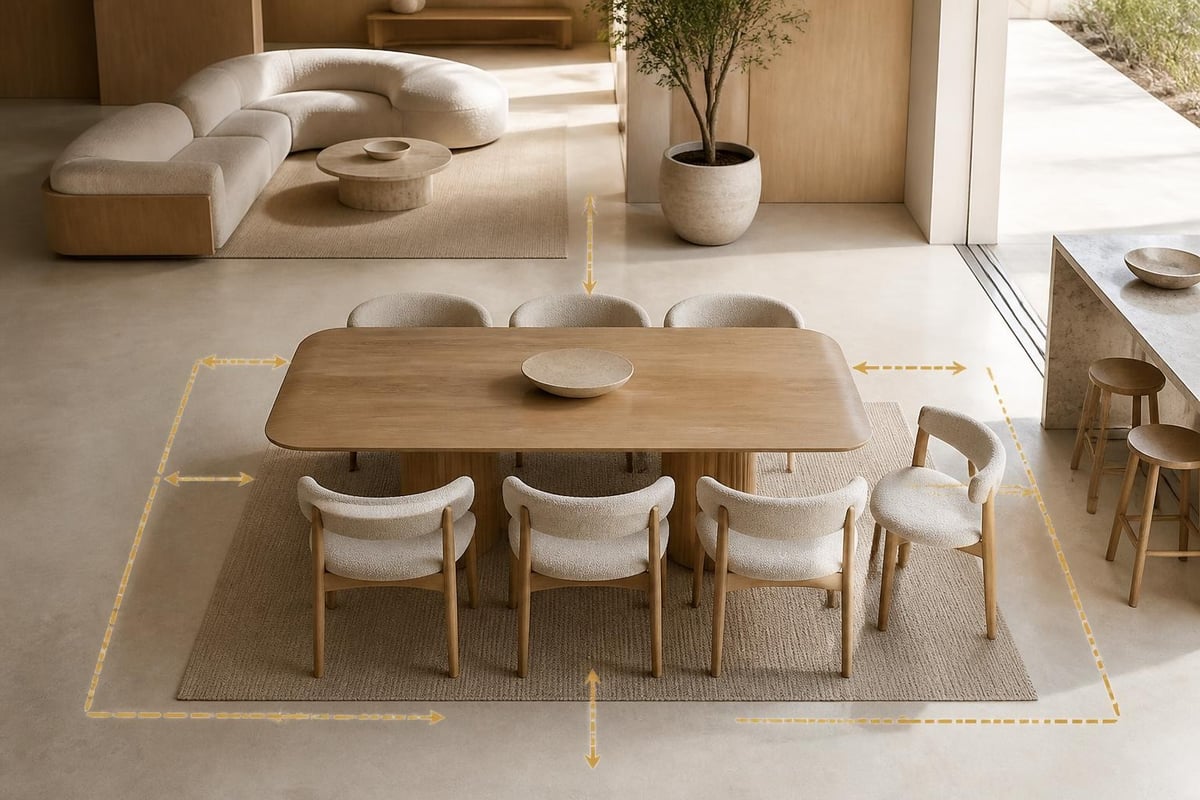
Leave at least 90cm between the table edge and the nearest wall or furniture. This allows chairs to pull out and people to walk behind seated diners. In tight spaces, 75cm works if the room sees light use, but daily dining needs full clearance. Open-plan homes often place dining sets near kitchen islands or living zones, measure traffic paths to avoid bottlenecks.
Pedestal tables like the Nova Table use a single sculptural base, meaning no corner legs to obstruct chairs. The rounded corners and StoneSkin finish suit everyday dining with easy cleaning, available in 1.8m and 2.4m lengths.
Matching Chairs to Your Table and Use
Chairs must suit the table height, base design and daily use. Mismatched proportions look awkward and feel worse. A heavy timber table with spindly metal chairs lacks visual weight. A sleek glass top paired with chunky upholstered chairs fights itself.
Visual and Structural Pairing
Match materials where possible. Timber tables pair naturally with timber chairs, metal tables with metal or mixed-material chairs. Upholstered chairs soften hard surfaces and improve acoustics in open-plan rooms. Avoid pairing more than three different materials in one set (table top, table base, chair frame, chair seat), or the look fragments.
Leg and arm placement matters. Tables with aprons (horizontal rails below the top) need chairs with low arms or no arms to slide underneath. Armless chairs fit tighter spacing, useful for six or eight around a standard table. Armchairs add comfort and presence but need 65–70cm of table edge per seat instead of 60cm.
Ergonomic Considerations for Long Meals
Seat depth, backrest angle and cushion firmness affect how long people stay at the table. Shallow seats (under 40cm deep) suit upright dining, deeper seats (45–50cm) encourage leaning back. Firm foam holds posture for two-hour dinners, soft feather-down seats feel luxurious but compress quickly.
Footrests and stretchers help shorter diners and children. Chairs without footrests leave feet dangling, causing discomfort within 20 minutes. The WorkSafe New Zealand guidance on musculoskeletal health highlights the importance of proper seat height and back support, principles that apply equally to dining seating used for meals, homework and working from home.
Dining Set Styles and Aesthetic Choices
Style determines how a dining set integrates with the rest of your home. New Zealand interiors lean toward natural materials, clean lines and understated detail. Mid-century, Scandinavian and contemporary styles dominate, with minimal ornament and honest construction.
Contemporary and Mid-Century Designs
Contemporary dining sets use simple geometry, mixed materials and functional detail. Expect metal legs, timber tops, upholstered seats and open frames. Colours stay neutral: ash, walnut, charcoal, white, black. Joinery is visible but refined, celebrating the making rather than hiding it.
Mid-century designs reference 1950s and 60s Scandinavian and American furniture: tapered legs, organic curves, warm timber tones. Chairs often feature sculpted backrests and splayed legs. Tables use rounded edges and understated bases. This style suits villas, townhouses and new builds that mix old and new.
Coastal, Industrial and Transitional Approaches
Coastal dining sets favour light timbers (whitewash oak, natural ash), woven seats and airy silhouettes. Chairs stay low-backed to preserve views and light. Tables often use trestle bases or X-frames in timber or rope-wrapped steel.
Industrial sets pair raw steel frames with reclaimed timber tops, exposed bolts and matte black finishes. Chairs use metal tubing or rod frames with minimal padding. This aesthetic works in loft conversions, warehouses and urban apartments with polished concrete floors.
Transitional sets bridge traditional and contemporary: turned legs meet flat surfaces, upholstered seats meet timber frames, classic proportions meet modern finishes. Suited to character homes undergoing renovation or homeowners wanting a less stark contemporary look.
For more guidance on coordinating dining and living furniture, visit the living and dining room furniture guide at Bauhaus.
Practical Considerations: Durability, Maintenance and Cost
A dining set endures daily contact, spills, scratches and weight. Construction quality and material choice determine how it ages.
Timber Finishes and Surface Protection
Solid timber tables need protective finishes. Oils penetrate the grain, enhancing colour and warmth, but require reapplication every 12–24 months. Lacquers and varnishes sit on the surface, offering better water and stain resistance, but can chip and need refinishing if damaged. Hard wax oils blend both approaches, penetrating for depth and curing to a durable surface.
Surface treatment comparison:
| Finish Type | Water Resistance | Maintenance Frequency | Repair Complexity |
|---|---|---|---|
| Oil (tung, linseed) | Low | Every 12 months | Easy, sand and reapply |
| Hard wax oil | Medium | Every 24 months | Moderate, spot repair possible |
| Lacquer / polyurethane | High | Rarely, unless damaged | Difficult, requires full refinishing |
| StoneSkin / engineered | Very high | Wipe clean only | Not repairable, replace if damaged |
Engineered surfaces such as StoneSkin or high-pressure laminates resist heat, moisture and scratches better than raw timber. They clean with a damp cloth and never need refinishing, making them practical for families with young children.
Chair Upholstery and Cleaning
Fabric seats add comfort and warmth but require regular vacuuming and occasional professional cleaning. Removable covers simplify washing but add cost. Fixed upholstery lasts longer structurally but stains become permanent without prompt treatment.
Eco leather (polyurethane-coated fabric) wipes clean with a damp cloth and resists most spills. Real leather develops a patina over time, softening and darkening with use. Both need conditioning every six months to prevent cracking. The Consumer NZ guide to online shopping recommends checking care instructions and warranty terms before purchasing upholstered furniture, especially when buying dining sets online.
Budget and Longevity
Entry-level dining sets (under $2,000 for table and four chairs) typically use veneered particle board, dowelled joints and minimal cushioning. These suits short-term rentals and first homes but rarely last beyond five years of daily use.
Mid-range sets ($2,000–$5,000) introduce solid timber frames, mortise-and-tenon joinery, higher-density foam and better finishes. Expect ten to fifteen years with normal care.
High-end sets (over $5,000) use premium materials, hand-finishing, modular or custom sizing and considered ergonomics. These pieces last decades, often outliving the first home they furnish. The Consumer Guarantees Act protects New Zealand buyers with rights to acceptable quality, fitness for purpose and durability, giving recourse if a dining set fails prematurely.
Sourcing and Buying a Dining Set NZ
New Zealand furniture retailers range from mass-market imports to local designers and family-owned specialists. Each channel offers different quality, lead times and service.
Local Showrooms vs Online Retailers
Visiting a physical showroom lets you test seat comfort, check finish quality and compare proportions in real space. Auckland-based retailers such as Bauhaus maintain working showrooms where you can sit in chairs, open drawers and inspect joinery before committing. This matters for dining sets, since photos cannot convey seat depth or backrest angle.
Online-only retailers offer lower prices by cutting showroom overheads but limit physical inspection. Return policies vary, delivery costs can negate savings, and assembly quality depends on your tools and skill. The online shopping tips from Consumer NZ recommend checking dimensions carefully, reading reviews and confirming delivery and return terms in writing.
Importing Dining Sets: Duties and Delays
Importing furniture from Australia, Asia or Europe may save money on certain styles but adds complexity. New Zealand import regulations require accurate declarations, and the Customs and Excise (Goods Management Levies) Order 2025 sets current levies and duties on imported goods. Shipping delays, currency fluctuations and damage in transit increase risk.
Local retailers manage these complexities, absorbing currency risk and ensuring products meet New Zealand standards. Warranty claims and part replacements become simpler when the seller operates within New Zealand jurisdiction.
Sustainability and Material Sourcing
Eco-conscious buyers increasingly ask where timber originates, how finishes are applied and whether furniture is built to last. The Eco Choice Aotearoa programme certifies products meeting New Zealand environmental standards, covering sustainable forestry, low-VOC finishes and responsible manufacturing. Look for FSC-certified timber, water-based lacquers and local production where possible.
Durable construction is the most sustainable choice. A dining set that lasts twenty years avoids the waste of replacing cheaper furniture every five. Solid timber frames, replaceable upholstery and timeless design extend useful life, reducing environmental impact over time. The Building Performance guidance on indoor materials covers sustainable material choices for New Zealand homes, principles that apply to furniture as much as building fabric.
Configuring Mixed and Modular Dining Sets
Not every dining set needs identical chairs. Mixing head chairs (often upholstered or with arms) with side chairs (simpler, lighter) adds visual interest and flexibility. Bench seating on one side accommodates extra guests and children.
Bench Seating Advantages and Drawbacks
Benches fit three or four people in the same footprint as two chairs, maximising seating when needed. They slide fully under the table, saving floor space in small rooms. Children find benches easier to access without pulling out individual chairs.
Drawbacks include reduced back support, no armrests, and the need for end diners to climb over others. Upholstered benches add comfort but increase cleaning complexity. Solid timber benches suit casual dining but become uncomfortable during long meals.
Extendable and Modular Tables
Extendable tables use drop-in leaves, butterfly mechanisms or pull-out ends to increase length. This lets a six-seater expand to eight or ten for gatherings, then return to compact size for daily use. Mechanisms vary in quality: cheap hardware binds or wobbles, well-made slides and locks operate smoothly for years.
Modular dining systems let you configure table size and shape by adding or removing sections. These suit commercial settings and homes expecting layout changes. Quality modular systems use hidden connectors and matching finishes to appear as one piece when joined.
Dining Set NZ: Real-World Use and Placement
A dining set must work within your home's layout, light and traffic flow. Open-plan homes, separate dining rooms and kitchen nooks each demand different approaches.
Open-Plan Dining Zones
Open-plan living blurs kitchen, dining and lounge into one space. The dining table often sits between zones, acting as a visual and functional anchor. Choose a table and chairs that relate to both kitchen cabinetry and lounge furniture in material, colour or detail.
Pendant lights above the table define the dining zone without walls. Drop them 70–80cm above the table surface for focused light without glare. Rugs under the table add acoustic softening and visual grounding, ensure the rug extends at least 60cm beyond the table edge so chairs remain on the rug when pulled out.
Separate Dining Rooms and Formal Settings
Dedicated dining rooms allow larger tables, upholstered chairs and more formal arrangements. With walls enclosing the space, you can use darker finishes and richer fabrics without overwhelming the home. Storage sideboards, display cabinets and serving trolleys fit naturally in separate dining rooms.
Formal dining sets often include six or eight matching chairs plus two head chairs with arms. This creates hierarchy and visual symmetry, suited to traditional entertaining and multi-generational meals.
Compact Dining for Apartments and Small Homes
Small spaces need tables that fit daily use without dominating the room. Round tables under 1.2m diameter or rectangular tables under 1.5m length work in apartments and terraced houses. Pair with armless chairs that stack or tuck fully under the table.
Wall-mounted drop-leaf tables save floor space, folding flat when not in use. Alternatively, a narrow console or desk can double as a dining surface for two, expanding functionality in studios and one-bedroom flats.
For more on selecting dining tables suited to New Zealand homes, the dining tables guide at Bauhaus covers dimensions, materials and placement in detail.
Care, Cleaning and Long-Term Maintenance
Daily cleaning and periodic maintenance keep a dining set functioning and looking well. Different materials need different approaches.
Daily and Weekly Cleaning Routines
Wipe timber and engineered surfaces after meals with a damp cloth, removing crumbs and spills before they set. Avoid harsh detergents or abrasive pads, which dull finishes and scratch surfaces. For stubborn marks, use a pH-neutral cleaner or diluted dish soap.
Vacuum upholstered chairs weekly to remove dust and crumbs from crevices. Spot-clean spills immediately with a clean, damp cloth, blotting rather than rubbing to prevent spreading. Leather and eco-leather seats wipe clean with a soft cloth; avoid soaking, which can damage stitching and padding.
Seasonal and Annual Care
Timber tables benefit from oiling or waxing once or twice yearly, depending on finish type. Apply oil with a lint-free cloth, let it penetrate for 15 minutes, then buff off excess. This refreshes colour and maintains the protective layer.
Check chair joints annually. Tighten loose screws, re-glue separated joints and replace worn glides or feet. Chairs that wobble or creak indicate failing joints, address these promptly to prevent structural damage.
Professional upholstery cleaning every 12–24 months extends fabric life and removes embedded dirt. Choose cleaners experienced with dining furniture, incorrect techniques can shrink covers or leave watermarks.
Protecting Against Damage
Use placemats or tablecloths to protect surfaces from hot dishes, scratches and water rings. Felt pads under decorative items prevent scratching. Rotate table leaves and move centrepieces regularly to allow timber to age evenly.
Keep dining sets out of direct sunlight, which fades finishes and dries timber. In coastal areas, control humidity with ventilation or dehumidifiers to prevent timber swelling and metal corrosion.
Selecting a dining set NZ homeowners will use for decades requires attention to construction, materials, sizing and daily practicality. The right table base, chair frame and finish choice determine how well the set serves morning coffee, family dinners and long gatherings. At Bauhaus, our Auckland showrooms let you test seat comfort, inspect joinery and compare proportions in person. Our team brings over twenty years of experience helping New Zealand families find dining sets that balance craftsmanship, comfort and real-world use.
Disclaimer: AI-supported images may differ from products on website.