Console tables occupy a peculiar position in New Zealand furniture retail. Neither purely decorative nor strictly functional, a well-chosen console table nz piece serves as spatial punctuation in hallways, living rooms and behind sofas. The form originated in 17th-century France as a wall-mounted ornamental bracket, but contemporary versions stand independently and carry genuine utility. This guide examines construction, placement and material choices for console tables suited to modern New Zealand interiors.
What Defines a Console Table
A console table typically measures 750-900mm in height, matching standard dining and desk heights. Depth runs narrow, usually 300-450mm, allowing placement in circulation zones without obstructing movement. Length varies widely from compact 900mm units to expansive 2000mm+ designs that anchor large walls.
The narrow profile distinguishes consoles from side tables and sideboards. Where a sideboard offers enclosed storage at 450-600mm depth, a console remains slender and typically open below the surface. This proportion suits spaces where floor area is limited but wall length is available.
Construction and Frame
Quality console tables use hardwood or metal frames. Solid oak, walnut and ash provide structural integrity at minimal section sizes. Expect frame members at 40x40mm minimum for timber construction, with mortise-and-tenon or dowelled joints at leg-to-rail connections.
Metal frames in powder-coated or stainless steel permit even finer profiles. Tubular steel at 25-30mm diameter or flat bar at 40x20mm creates clean lines without visual bulk. Welded joints outperform bolted assemblies for longevity and rigidity.
Entryway and Hallway Placement
The entryway represents the most common location for a console table nz installation. Here the piece serves as a landing zone for keys, mail and bags while providing a display surface for lighting or decorative objects.
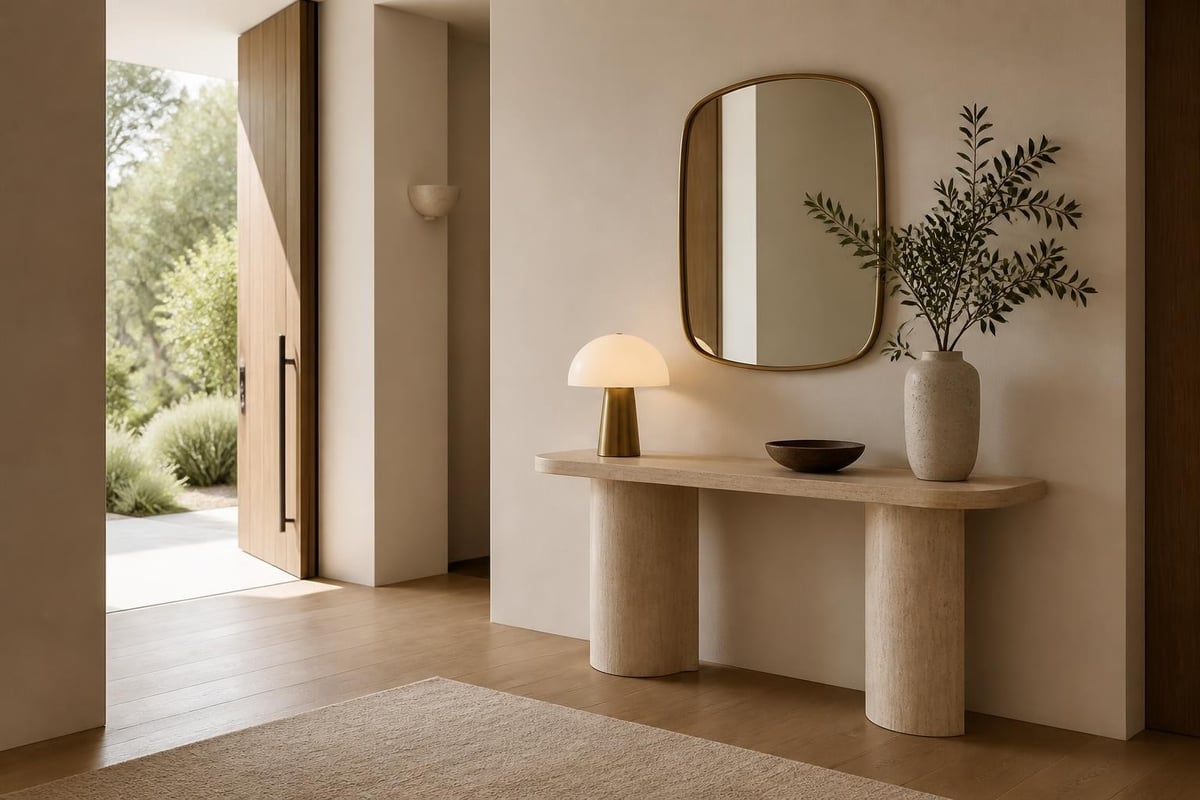
Standard hallway width in New Zealand homes ranges from 1000-1200mm. A console at 350mm depth leaves 650-850mm for passage, meeting the 900mm minimum circulation width recommended in spatial planning guidelines. Narrower halls require proportionally shallower consoles or alternative furniture solutions.
Functional Requirements
An entryway console should accommodate the following:
- Surface depth for a table lamp with 150-200mm base
- Drawer or shelf for keys, sunglasses and small items
- Clearance below for shoes, bags or storage baskets
- Wall space above for mirror or artwork at eye level (1500-1700mm centre point)
Drawer construction matters in high-traffic zones. Dovetail joinery and full-extension runners withstand repeated daily use better than stapled boxes on side-mounted slides. Soft-close mechanisms reduce wear and noise.
Behind-Sofa Positioning
Open-plan living arrangements often position sofas away from walls, creating dead space behind seating. A console table fills this gap, providing storage and display without adding perceived bulk to the room.
Measure sofa back height before selecting a console. The table surface should sit 50-100mm below the sofa back for visual balance. Most contemporary sofas measure 750-850mm high at the back, making a 700-750mm console appropriate.
| Sofa Back Height | Recommended Console Height | Typical Application |
|---|---|---|
| 700-750mm | 600-650mm | Low-profile sectionals |
| 750-850mm | 700-750mm | Standard depth sofas |
| 850-950mm | 800-850mm | High-back lounge seating |
This placement works particularly well in homes where living and dining areas share a single volume. The console provides soft separation between zones without requiring screens or built-in joinery.
Surface Function
Behind-sofa consoles carry different demands than entryway pieces. Expect to use the surface for:
- Table lamps providing task lighting for reading
- Drinks and remotes during use
- Display items visible from dining or kitchen zones
- Charging stations with discreet cable management
Cable access becomes essential in this location. Look for consoles with rear cutouts or removable grommets that permit cord passage without surface clutter.
Timber Species and Finish
Timber selection affects both appearance and durability. Native New Zealand hardwoods prove scarce in furniture production, with most contemporary pieces using European or North American species.
Oak remains the dominant choice for mid-to-high-end console tables. Quarter-sawn oak reveals distinctive ray fleck figure and offers excellent dimensional stability. Oil or hard-wax finishes enhance the grain while permitting future restoration. Expect pricing from $1,200-2,500 for solid oak construction.
Walnut provides richer colour variation from chocolate browns to lighter sapwood. The species machines cleanly and takes a polished finish well. Walnut console tables typically command a 30-40% premium over comparable oak pieces due to material costs.
Ash delivers a lighter palette similar to oak but with more pronounced grain patterns. The timber accepts stain readily, making it suitable for custom colour-matched installations.
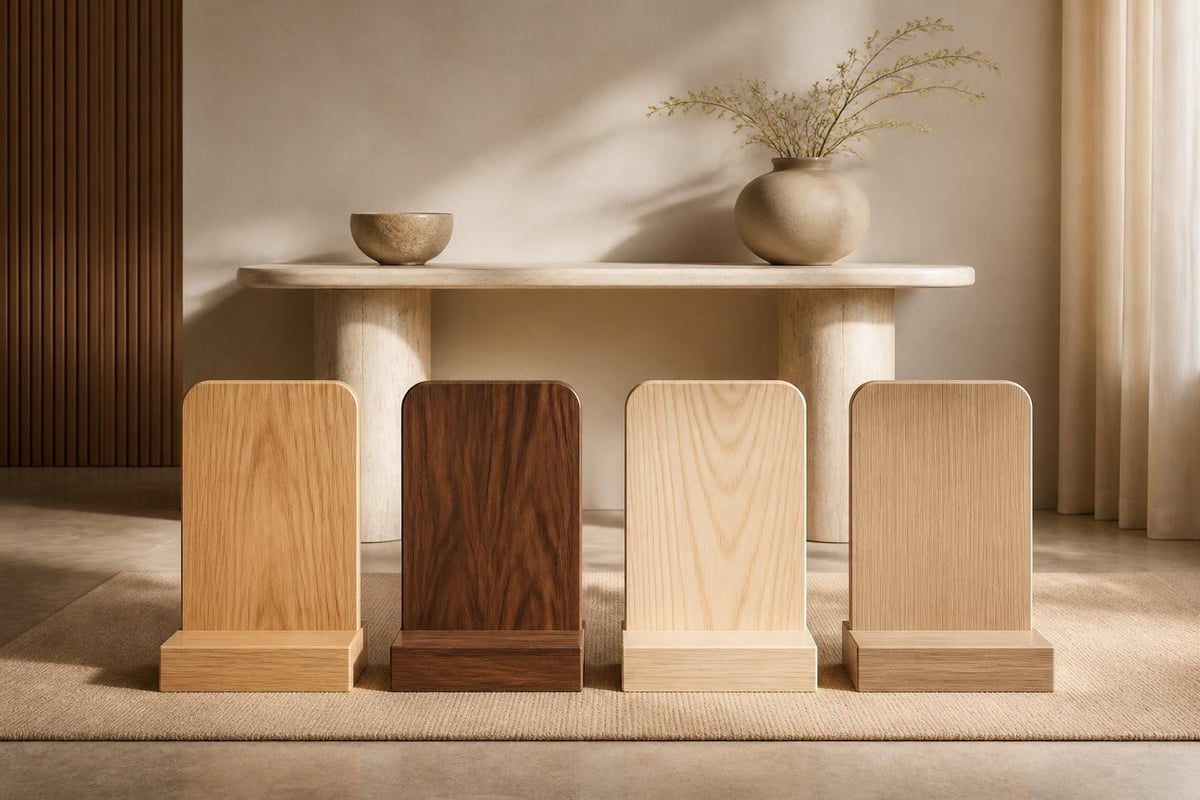
Engineered timber options include veneered MDF or plywood substrates. Quality veneers at 0.6mm thickness perform well in low-wear applications. Avoid paper-backed or photographic "wood-look" finishes, which deteriorate under handling and humidity changes common in New Zealand climates.
Metal and Stone Alternatives
Metal console tables suit contemporary interiors prioritising industrial or minimal aesthetics. Powder-coated steel in matte black or white finishes requires minimal maintenance and tolerates higher loads than equivalent timber construction.
Stainless steel in brushed or polished finishes costs more but eliminates corrosion concerns in coastal locations. The material pairs well with stone or glass tops for mixed-material designs.
Stone Surface Options
Natural stone tops add mass and permanence to console tables. Common choices include:
- Marble: Calacatta, Carrara or local Oamaru stone at 20-30mm thickness
- Granite: Higher durability and stain resistance than marble
- Engineered quartz: Consistent colour and pattern with superior impact resistance
Stone tops require adequate frame support. Expect minimum 50x50mm frame sections for 1500mm spans, with central support rails on longer pieces. The added weight (40-60kg for a 1500x400mm marble top) complicates installation and limits portability.
Styling and Surface Arrangement
Styling guidance suggests limiting console surfaces to 3-5 objects to avoid clutter. This approach suits most residential installations but requires discipline in high-traffic areas where items accumulate.
A functional arrangement might include:
- Table lamp (300-450mm height for hallways, 500-650mm for living areas)
- Tray or bowl for small items
- Decorative object or plant (varying height creates visual interest)
- Stack of books or magazines
- Artwork or mirror above (not on the surface)
Asymmetrical arrangements generally read as more dynamic than centred compositions. Place taller items to one side, balanced by grouped lower objects opposite.
Drawer and Shelf Configuration
Storage configuration varies based on intended use. Entryway consoles benefit from at least one drawer for concealing visual clutter. Living room pieces might prioritise open shelving for display or basket storage.
Single-drawer designs keep the profile minimal while providing concealed storage for keys, chargers and small items. Drawer depth at 100-120mm accommodates most requirements without adding bulk to the overall piece.
Multi-drawer consoles suit applications requiring organised storage. Two or three shallow drawers (60-80mm internal height) permit better categorisation than a single deep drawer. Interior dividers or felt-lined compartments add utility for specific items.
Open shelving works well behind sofas or in living zones where displayed items contribute to the interior scheme. A lower shelf at 200-250mm above floor level provides practical storage for baskets, books or decorative boxes while keeping the visual line open.
Proportional Relationships
Console table dimensions should relate to the architectural features and furniture around them. A 900mm console appears lost against a 3000mm wall but suits a narrow hallway or compact entryway.
The spatial planning approach recommends console length at 50-75% of the wall length it occupies. This proportion maintains balance without overwhelming the space. A 2400mm wall would accept a 1200-1800mm console comfortably.
Height relationships matter equally. Console tables should align with door hardware, light switches or other architectural datums where possible. Standard door handle height in New Zealand sits at 1000mm, creating a natural horizontal line that consoles can either align with or deliberately contrast.
| Wall Length | Recommended Console Length | Maximum Depth |
|---|---|---|
| 1200-1500mm | 800-1100mm | 350mm |
| 1500-2000mm | 1000-1500mm | 400mm |
| 2000-2500mm | 1400-1800mm | 450mm |
| 2500mm+ | 1600-2000mm | 450-500mm |
Material Durability Considerations
Console tables in entryways and hallways receive more contact and abrasion than pieces in low-traffic zones. Surface finish selection should account for expected wear patterns.
Hard-wax oil finishes on timber permit localised repair and refinishing. Minor scratches or water marks sand out easily, with fresh oil restoring the original appearance. Polyurethane and lacquer finishes offer higher initial protection but require complete stripping for restoration.
Metal frames with powder-coat finish resist chips and scratches better than painted surfaces. Chips in powder coating expose bare metal, leading to potential rust issues in humid conditions. Stainless steel eliminates this concern but costs significantly more.
Console tables often serve as a transition point between contemporary living room furniture and more traditional hallway aesthetics. The piece needs sufficient design presence to hold its own while remaining restrained enough to avoid dominating circulation spaces. This balance shapes material and finish selection in ways specific to New Zealand domestic architecture.
Integration with Existing Furniture
A console table rarely exists in isolation. The piece should relate to dining tables, occasional chairs and sofas already in the space. Material consistency creates visual coherence, but exact matching often appears too coordinated.
Consider these relationships:
- Timber tone: Console timber should sit within the same warm or cool temperature as existing pieces, even if species differ
- Metal finish: Match metal frame finishes (black, brushed steel, brass) to lighting fixtures, door hardware or chair bases
- Surface height: Align console height with sofa arms, dining chair backs or other horizontal datums in the room
- Leg profile: Tapered, turned or straight legs should echo the language of existing furniture
Clients furnishing new builds or undertaking complete room renovations have more flexibility. Here the console can anchor material and finish decisions for subsequent purchases.
Specific Use Cases
Different locations demand different console specifications. A piece behind a sofa serves fundamentally different functions than one in an entryway, requiring distinct features.
Media room consoles need cable management, depth for equipment (400-500mm), and ventilation if housing electronics. Surface material should tolerate heat from amplifiers or gaming consoles.
Dining room consoles function as serving surfaces during meals and display furniture between uses. Height should permit comfortable serving while standing (850-900mm), with drawer storage for linens, cutlery or serving pieces.
Bedroom consoles often replace traditional dressing tables in contemporary layouts. Adequate depth for a table lamp, jewellery storage and mirror mounting becomes essential. Lower height (700-750mm) suits seated use with a separate stool or low chair.
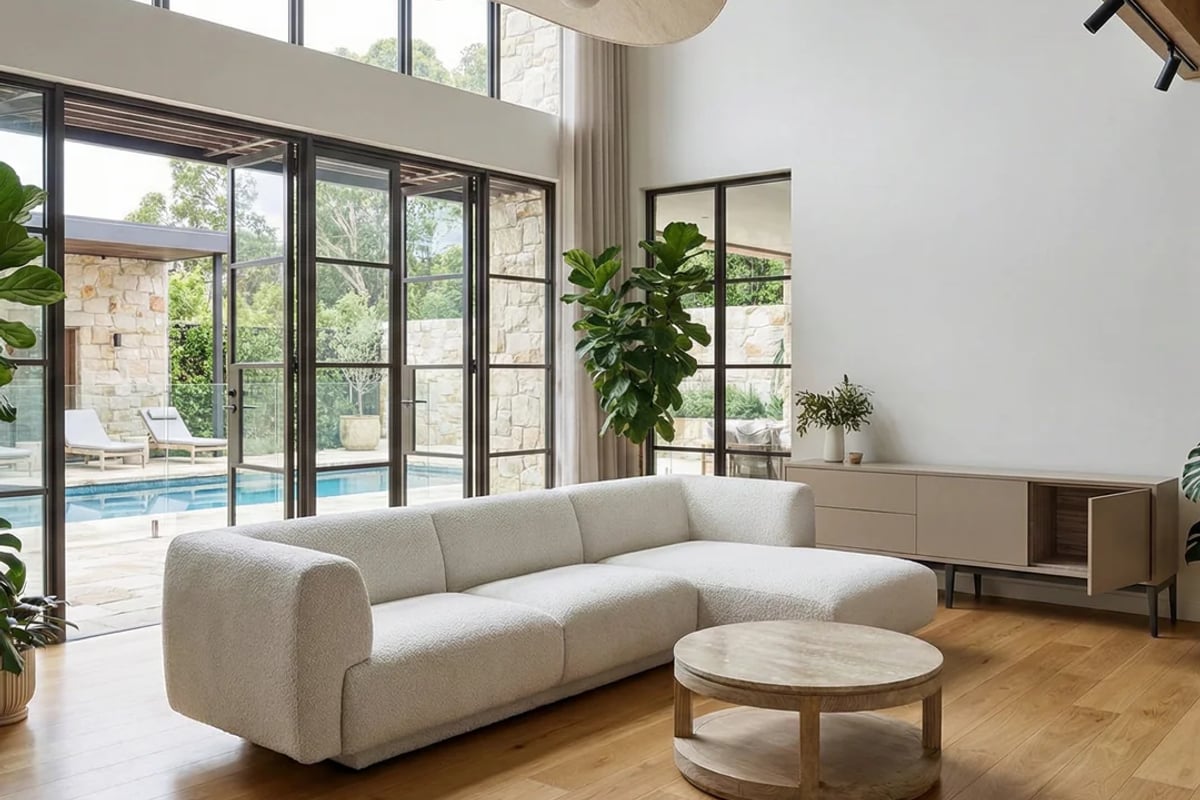
Some of our clients position consoles alongside modular seating like the Bowie L-Shape Sofa, where the console provides drinks and lamp support without requiring built-in side tables. This approach maintains flexibility in furniture arrangement while adding functionality to sectional configurations.
Assembly and Installation
Quality console tables arrive flat-packed or fully assembled depending on size and construction. Pieces under 1200mm length often ship complete, while longer designs require on-site leg attachment to manage shipping dimensions and costs.
Assembly should demand no more than four bolts at leg-to-frame connections. Excessive hardware suggests inadequate joinery or cost-cutting in manufacturing. Proper mortise-and-tenon or dowelled construction requires only supplementary bolts, with the joint itself providing structural integrity.
Wall anchoring becomes necessary for tall, narrow consoles in households with young children. A 900mm high console at 300mm depth can tip forward if a child climbs or pulls on the front edge. L-brackets fixed to wall studs and the console back prevent this risk without visible hardware.
Current Design Directions
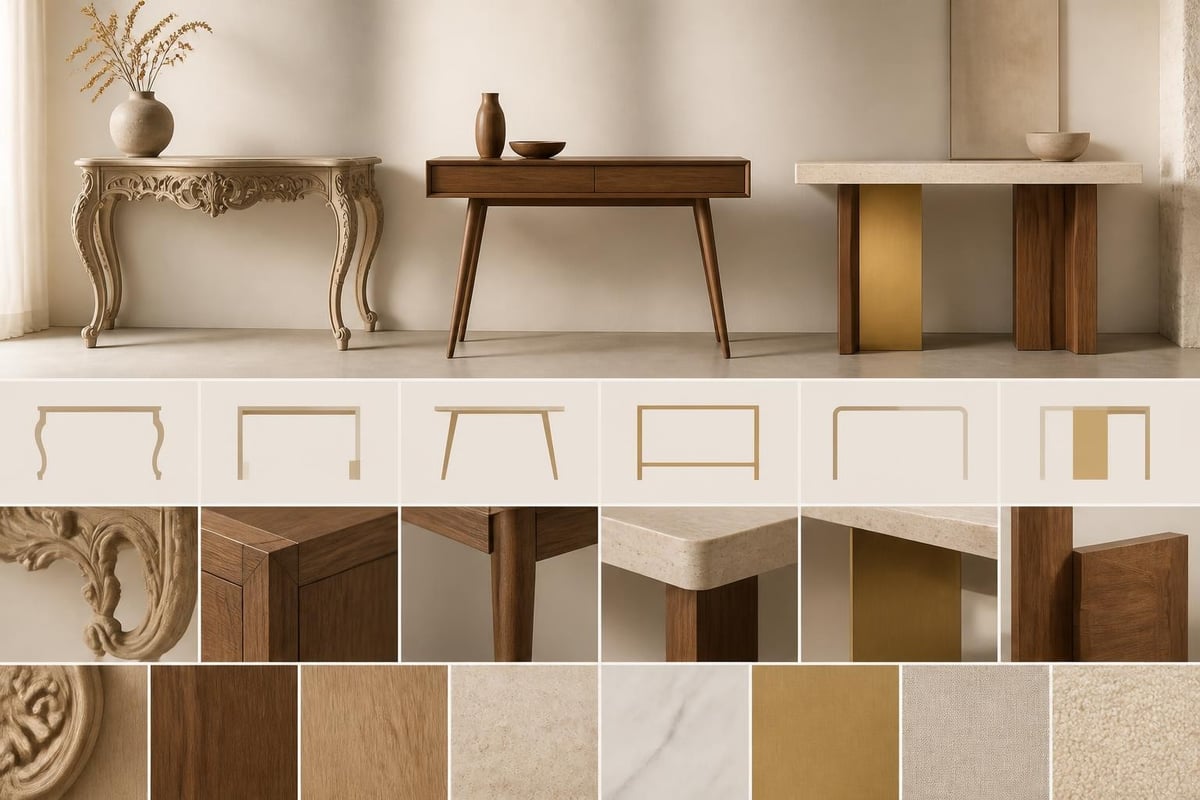
Contemporary console table nz design has shifted toward cleaner profiles and mixed materials. The ornate carved legs and decorative aprons common in traditional pieces have largely disappeared from mid-to-high-end residential furniture.
Minimal metal frames with slim rectangular tubing (30x15mm or less) now dominate higher-priced offerings. These frames pair with solid timber, stone or glass tops for material contrast. The approach keeps visual weight low while providing structural integrity.
Floating consoles eliminate visible legs entirely, using concealed wall-mounting brackets. This specification suits modern builds with adequate wall framing but proves impractical in older homes or rental properties. Load capacity rarely exceeds 30-40kg, limiting surface use and material options.
Integrated lighting appears in some European-influenced designs, with LED strips set into recesses under the top surface. The feature adds ambience in hallways but complicates installation and requires electrical outlet access.
Maintenance and Long-Term Care
Timber console tables require periodic maintenance to preserve finish and structure. Hard-wax oil finishes benefit from fresh applications every 12-18 months in high-use locations. The process takes 20-30 minutes and requires no special equipment beyond lint-free cloths and appropriate oil.
Metal frames need only occasional cleaning with appropriate products. Powder-coated surfaces tolerate mild detergent and water. Stainless steel requires specific cleaners to prevent streaking and maintain finish consistency.
Stone tops demand careful product selection. Marble and limestone remain porous despite sealing, requiring immediate cleanup of acidic spills (wine, citrus, vinegar) to prevent etching. Engineered quartz offers superior stain resistance but can discolour from prolonged heat exposure.
Annual inspection of joint integrity prevents minor issues escalating to structural failure. Check that leg-to-frame connections remain tight, drawer runners operate smoothly, and any wall-mounting hardware stays secure. These simple checks extend console lifespan significantly beyond pieces left unexamined until failure occurs.
Price Positioning and Value
Console table nz pricing reflects material, construction and origin. Entry-level pieces in veneered MDF or particleboard with paper finishes start around $300-500. These suit rental properties or temporary installations but lack durability for long-term residential use.
Mid-range consoles in solid timber or quality metal frames occupy the $800-1,800 bracket. This segment offers genuine value for clients prioritising furniture that endures beyond initial novelty. Construction quality permits refinishing and repair, extending practical lifespan to decades rather than years.
High-end pieces from European or North American makers reach $2,500-5,000+. Premium pricing reflects superior joinery, finishing standards and materials but doesn't always translate to proportional durability gains over mid-range offerings. Assess whether design distinctiveness justifies the cost increase for your specific application.
For context on how console tables fit within broader furniture budgeting, our experience suggests allocating 8-12% of total living room furniture spend to occasional pieces including consoles, side tables and accent seating. This proportion maintains balance between anchor pieces like sofas and the supporting furniture that completes a room.
Console tables deliver spatial organisation and surface utility in compact footprints suited to New Zealand home layouts. Material, construction and placement decisions shape how effectively these pieces serve their intended functions. Whether you need an entryway landing zone, behind-sofa storage or display surface in an open-plan living area, our team at Bauhaus can guide you toward console tables built for long-term use in contemporary New Zealand interiors.