Bar stools and bar chairs bridge the gap between dining seating and casual perching, turning kitchen islands and bar leaners into functional spaces for breakfast, homework, and the long end of dinner parties. The right piece needs the correct seat height for your counter, enough support for extended sitting, and construction that holds up to daily use. Whether you're furnishing a new build or replacing worn seating, understanding the differences between stools and chairs, the materials that perform well in New Zealand homes, and the ergonomic details that separate comfortable seating from a wobbly perch makes the selection process straightforward and grounded in real use.
Understanding Seat Heights and Counter Relationships
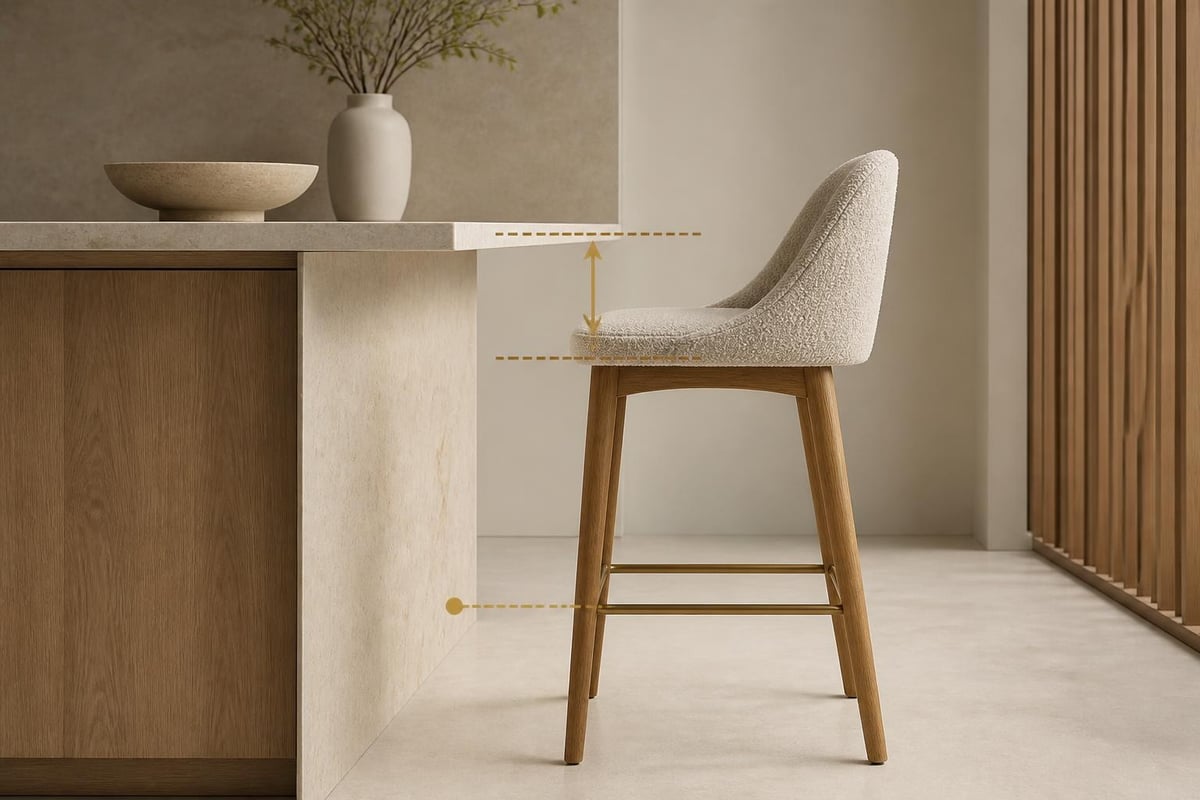
Counter height and seat height determine whether your knees hit the underside of the bench or your feet dangle uncomfortably. Standard kitchen benches in New Zealand sit around 900mm high. Bar stools and bar chairs designed for these surfaces typically feature a seat height of 650mm to 750mm, leaving 150mm to 250mm clearance for thighs and allowing feet to rest on a footrest or the floor.
Standard Counter vs Bar Height
Most residential kitchen islands fall into the counter-height category at 900mm to 950mm. Bar-height counters, more common in commercial hospitality settings or dedicated home bars, reach 1050mm to 1100mm and require taller seating with seat heights around 750mm to 800mm. Measuring your existing counter before selecting seating prevents the common mistake of ordering beautiful pieces that don't fit the space.
Key height pairings:
- 900mm counter: 650mm seat height
- 950mm counter: 700mm seat height
- 1050mm bar counter: 750mm seat height
- 1100mm bar counter: 800mm seat height
A footrest becomes essential when seat height exceeds 600mm. Without proper foot support, pressure builds on the back of thighs, reducing circulation and causing discomfort within minutes. Well-designed bar stools and bar chairs incorporate footrests as structural elements, not afterthoughts.
Backrest vs Backless: Functional Differences
Backless stools suit quick perches at breakfast bars where users lean forward over coffee or a laptop. Chairs with backrests support longer sitting sessions, providing lumbar contact and allowing users to recline slightly without toppling backward. The choice depends on how the seating will be used, not just how it looks under the counter.
When Backrests Matter
Extended dining sessions, homework hours, and social gatherings all benefit from backrest support. Research on seating ergonomics published through PubMed consistently shows that backrest contact reduces fatigue and postural strain during prolonged sitting. A curved backrest that follows the lumbar curve provides more support than a straight upright rail.
Backless stools tuck completely under the counter, saving floor space in compact kitchens. They work well for morning coffee or quick meals but become uncomfortable after 15 to 20 minutes. For families using kitchen islands as the primary dining surface, chairs with backrests make practical sense.
| Feature | Backless Stool | Chair with Backrest |
|---|---|---|
| Sitting duration | Up to 20 minutes | 1+ hours comfortably |
| Space saved | Full tuck-under | Partial tuck-under |
| Postural support | Minimal | Lumbar contact |
| Best use | Quick meals, perching | Dining, working, socialising |
Material Selection for Daily Use
Timber frames offer durability and visual warmth but require different maintenance than metal or upholstered options. Solid ash, oak, or beech withstand years of use when properly finished. Metal frames in powder-coated steel or matte black provide slim profiles and wipe-clean surfaces suited to households with young children.
Timber Construction and Finishing
Solid timber bar stools and bar chairs perform well in New Zealand's varied climate when kiln-dried and sealed with appropriate finishes. The Forest Products Laboratory provides detailed guidance on wood species and durability. Ash and oak resist denting better than softer timbers, and rounded legs distribute weight more evenly than squared edges.
Smoked ash and walnut finishes add depth without heavy staining. Natural timber shows grain variation, and no two pieces match exactly. For clients seeking consistent colour across multiple stools, stained finishes provide uniformity. At Bauhaus, timber selections are chosen for performance and grain character, not just appearance.
Upholstered Seats and Eco Leather
Cushioned seats add comfort for extended sitting but introduce maintenance considerations. Eco leather wipes clean with a damp cloth, making it practical for kitchen use where spills happen. Fabric seats require regular vacuuming and occasional spot cleaning, and not all fabrics suit high-traffic areas.
Full-grain leather develops patina over time, showing wear as character rather than damage. Eco leather mimics this look at a lower price point with easier care. Foam density matters as much as the covering material. High-density foam maintains shape and support for years, while low-density foam compresses quickly, creating uncomfortable dips.
Structural Stability and Weight Capacity
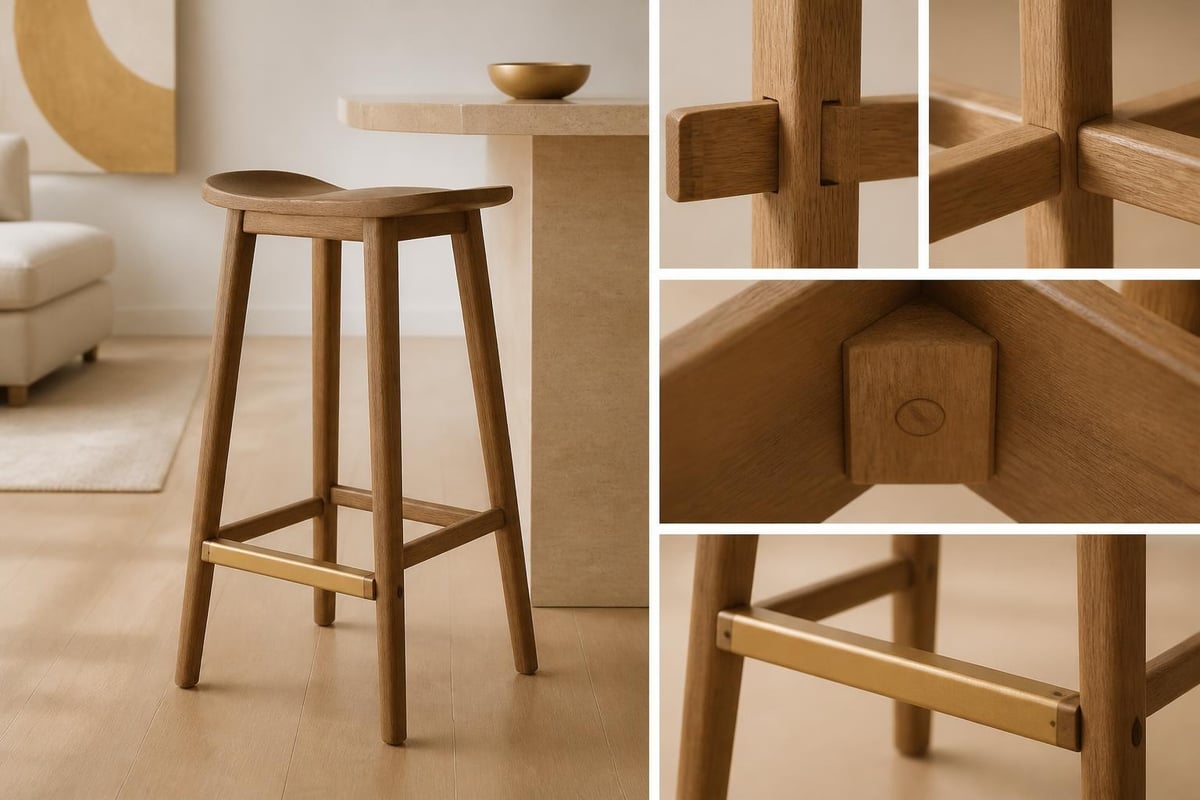
A wobbly stool indicates poor joinery, inadequate cross-bracing, or loose fasteners. Bar stools and bar chairs experience lateral forces when users twist to reach across counters or shift weight while seated. Proper construction includes mortise-and-tenon joints in timber frames, welded joints in metal, and cross-stretchers that tie legs together.
Frame Reinforcement Techniques
Four-leg designs distribute weight evenly and resist tipping better than three-leg or pedestal bases. Cross-stretchers positioned 200mm to 300mm above the floor double as footrests while adding rigidity. Corner blocks glued and screwed into the seat frame prevent racking, the side-to-side movement that loosens joints over time.
Metal frames require adequate gauge thickness. Thin-wall tubing flexes under load, creating the sensation of instability even when joints hold. Powder-coated finishes protect steel from moisture and daily wear, but the coating quality varies. Properly cured powder coat resists chipping and fading.
For design inspiration and material comparisons in commercial settings, ArchDaily's bar projects showcase built examples where seating durability has been tested in real-world hospitality environments.
Swivel Mechanisms and Movement
Swivel seats allow users to enter and exit without dragging the stool across the floor, reducing noise and floor wear. The swivel mechanism sits between the seat and the frame, consisting of ball bearings or a simple rotating plate. Ball-bearing swivels turn smoothly under load and last longer than friction-only plates.
Full Rotation vs Limited Swing
Full 360-degree rotation suits social settings where users turn to face different conversation partners without repositioning the stool. Limited-swing mechanisms, typically 90 to 180 degrees, prevent tangling of upholstery or exposed joints. For kitchen islands where users face the counter most of the time, limited swing provides enough flexibility without unnecessary complexity.
Swivel mechanisms add moving parts that require occasional maintenance. Lubrication keeps bearings smooth, and checking fasteners prevents loosening over time. Fixed stools eliminate this maintenance but demand more effort to enter and exit gracefully.
Footrest Positioning and Ergonomics
Footrests positioned too high force knees upward, creating pressure on the seat front. Footrests too low leave feet dangling, causing the same circulation issues as no footrest at all. The ideal position places feet flat with knees bent at approximately 90 degrees when seated upright.
Adjustable vs Fixed Footrests
Adjustable footrests accommodate users of different heights but add mechanical complexity. Fixed footrests work well when the primary users fall within a narrow height range. For family use, a fixed footrest positioned 450mm to 500mm below the seat height suits most adults and older children.
Ring-style footrests encircle the stool base, providing foot support from any seated angle. Rung-style footrests connect individual legs, creating a lighter visual appearance but limiting foot placement to specific positions. Both styles function well when positioned correctly; the choice comes down to aesthetic preference and frame design.
Accessibility guidelines from the U.S. Department of Justice ADA Standards provide dimensions for clear floor space and knee clearance at counters, useful when planning layouts for mixed-mobility households or commercial compliance.
Coordinating with Dining and Living Furniture
Bar stools and bar chairs function as transitional pieces, linking kitchen spaces with dining and living areas. Matching timber finishes and upholstery fabrics create visual continuity without demanding identical designs across every piece. A smoked ash bar stool pairs naturally with a dining table in the same finish, even when chair styles differ.
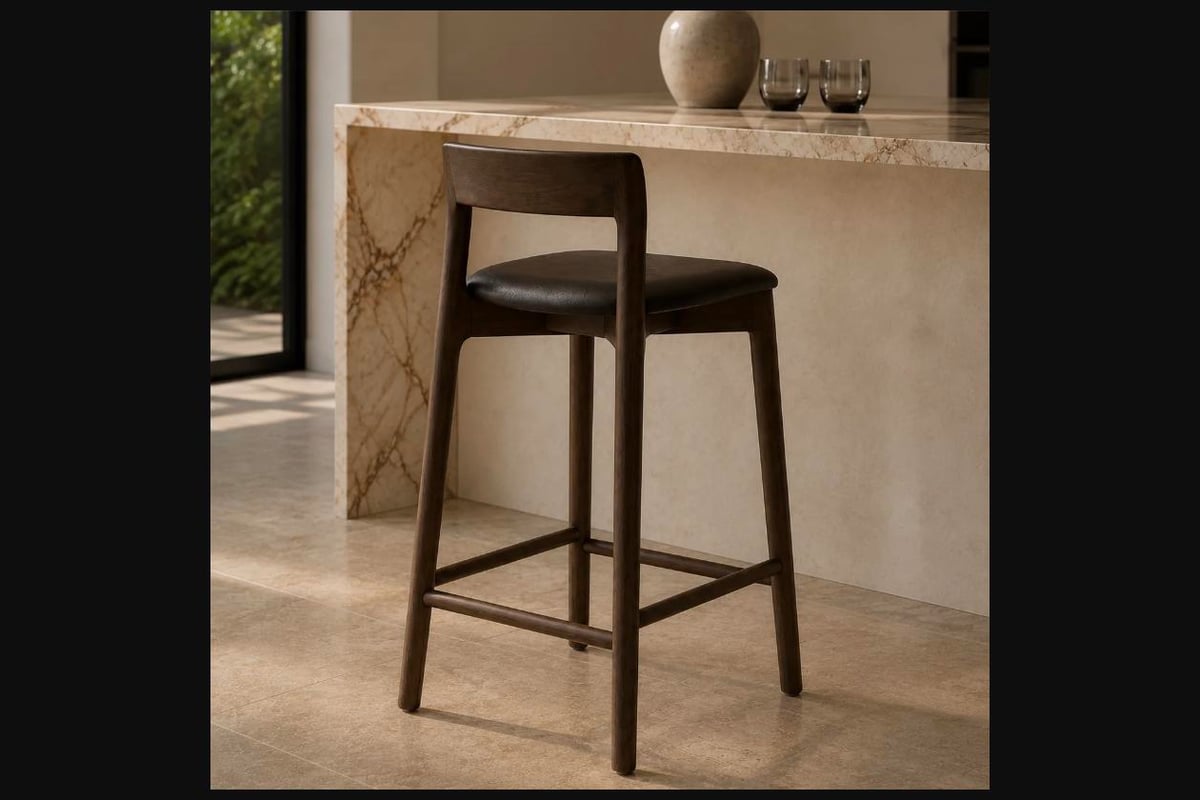
At Bauhaus, the Raphael Bar Stool in Smoke features a cushioned eco leather seat and solid timber frame in smoked ash, designed to coordinate with dining chairs and tables across the range. The 65cm seat height suits standard kitchen islands, and the wipe-clean surface handles daily use without constant maintenance.
Fabric and Finish Consistency
Using the same eco leather or fabric across bar seating and dining chairs simplifies reordering and future replacements. Fabric dye lots vary, and discontinued lines create mismatches down the track. Selecting materials with long production runs or working with retailers who maintain stock of core fabrics reduces these risks.
For guidance on furniture care and maintaining consistent finishes over time, Bauhaus provides detailed information in the furniture care guide, covering timber, leather, and fabric maintenance specific to New Zealand conditions.
Commercial vs Residential Construction Standards
Commercial bar stools and bar chairs endure heavier use than residential pieces, with reinforced frames, higher-density foam, and commercial-grade upholstery. Hospitality settings demand cleanability, rapid turnover, and resistance to spills, scratches, and frequent movement. Residential pieces balance durability with comfort and aesthetic refinement.
Assessing Construction for Intended Use
Households with young children or frequent entertaining benefit from commercial-grade construction without the industrial appearance. Look for mortise-and-tenon joinery, corner blocking, and high-density foam even in residential designs. These details cost more upfront but extend usable life significantly.
Material certifications for low-VOC emissions matter in enclosed spaces. The LEED indoor air quality guidance discusses furniture emissions and GREENGUARD certification, relevant for new builds targeting green building credits or households sensitive to off-gassing.
Sustainability and Timber Sourcing
Responsibly sourced timber ensures forests remain productive and ecosystems intact. FSC certification verifies sustainable forestry practices, tracking timber from forest to finished product. The Forest Stewardship Council provides resources on certified furniture and responsible sourcing, useful when specifying materials for environmental credentials.
Long-Term Value vs Disposable Seating
Quality bar stools and bar chairs last 10 to 15 years with proper care, while budget pieces often fail within 2 to 3 years. Joint failure, foam collapse, and finish deterioration plague poorly constructed seating. Investing in solid construction, quality materials, and repairable designs reduces long-term cost and waste.
Reupholstering extends life further. Timber frames in good structural condition accept new foam and fabric, updating appearance without replacing the entire piece. This approach works only when the frame itself was built to last.
Layout Considerations for Kitchen Islands
Spacing between stools affects comfort and traffic flow. Allow 600mm to 750mm of counter width per stool for elbow room and comfortable sitting. Overcrowding forces users to sit shoulder-to-shoulder, appropriate for quick meals but awkward for extended dining or working.
Clearance Zones and Traffic Paths
Leave 1000mm to 1200mm behind seated users for walking past without bumping chairs. Tight kitchens often compromise this clearance, creating bottlenecks during meal preparation. Backless stools that tuck fully under the counter mitigate this issue, as do swivel seats that turn inward when not in use.
Corner placements at L-shaped islands require careful planning. Stools positioned too close to the corner force users to sit at an angle or compete for legroom. Leaving the corner open or using a single corner stool preserves usability.
For broader context on designing contemporary furniture layouts that work with New Zealand living spaces, Bauhaus offers insights on contemporary furniture sets, covering coordination across dining, living, and kitchen zones.
Maintenance and Longevity
Routine care extends the life of bar stools and bar chairs significantly. Tightening loose fasteners every six months prevents joints from working apart. Vacuuming upholstered seats removes grit that abrades fabric from within, and wiping timber and metal frames after spills prevents staining and corrosion.
Timber Care Specifics
Solid timber responds to humidity changes, expanding in summer and contracting in winter. Maintaining consistent indoor humidity between 40% and 60% reduces seasonal movement and joint stress. Apply furniture polish or conditioning oil annually to nourish timber and maintain finish depth.
Scratches on timber surfaces can be touched up with matching stain pens or filled with coloured wax. Deep gouges require professional refinishing, but surface scratches blend over time as the timber develops patina.
Upholstery Cleaning Protocols
Eco leather wipes clean with mild soap and water. Avoid harsh solvents that strip protective coatings. Fabric seats benefit from professional steam cleaning every 12 to 18 months, depending on use. Check manufacturer care codes before applying any cleaning agent; water-based cleaners damage some fabrics while solvent-based options harm others.
Style Trends and Design Shifts
Bar stools and bar chairs in 2026 reflect a shift toward natural materials, curved forms, and understated detailing. The angular industrial aesthetic of the past decade is giving way to softer lines, organic shapes, and tactile surfaces. Design coverage in Architectural Digest highlights these trends, showing mixed materials, sculptural bases, and integrated upholstery.
Colour and Finish Directions
Warm timber tones in walnut, smoked ash, and natural oak dominate current selections. Matte black metal remains popular for its versatility and ability to anchor lighter timber and upholstery. Coloured finishes are returning, with deep greens, terracotta, and charcoal fabrics appearing alongside neutral palettes.
The move away from stark monochrome toward layered neutrals and earthy tones suits New Zealand interiors, where natural light and connection to outdoor spaces inform material choices. Bar stools and bar chairs in these finishes integrate easily without demanding dramatic design statements.
Disclaimer: AI-supported images may differ from products on website.
Bar stools and bar chairs combine functional seating with visual continuity across kitchen, dining, and living spaces. Proper seat height, structural stability, quality materials, and thoughtful ergonomics separate pieces that serve well for years from those that disappoint within months. At Bauhaus, our Auckland showrooms feature carefully selected bar seating alongside dining tables, occasional chairs, and sofas, all grounded in solid construction and timeless design. Visit us to see the Raphael Bar Stool and other pieces designed for modern New Zealand living.